
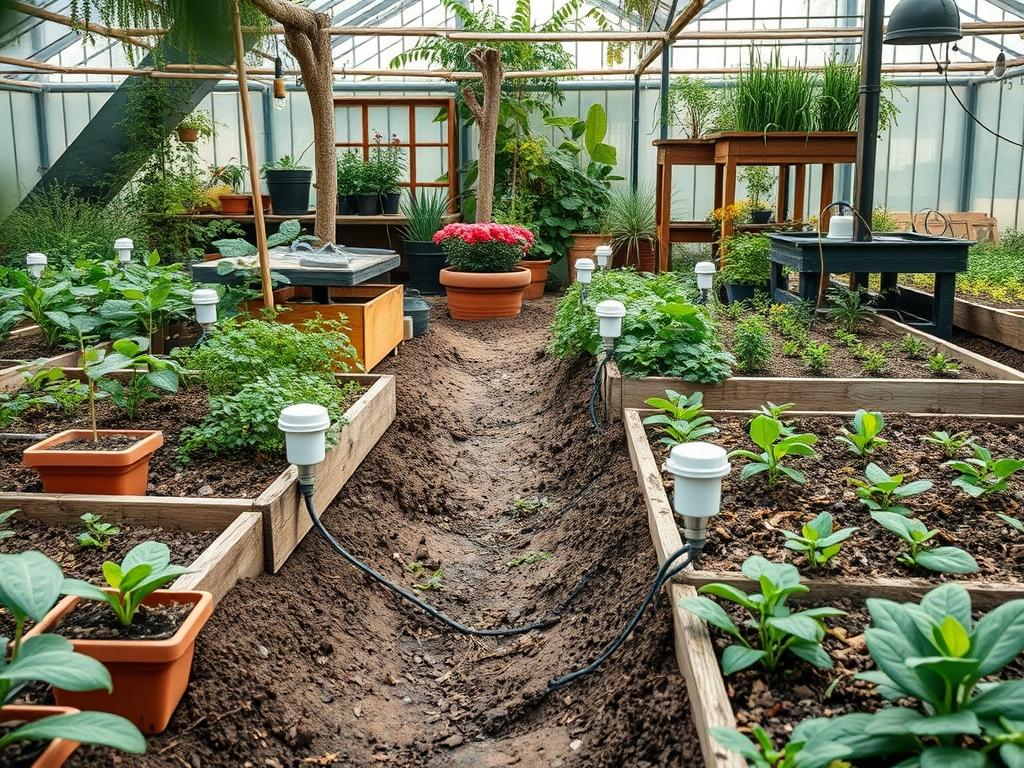
Modern landscape architecture requires a delicate balance between aesthetic ambition and resource management. When we approach a professional garden design, we are not merely selecting beautiful flora; we are engineering a living ecosystem that must withstand fluctuating weather patterns while maintaining peak visual appeal. One of the most significant challenges in high-end residential landscaping is the management of water. Over-saturated soil can lead to the death of expensive specimen trees, while underwatering causes irreversible stress to turfgrass and ornamental shrubs. The introduction of Smart Irrigation Rain Sensors has revolutionized how we manage these outdoor environments. These devices serve as the central nervous system of a property, ensuring that water is dispensed only when necessary. By integrating these sensors, a homeowner protects their investment in native plants, high-quality mulch, and complex drainage systems while significantly reducing utility costs.
Landscape Design Principles
A successful landscape relies on foundational design principles that guide the eye and create a sense of cohesion. Symmetry and balance are the two most critical elements in professional environments. In formal gardens, we often use mirrored plantings of American Boxwood or Emerald Green Arborvitae to create sharp, architectural lines. In more contemporary, naturalistic designs, we utilize asymmetrical balance, where different plant masses carry similar visual weight. For instance, a single large Japanese Maple on one side of a property can be balanced by a dense grouping of Ornamental Grasses on the other.
Elevation and layering are equally vital. A flat yard lacks depth and character. By creating mounds or using natural stone retaining walls, we introduce vertical interest. Proper layering involves placing larger canopy trees in the background, mid-sized flowering shrubs like Hydrangeas in the center, and low-growing groundcovers or perennials in the foreground. This provides a lush, full appearance even in the early stages of growth. However, this density requires precise watering. This is where Smart Irrigation Rain Sensors become essential. Without them, a sudden thunderstorm followed by a scheduled irrigation cycle could lead to root rot in the lower elevation layers where water naturally collects. A well-designed landscape must also factor in walkways and hardscaping. Paths made of Pennsylvania Bluestone or Pea Gravel should guide guests through the space while providing clear boundaries for garden beds.
Plant and Material Selection
Choosing the right materials and life forms is the building block of any outdoor space. Below is a selection of commonly used plants and their specific requirements for a thriving environment.
| Plant Type | Sun Exposure | Soil Needs | Water Demand | Growth Speed | Maintenance Level |
| :— | :— | :— | :— | :— | :— |
| English Lavender | Full Sun | Sandy, Alkaline | Low | Moderate | Moderate |
| River Birch | Full / Part Sun | Acidic, Moist | High | Fast | Low |
| Hostas | Full / Part Shade | Loamy, Rich | Moderate | Moderate | Very Low |
| Purple Coneflower | Full Sun | Well-drained | Low | Fast | Low |
| Dwarf Korean Lilac | Full Sun | Well-drained | Moderate | Slow | Moderate |
| Fescue Turfgrass | Sun / Part Shade | Neutral pH | Moderate | Fast | High |
In addition to plants, the selection of hardscape materials defines the longevity of the design. Landscaping fabric should be used sparingly, as it can occasionally stifle soil respiration; however, a 3 inch layer of hardwood mulch or pine bark nuggets is essential for moisture retention and weed suppression. For areas with high foot traffic, paver stones set on a bed of compacted structural fill and polymeric sand ensure a level surface that resists shifting over time.
Implementation Strategy
The transition from a design on paper to a physical landscape requires a structured execution. The first and most critical step is grading. We must ensure that the land slopes away from the home foundation at a rate of at least 2 percent. This prevents water from pooling against the structure. During this phase, we also install subsurface drainage pipes and French drains to handle heavy rainfall. Once the grading is complete, we layout the garden beds using flexible steel edging or poured concrete curbing to maintain clean lines between the lawn and the soil.
Installing the irrigation system occurs before any plants are in the ground. This is the moment to integrate Smart Irrigation Rain Sensors. These sensors should be mounted on a high point, such as a fence post or an eave, where they have an unobstructed path to capture rainfall. They are wired, or wirelessly synced, to the irrigation controller. When they detect a specific threshold of moisture, such as 1/8 inch or 1/4 inch of rain, they send a signal to shut down the scheduled watering cycle. This automation is a cornerstone of professional implementation because it prevents the waste of thousands of gallons of water per year. After the system is tested, we begin planting, starting with the largest specimens and working down to the groundcovers. Finally, a thick layer of organic mulch is applied to protect the root systems of the new additions.
Common Landscaping Failures
The most frequent failure in residential landscapes is improper drainage. When water has nowhere to go, it creates anaerobic soil conditions that kill even the hardiest plants. Another mistake is root overcrowding. Homeowners often want an “instant” garden, leading them to plant Leyland Cypress or Norway Spruces too close together. Within five years, these trees compete for nutrients and light, leading to thin foliage and disease.
Irrigation inefficiency is perhaps the most costly failure. Many systems are set to a simple timer regardless of the weather. This results in the “watering during a rainstorm” phenomenon, which is not only environmentally irresponsible but also destructive to the plants. Overwatering causes the leaves of species like Azaleas to turn yellow and drop. By failing to use Smart Irrigation Rain Sensors, the gardener lacks a fail-safe against saturated soil. Soil compaction is another silent killer. When heavy equipment or constant foot traffic packs the soil too tightly, the microscopic air pockets vanish, preventing water and oxygen from reaching the roots. We recommend annual core aeration for lawns to combat this issue.
Seasonal Maintenance
Landscape management is a year-round commitment. In the spring, the focus is on renewal. This is the time to apply a slow-release fertilizer, refresh the mulch, and prune any winter-damaged branches from shrub roses or butterfly bears. It is also the vital time to calibrate your Smart Irrigation Rain Sensors to ensure they are clean and functioning before the heat of summer arrives.
Summer maintenance is dominated by water management and weed control. During periods of extreme heat, deep watering in the early morning is essential. However, the garden must be monitored for fungal diseases that thrive in humidity. In the autumn, the priority shifts to leaf removal and bulb planting. We recommend planting Tulips and Daffodils at a depth of 6 to 8 inches before the first frost. This is also when we winterize the irrigation system. For colder climates, this involves blowing out the lines with an air compressor to prevent pipes from bursting. During the winter, the landscape consultant focuses on “hardship” pruning and planning for the next season. It is a time for tool maintenance, such as sharpening bypass pruners and cleaning shovels, ensuring everything is ready for the spring thaw.
Professional Landscaping FAQ
How do Smart Irrigation Rain Sensors save money?
These sensors prevent the irrigation system from running during and after rainfall. By eliminating unnecessary watering cycles, they significantly reduce monthly water bills and extend the lifespan of your irrigation pump and valves through reduced wear and tear.
What is the best location for sensor installation?
Install the sensor in an open area at least 10 feet away from the roofline or overhanging trees. It must have a clear path to the sky to accurately measure precipitation and avoid “false dry” readings from sheltered spots.
Can I add a rain sensor to an existing irrigation system?
Yes, most modern irrigation controllers are compatible with both wired and wireless sensors. A professional can typically retrofit a system in less than an hour, making it one of the most cost-effective upgrades available for any landscape.
How often should I replace my rain sensor?
High-quality sensors generally last between 5 to 10 years. Wireless models may require battery replacements every few seasons. It is best to test the sensor annually by manually activating the moisture trigger during a scheduled watering test.
Does a rain sensor prevent all overwatering?
While a sensor is highly effective at stopping cycles during rain, it should be paired with proper soil moisture sensors for total control. The rain sensor handles atmospheric water, while moisture sensors monitor the hydration levels at the root zone.