
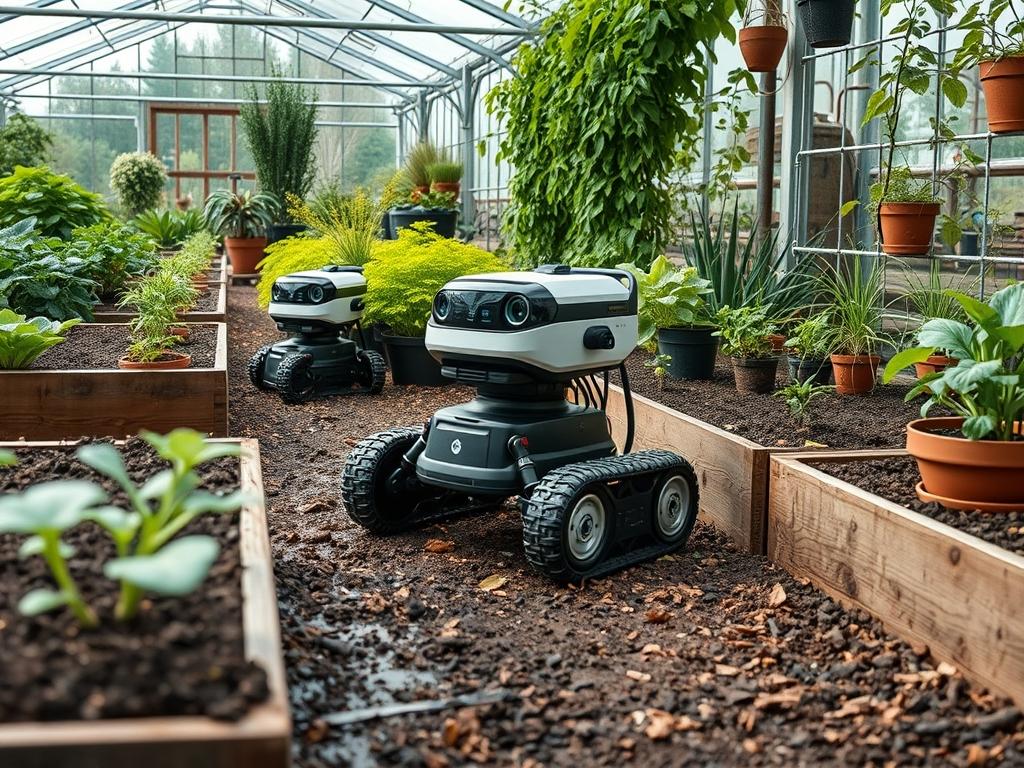
The integration of high yield food production into residential aesthetic landscapes represents a significant shift in modern site planning. Historically, the vegetable garden was a utilitarian space tucked behind a hedge or relegated to the back corner of a property to avoid detracting from curb appeal. Today, homeowners demand a fusion of form and function where edible species provide the structural foundation for ornamental beauty. Achieving this requires a deep understanding of site orientation, microclimates, and the emerging role of autonomous technology. As we look toward the future, the primary challenge for the landscape architect is creating an environment that is both visually stunning and technically accessible for Smart Harvesting Robots. These machines require precise pathing, specific clearances, and predictable plant placement to function effectively. A successful design must prioritize soil health and drainage while maintaining the refined elegance of a traditional estate.
Building a productive landscape starts with a rigorous analysis of the existing topography. We must consider how sunlight interacts with the elevation of the land throughout the growing season. North facing slopes may require retaining walls to create level terraces that catch the sun, while low lying areas need sophisticated French Drains or Catch Basins to prevent water logging. Transitioning from a decorative lawn to a food producing ecosystem is not merely about planting seeds; it is about engineering a substrate that sustains heavy production without succumbing to erosion or nutrient depletion. By treating the backyard as a functional micro farm, we can elevate the outdoor living experience, ensuring that every square foot of the property contributes to both the visual narrative and the kitchen table.
Landscape Design Principles
Effective landscape design for automated food production relies on the principle of accessibility. Traditional gardens often feature winding, narrow paths that are charming but impractical for machinery. To accommodate Smart Harvesting Robots, we must design with symmetry and geometric logic. Wide, stabilized Walkways are essential. These paths should be at least 36 inches wide to allow for the turning radius of most robotic units. Using Permeable Pavers or Crushed Granite provides a firm surface that prevents the robot from sinking during the rainy season while allowing water to infiltrate the soil rather than running off into the street.
Focal points should serve a dual purpose in a high tech garden. For instance, a central Espaliered Apple Tree serves as a stunning vertical element that draws the eye, yet its two dimensional growth habit makes it the perfect candidate for automated picking arms. Elevation layers are equally important. By using Raised Beds constructed from Western Red Cedar or Powder Coated Steel, we bring the fruit and foliage to a consistent height. This consistency reduces the complexity of the computer vision algorithms used by harvesting robots, as they can scan for ripeness at a predictable eye level rather than searching through undulating ground cover.
Visual balance is achieved by mixing textures. We pair the feathery foliage of Asparagus with the broad, architectural leaves of Swiss Chard. This layering creates depth and shadow, masking the highly organized, grid like structure required for efficient robotic navigation. Irrigation planning must also be integrated into the initial skeleton of the design. Rather than relying on surface oscillators, we install Subsurface Drip Irrigation systems. These systems deliver water directly to the root zone, keeping the foliage dry. This is critical for robots equipped with sensitive cameras and infrared sensors, as water droplets on leaves can cause false readings or interfere with optical clarity.
Plant and Material Selection
The selection of materials and biological specimens dictates the longevity and maintenance requirements of the site. We prioritize Native Plants for perimeter buffering to support local pollinators, while the central production zones are populated with high value crops. Below is a selection of plants optimized for both aesthetic appeal and robotic compatibility.
| Plant Type | Sun Exposure | Soil Needs | Water Demand | Growth Speed | Maintenance Level |
| :— | :— | :— | :— | :— | :— |
| Dwarf Citrus | Full Sun | Sandy Loam | Moderate | Medium | Low |
| Highbush Blueberry | Full Sun/Part Shade | Acidic (pH 4.5) | High | Slow | Moderate |
| Lacinato Kale | Full Sun | Rich Organic | Moderate | Fast | Low |
| Standard Tomato | Full Sun | Well Drained | High | Very Fast | High |
| Perennial Rosemary | Full Sun | Gritty/Dry | Low | Medium | Minimal |
Material selection extends beyond the plants. For mulching, we avoid lightweight wood chips that can be easily displaced by robotic wheels. Instead, we use Double Shredded Hardwood Mulch or Pea Gravel. These materials stay in place and provide a clear contrast against the green of the plants, helping the robot distinguish between the “traffic zone” and the “growth zone.” For the structural components, Galvanized Steel Edging provides a crisp, permanent border that keeps grass from encroaching on the production beds and acts as a physical guide for bumper sensors.
Implementation Strategy
The implementation phase begins with professional grading. We use Laser Levels to ensure that the primary production area has a slope of no more than two percent. If the natural terrain is steeper, we must install Dry Stack Stone Walls to create level benches. Once the rough grading is complete, we focus on soil amendment. We integrate Six Inches of Organic Compost into the existing topsoil to improve tilth and cation exchange capacity.
After the soil is prepared, we install the Hardscaping. This includes the primary navigation paths and any Permanent Trellises. For robotic harvesting, trellises should be rigid and securely anchored using Concrete Footings to prevent swaying in the wind, which can confuse mechanical grippers. Once the infrastructure is in place, we lay out the Drip Lines. Each zone is controlled by a Smart Irrigation Controller that adjusts water delivery based on real time weather data and soil moisture sensors.
Planting follows a strict spatial grid. We use Transplanting Trowels and Post Hole Diggers to ensure each specimen is placed at the exact depth required. For robots to harvest efficiently, plants like Indeterminate Tomatoes must be pruned to a single leader and secured to a vertical Wire Support System. This creates a clear vertical column of fruit. Finally, we apply a Three Inch Layer of mulch across all exposed soil to suppress weeds and retain moisture, finishing the edges with a Power Edger for a clean, professional look.
Common Landscaping Failures
The most frequent failure in edible landscaping is inadequate drainage. When water accumulates around the roots of fruit bearing plants, it leads to Root Rot and fungal diseases. Many homeowners fail to account for the increased water needs of a food garden, leading to localized flooding if the site is not properly graded. Another common mistake is root overcrowding. While “intensive planting” is a popular buzzword, overcrowding limits air circulation and creates a tangled mass of vegetation that is impossible for a Smart Harvesting Robot to navigate.
Improper spacing also affects the longevity of the landscape. A Fig Tree might look perfect in a three foot wide bed today, but within five years, its root system will heave the surrounding Pavers. Soil compaction is another silent killer. Heavy foot traffic or the repeated pathing of a robot over unreinforced soil will crush the macropores necessary for oxygen exchange. To prevent this, all traffic must be restricted to designated Hardscaped Paths. Lastly, irrigation inefficiencies often stem from a lack of pressure regulation. High pressure can blow out emitters, while low pressure leads to uneven watering, resulting in some plants drowning while others wilt.
Seasonal Maintenance
Landscape management is a year round commitment, especially when blending technology with nature. In the Spring, the focus is on reactivation. We clear any debris from Drainage Grates, test the Irrigation Valves, and apply a fresh layer of Slow Release Fertilizer. This is also the time for structural pruning of Deciduous Fruit Trees to maintain the open canopy required for robotic access.
During the Summer, the priority shifts to moisture management and pest monitoring. We check the Drip Emitters weekly to ensure they are not clogged by mineral deposits. As the harvest peaks, we must calibrate the sensors on our Smart Harvesting Robots to account for the changing light conditions and heavy foliage density. Autumn is the season for soil replenishment. We pull spent annuals and top dress the beds with Composted Manure. We also perform an “end of season” inspection of all Retaining Walls for signs of shifting or hydraulic pressure buildup. In Winter, we winterize the irrigation system by blowing out the lines with Compressed Air to prevent freeze damage. Tools like Pruning Shears and Loppers are sharpened and oiled, and the robotic units are stored in a dry environment for software updates and mechanical servicing.
Professional Landscaping FAQ
How do harvesting robots navigate uneven backyard terrain?
Most units utilize LiDAR or Stereo Cameras to map the environment. However, for reliable operation, designers should minimize sudden grade changes and ensure that all transition points between different materials are flush and stable.
Are native plants compatible with a robotic food garden?
Absolutely. We use Native Plants on the perimeter to attract beneficial insects that provide natural pest control. This reduces the need for chemical interventions, which is safer for both the robotic sensors and the final food product.
What is the best mulch for a high tech garden?
We recommend Double Shredded Hardwood Mulch. It creates a stable, interlocking mat that withstands the movement of small robotic wheels while providing excellent thermal insulation for the soil and suppressed weed growth.
How does irrigation affect robotic sensor accuracy?
Surface water can cause glare or interfere with moisture sensitive electronics. By using Subsurface Drip Irrigation, we keep the ground surface dry and the foliage clear, which significantly improves the machine’s ability to identify ripe fruit.
Can I retro-fit an existing garden for smart harvesting?
Yes, though it often requires widening paths and installing Permanent Edging. The transition usually involves moving from a “clump” planting style to a more linear, organized layout that allows the robot a clear line of sight.