
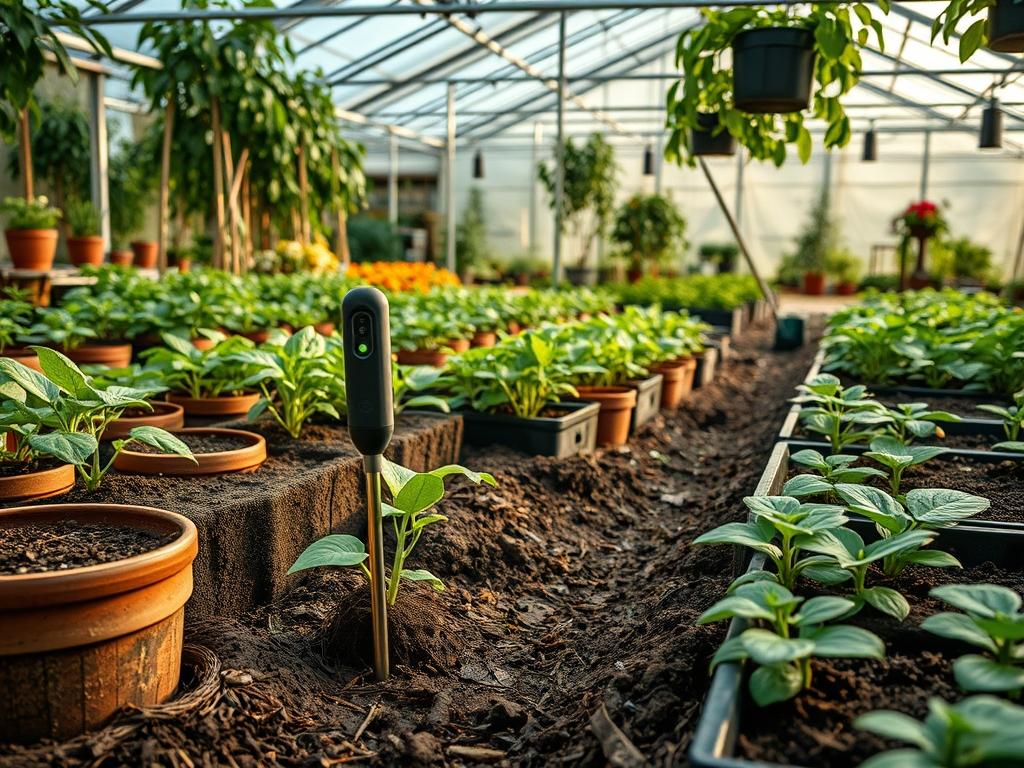
Landscaping has evolved from a simple aesthetic hobby into a sophisticated environmental science where precision impacts both property value and resource conservation. A thoughtfully designed outdoor space can increase a home’s resale value by as much as fifteen percent; however, maintaining those gains requires more than just occasional mowing and pruning. The modern landscape architect views a property as a living infrastructure, where the health of the soil acts as the foundation for the entire ecosystem. The most common cause of landscape failure is not a lack of effort, but a lack of accurate data regarding the subterranean environment. This is where Smart Garden Soil Probes become an essential investment. By moving away from subjective measurements like the “finger test” and toward real-time telemetry, homeowners can prevent the costly cycle of plant replacement and water waste.
The challenge of modern landscaping is exacerbated by increasingly volatile climate patterns. Extreme heat waves followed by intense localized flooding can stress even the most resilient Native Plants. Without a window into the root zone, property owners often overcompensate by overwatering, which leads to root rot, or underwatering, which leads to permanent wilting point stress. Smart Garden Soil Probes act as the central nervous system for the garden, providing a continuous stream of data on moisture, temperature, and electrical conductivity. This professional-grade insight allows for the management of the landscape with the same precision used on championship golf courses or commercial agricultural operations. When you consider that a single mature Specimen Tree can cost thousands of dollars to purchase and install, the cost of a probe is negligible compared to the insurance it provides for your living assets.
Landscape Design Principles
Professional landscape design relies on a structured approach that balances aesthetic appeal with biological viability. Symmetry and focal points are the hallmarks of a classic garden, but they depend entirely on uniform plant health. If one side of a symmetrical Boxwood hedge fails due to localized drainage issues, the entire visual composition is compromised. Smart Garden Soil Probes allow designers to monitor these microclimates, ensuring that the soil conditions on the shaded north side of a property match the requirements of the plants just as well as the sun-drenched south side.
Elevation layers and visual balance also play a critical role in how we perceive outdoor spaces. By layering plants of varying heights, from ground covers to mid-story shrubs and towering canopy trees, we create a sense of depth and enclosure. However, different layers have different root depths and water requirements. A high-canopy Oak tree draws moisture from deep within the subsoil, while Creeping Thyme ground covers rely on the top two inches of the soil profile. Effective irrigation planning must account for these variations. A well-placed sensor network provides the data necessary to zone an irrigation system correctly, preventing the common mistake of watering shallow-rooted flowers and deep-rooted trees on the same schedule, which inevitably leads to one or both sets of plants failing.
Plant and Material Selection
Selecting the right material for the right location is the difference between a garden that matures gracefully and one that requires constant intervention. Below is a guide for common landscape selections and their specific requirements.
| Plant Type | Sun Exposure | Soil Needs | Water Demand | Growth Speed | Maintenance Level |
|—|—|—|—|—|—|
| Japanese Maple | Partial Shade | Loamy, Well-Drained | Medium | Slow | Moderate |
| Lavender | Full Sun | Sandy, Alkaline | Low | Moderate | Low |
| Oakleaf Hydrangea | Part Sun/Shade | Rich, Moist | Moderate | Fast | Low |
| Boxwood Hedge | Full Sun/Part Shade | Neutral pH | Medium | Slow | High (Pruning) |
| Switchgrass | Full Sun | Adaptable | Low | Fast | Very Low |
| Fescue Turf | Full Sun/Part Shade | Nitrogen-Rich | High | Fast | High |
Using Smart Garden Soil Probes in conjunction with this table allows property owners to verify that the theoretical needs of the plant match the actual conditions of the site. For instance, if a probe indicates that a “well-drained” area is actually holding water after a storm, a Japanese Maple should not be planted there until Drainage Tiles or French Drains are installed.
Implementation Strategy
The successful execution of a landscape plan begins with site preparation. Before any plant enters the ground, the Grading of the property must be assessed. The land should always slope away from the home’s foundation at a minimum of two percent to prevent structural water damage. After grading, the layout of Hardscaping elements such as Retaining Walls, Paver Walkways, and Decks should be established. These permanent structures define the “rooms” of the outdoor environment and influence how water moves across the surface.
Once the skeleton of the landscape is in place, soil modification begins. Professionals utilize Organic Compost and Topsoil to create an ideal growing medium, but the depth of these amendments is crucial. For ornamental beds, a minimum of eight to twelve inches of quality soil is required. During the planting phase, Smart Garden Soil Probes should be installed at the primary root ball level of your most expensive specimens.
The final step is the application of Mulch. A standard Mulch Depth of three inches is recommended to suppress weeds and retain moisture. However, mulch can also act as a barrier to light rain, preventing it from reaching the soil. Probes installed beneath the mulch layer will tell you if your irrigation system is actually penetrating the organic barrier or if the water is simply evaporating off the surface. This data-driven approach ensures that your Edging remains crisp and your plants remain hydrated without the guesswork that leads to wasted resources.
Common Landscaping Failures
The most frequent failure in residential landscapes is poor Drainage. When water accumulates in the root zone, it displaces oxygen, effectively suffocating the plant. This condition, known as anaerobic soil, often presents symptoms that look identical to drought, such as yellowing leaves and wilting. Without Smart Garden Soil Probes, many homeowners see a wilting plant and add even more water, accelerating the death of the specimen. Sensors provide an objective “stop” signal for irrigation, saving both the plant and the water bill.
Soil Compaction is another silent killer. In high-traffic areas or new construction sites, the soil is often pressed so tightly that roots cannot penetrate and water cannot infiltrate. Compacted soil also fluctuates in temperature more wildly than healthy, aerated soil. By monitoring the soil temperature via smart sensors, you can determine if a plant is struggling because of compaction-related heat stress. Additionally, improper spacing and root overcrowding often lead to competition for nutrients. If your probes show a rapid decline in soil moisture shortly after a deep watering, it may be a sign that the biomass in that specific area has outgrown the soil volume, indicating a need for thinning or transplanting.
Seasonal Maintenance
Maintenance is a year-round commitment that changes with the tilt of the earth. During the Spring, the focus is on “waking up” the garden. This involves testing the soil pH, clearing debris, and calibrating Smart Garden Soil Probes for the upcoming growing season. As the ground thaws, sensors help identify the exact moment when the soil temperature is high enough for seeding or transplanting, which is typically fifty-five degrees Fahrenheit for most cool-season grasses.
Summer maintenance is dominated by heat management. This is when the financial benefits of smart probes are most apparent. Instead of running irrigation on a fixed timer, which ignores rainy days or humid cool spells, the probes allow for “weather-delayed” watering. This can reduce water consumption by thirty to fifty percent. In the Autumn, the goal shifts to root establishment and winter preparation. Plants need sufficient hydration before the ground freezes, as winter desiccation can kill evergreens. Finally, during Winter, while the garden appears dormant, probes can monitor frost depth. This information is vital for protecting the root systems of younger plants that have not yet established a deep enough footprint to survive a hard freeze.
Professional Landscaping FAQ
How deep should I install my soil probe?
For turf and ground covers, four inches is sufficient. For larger shrubs and trees, place the sensor eight to twelve inches deep near the outer edge of the root ball to monitor the area where active water uptake occurs.
Can smart probes help with fertilizer application?
Yes. Many probes measure electrical conductivity, which correlates with soil salinity and nutrient levels. This data prevents “over-fertilizing,” which can burn delicate root systems and lead to toxic runoff into local waterways and storm drains.
How many sensors do I need for a standard yard?
Generally, one sensor per irrigation zone is ideal. At a minimum, place one in a high-sun area and one in a shaded, low-lying area to capture the two extremes of your property’s microclimate.
Do these probes work with existing irrigation controllers?
Many modern Smart Garden Soil Probes connect via Wi-Fi or Bluetooth to smart irrigation hubs. These systems can automatically override your watering schedule based on real-time soil moisture data, requiring no manual intervention from the homeowner.
Will a soil probe survive the winter?
Most professional-grade sensors are designed to be weather-resistant; however, in climates with deep ground freezes, it is often recommended to remove them or ensure they are rated for sub-zero soil temperatures to prevent damage to the internal electronics.