
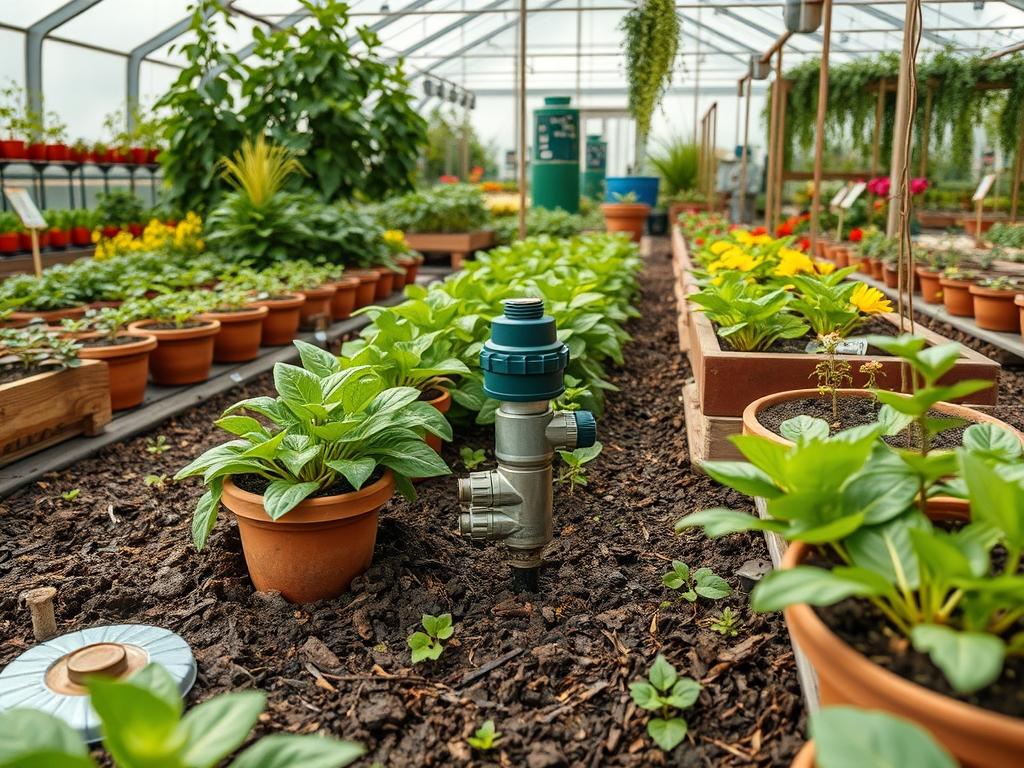
Effective landscape management requires a delicate balance between aesthetic vision and technical precision. In a climate where weather patterns are increasingly unpredictable, the preservation of curb appeal relies heavily on the underlying infrastructure of the site. A professional outdoor environment is not merely a collection of plants; it is a living investment that demands consistent care and resource management. Without a robust system to monitor water distribution, even the most meticulously designed garden can fall victim to hidden leaks or system failures. This is where the integration of Smart Irrigation Flow Sensors becomes essential. These devices act as the central nervous system of a modern irrigation strategy, providing real-time data that protects both the plant health and the structural integrity of the landscape. By monitoring the volume of water moving through PVC piping and identifying deviations from the norm, these sensors prevent the catastrophic erosion and soil saturation that typically follow a line break.
Landscape Design Principles
A successful landscape begins with the fundamental principles of symmetry and visual balance. Designers often use focal points, such as an architectural Japanese Maple or a custom natural stone fountain, to draw the eye and establish a sense of order. To support these visual elements, we implement elevation layers. By using retaining walls and tiered planting beds, we create depth and interest within the vertical plane. However, these layers also complicate drainage and irrigation. Water naturally migrates to the lowest point of the property; therefore, a design must account for subsurface moisture levels to prevent root rot in lower elevations.
Irrigation planning must be integrated into the design phase rather than treated as an afterthought. We organize zones based on the specific needs of the flora, grouping high-intensity water consumers separately from drought-tolerant species. This zoning strategy is only effective if the delivery system is precise. Smart Irrigation Flow Sensors ensure that each zone receives the exact GPM (Gallons Per Minute) required. When a walkway of flagstone pavers or decomposed granite is installed, the irrigation lines often run beneath or alongside them. If a leak occurs in these sensitive areas, the flow sensor detects the surge and shuts down the system before the water can undermine the subbase of the hardscaping. This level of control maintains the symmetry of the design by ensuring no single area becomes over-saturated and unsightly.
Plant and Material Selection
Selecting the right materials and vegetation is a critical step in ensuring the longevity of the outdoor environment. We prioritize native plants that have evolved to thrive in local conditions, as they often require less supplemental water and are more resistant to local pests. The following table outlines a selection of common plant types used in professional landscapes and their specific requirements.
| Plant Type | Sun Exposure | Soil Needs | Water Demand | Growth Speed | Maintenance Level |
| :— | :— | :— | :— | :— | :— |
| Evergreen Boxwood | Full to Partial | Well-drained loam | Moderate | Slow | Medium |
| Purple Coneflower | Full Sun | Poor to fertile | Low | Moderate | Low |
| Blue Star Creeper | Partial Shade | Moist / Humus | High | Fast | Medium |
| Dwarf Fountain Grass | Full Sun | Sandy / Loamy | Low | Fast | Low |
| Hydrangea Macrophylla | Morning Sun | Rich / Consistently moist | High | Moderate | High |
| Skyrocket Juniper | Full Sun | Any well-drained | Low | Moderate | Low |
Materials such as dark hardwood mulch or river rock are used to finish the beds. Mulch should be applied at a depth of 3 inches to effectively suppress weeds and retain soil moisture. When using Smart Irrigation Flow Sensors, the data often reveals exactly how much water the soil is retaining under different mulch types, allowing for even more precise scheduling.
Implementation Strategy
The implementation of a professional garden layout begins with grading. The land must be sloped at a minimum of 2 percent away from any building foundations to ensure proper runoff. Once the grade is established, we install French drains or catch basins in low-lying areas to manage excess precipitation. The irrigation manifold is typically installed in a central, accessible location. It is at this main line that we integrate the Smart Irrigation Flow Sensors. This placement allows the consultant to monitor the total volume of water entering the network.
During the hardscaping phase, we lay the foundation for walkways and patios. We use 4 inches of compacted crush-and-run as a base for most stone installations. If the irrigation lines must cross under a permanent structure, we use a schedule 40 PVC sleeve to allow for future repairs without disturbing the masonry. After the hardscaping is set, edging is installed to create a clean transition between turf and planting beds. Steel edging or poured concrete curbs provide a crisp line that enhances the visual balance of the project. Finally, the planting occurs, with each specimen placed according to the spacing requirements noted in the design plan. The irrigation system is then calibrated to the baseline flow of each individual zone, and the flow sensor is programmed to alert the property manager if these levels fluctuate.
Common Landscaping Failures
One of the most frequent failures in landscape management is improper drainage. When water is allowed to pool around the root ball of a tree, it displaces oxygen, leading to anaerobic conditions and eventual rot. Similarly, root overcrowding occurs when plants are placed too close together in an effort to make a garden look “full” immediately. Over time, these plants compete for resources, and the lack of airflow leads to fungal outbreaks.
Irrigation inefficiencies are equally damaging. Many systems operate on a simple timer, regardless of rain levels or soil saturation. This leads to overwatering, which is not only a waste of a precious resource but also dangerous for the landscape’s health. Smart Irrigation Flow Sensors solve the “silent leak” problem. Many small leaks in polyethylene tubing or drip emitters go unnoticed for months; they do not create a surface puddle but do waste thousands of gallons of water. These sensors detect low-level leaks by comparing real-time flow to historical averages, triggering an immediate shut-off if a discrepancy is found. Without this technology, soil compaction and nutrient leaching become chronic issues that degrade the quality of the topsoil over time.
Seasonal Maintenance
Landscape management is a year-round commitment. In the spring, the focus is on rejuvenation. We remove winter debris, apply a fresh layer of organic mulch, and perform a comprehensive audit of the irrigation system. This includes cleaning the Smart Irrigation Flow Sensors and testing all valves. This is also the time for pre-emergent herbicide applications to prevent weed seeds from germinating.
Summer maintenance centers on moisture management and stress reduction. As temperatures rise, the irrigation schedule must be adjusted. We rely on flow sensor data to ensure that increased watering times do not result in wasted runoff. Autumn is the season for planting and soil health. We core aerate the turf to relieve soil compaction and apply a slow-release nitrogen fertilizer. This is also the time to plant spring-flowering bulbs and many woody shrubs. In winter, the priority shifts to protection. We winterize the irrigation system by blowing out the lines with compressed air to prevent freeze damage. The flow sensors are particularly valuable here, as they can verify that no water remains in the main lines, protecting the sophisticated internal components of the system from expansion and cracking.
Professional Landscaping FAQ
What is the primary benefit of flow sensors?
They provide real-time monitoring to detect leaks and pipe bursts. This prevents property damage, conserves water, and protects expensive plantings by automatically shutting down the system when abnormal flow rates occur during a scheduled watering cycle.
How deep should I bury my irrigation lines?
Main lines should be buried at a depth of 12 to 18 inches to protect them from surface activity and frost. Lateral lines to individual zones can be shallower, typically between 8 and 12 inches deep.
Can flow sensors work with older irrigation controllers?
Many modern sensors require a smart controller to process data. However, some standalone units can be integrated into older systems using a specialized interface, though you may lose the ability to receive mobile alerts without a cloud-connected controller.
How often should mulch be replaced?
Organic mulch should be refreshed annually or bi-annually. As it decomposes, it adds nutrients to the soil. Maintaining a constant 3-inch depth is vital for temperature regulation and moisture retention throughout the harsh summer months.
Why is drainage more important than irrigation?
While plants need water, excess water is more quickly lethal than a temporary drought. Proper drainage ensures that roots have access to oxygen. Without it, the soil becomes toxic, and the entire landscape investment can be lost.