
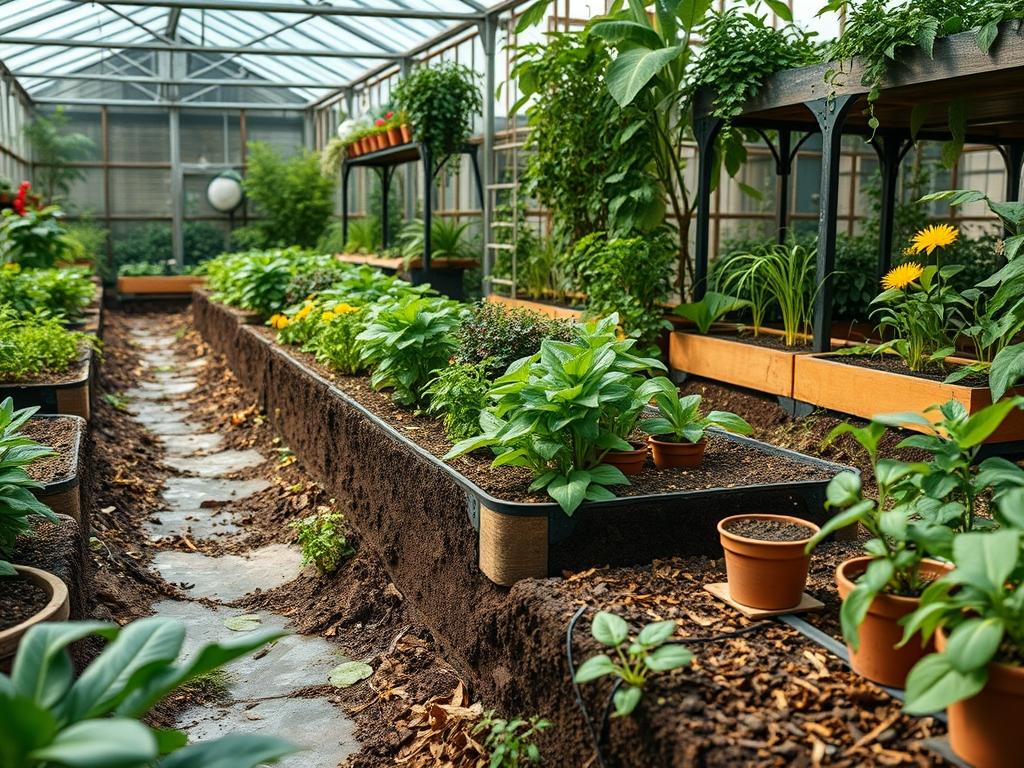
Modern landscape architecture requires a delicate balance between organic aesthetics and technological infrastructure. As homeowners and estate managers seek to increase curb appeal while reducing resource waste, the integration of Smart Garden Connectivity has moved from a luxury addition to a fundamental design requirement. Creating an outdoor environment that thrives across varying microclimates necessitates more than just a keen eye for Japanese Maples or Boxwood hedges. It requires a robust data backbone. Integrating a Long Range Wide Area Network, commonly known as LoRaWAN, allows for the monitoring of hundreds of sensors across a property without the power demands or range limitations of traditional Wi-Fi. This technical evolution enables landscape architects to manage Irrigation, soil health, and lighting systems from a central hub, ensuring that the visual intent of the design is preserved through data-driven maintenance.
The primary landscaping challenge in large-scale residential projects involves managing expansive areas where signal attenuation is high. Dense vegetation, heavy moisture, and stone Retaining Walls can cripple standard wireless signals. This is precisely where LoRaWAN excels. By operating on sub-gigahertz frequencies, this protocol penetrates thick foliage and masonry with ease. When planning a connectivity map for a smart garden, one must consider the placement of a central LoRaWAN Gateway at a high Elevation, perhaps disguised within an architectural chimney or a tall Arbor. This allows for the deployment of low-power soil moisture probes, valve controllers, and ambient light sensors that can run for years on a single battery. The goal is to create a seamless experience where technology serves the flora, preventing the over-saturation of soil or the unnecessary operation of high-voltage landscape lighting.
Functionality in the modern outdoor space is defined by its ability to react to environmental shifts in real time. A traditional timer-based Irrigation system lacks the nuance required to handle a sudden heatwave or an unexpected frost. By leveraging Smart Garden Connectivity, designers can create zones that respond to specific Evapotranspiration rates. This level of control ensures that a sensitive Azalea garden receives exactly the cubic centimeters of water it needs, while a nearby Xeriscaped rock garden remains dry. This precision not only protects the financial investment in plant material but also reinforces the structural integrity of the site by preventing excessive runoff and Soil Erosion near the foundation or hardscaped pathways.
Landscape Design Principles
Effective landscape design begins with the principle of symmetry and the establishment of clear Focal Points. In a smart-connected environment, these focal points are often enhanced by intelligent lighting and water features that activate based on movement or scheduled scenes. To achieve visual balance, designers utilize Elevation layers, placing taller specimens like Lombardy Poplars or Cypress at the periphery to create a sense of vertical scale and privacy. These boundary lines also serve as ideal locations for hidden gateway repeaters, ensuring that the Smart Garden Connectivity extends to the very edges of the property line.
Symmetry does not always imply a mirror image but rather a balanced distribution of visual weight. For instance, a heavy Flagstone patio on one side of a lawn can be balanced by a dense cluster of Hydrangeas on the other. Beneath the surface, the planning must be equally rigorous. Irrigation lines should be mapped alongside low-voltage power cables in a way that allows for easy access without disturbing the root systems of established trees. This requires a tiered approach to site layout: the foundational layer of Grading and Drainage, the structural layer of Retaining Walls and Walkways, and the final aesthetic layer of softscaping.
Connectivity planning should follow these layers. A moisture sensor placed in a high-visibility area must be discreetly housed, but its data must be accessible. The design of Walkways should include conduit pathways under the gravel or stone to allow for future technological upgrades. By treating connectivity as a core design principle similar to scale or rhythm, the landscape architect ensures that the property can evolve. The result is a landscape that feels timeless and natural while operating with the precision of a high-tech facility.
Plant and Material Selection
Selecting the right materials is the cornerstone of a sustainable landscape. In a smart-governed garden, we categorize plants not only by their beauty but by their sensor requirements. The following table provides a breakdown for common selections in a multi-zoned estate.
| Plant Type | Sun Exposure | Soil Needs | Water Demand | Growth Speed | Maintenance Level |
| :— | :— | :— | :— | :— | :— |
| English Lavender | Full Sun | Well-drained | Low | Moderate | Low |
| Hosta | Shade | Rich, Loamy | Moderate | Slow | Low |
| River Birch | Partial Sun | Moist, Acidic | High | Fast | Moderate |
| Dwarf Boxwood | Full to Part | Neutral pH | Moderate | Slow | High (Pruning) |
| Blue Fescue | Full Sun | Sandy/Rocky | Low | Moderate | Very Low |
| Creeping Thyme | Full Sun | Poor to Fair | Low | Fast | Low |
When selecting hardscape materials, consider the impact of Crushed Granite, River Rock, or Cedar Mulch on the local moisture retention. Cedar Mulch applied at a depth of 3 inches is excellent for suppressing weeds and retaining water, which the smart sensors will reflect in lower irrigation triggers. Conversely, dark Slate or Basalt stones can increase soil temperature, requiring the connectivity system to adjust cooling sprays more frequently during the peak of summer.
Implementation Strategy
The transition from a design on paper to a physical landscape involves a specific sequence of operations. This begins with Grading. Proper slope is essential to ensure that water moves away from the home and toward designated Drainage basins or Rain Gardens. A grade of at least 2 percent is standard for turf areas to prevent standing water. Once the topography is set, the installation of the Retaining Walls and Hardscaping components provides the skeleton of the garden.
The next step is the installation of the Irrigation backbone. This includes the Valve Manifold, the main line pipes, and the lateral lines leading to individual zones. During this phase, integrate the Smart Garden Connectivity hardware. Place Moisture Probes at a depth of 6 to 12 inches depending on the root zone of the specific plants in that area. For turf, a shallower depth of 4 inches is appropriate. Ensure that all wiring is buried at least 18 inches deep or housed in PVC Conduit to prevent accidental damage from aeration or shovel strikes.
After the infrastructure is tested, the planting begins. Start with the largest specimens first to ensure root balls have adequate space. Once the trees and shrubs are in place, apply the Edging to define the beds. Finally, spread the Mulch to a consistent depth. The final step is the calibration of the LoRaWAN sensors. This involves syncing each node with the gateway and setting the threshold triggers for automated tasks, such as turning on the drip system when soil moisture drops below 15 percent.
Common Landscaping Failures
One of the most frequent errors in landscape management is Soil Compaction. This often occurs during construction when heavy machinery is driven over planting areas. Compacted soil lacks the pore space necessary for air and water to reach the roots, leading to stunted growth and eventual plant death. Another critical failure involves Root Overcrowding. If a designer fails to account for the mature width of a Spruce or Oak, the trees will eventually compete for nutrients and light, causing the interior branches to die back and ruin the aesthetic of the screen.
Irrigation inefficiencies also plague many gardens. Over-watering is actually more common than under-watering in many professional designs, leading to root rot and fungal infections. Without Smart Garden Connectivity, it is difficult to know if the soil 3 inches below the surface is saturated even if the top looks dry. Furthermore, poor Drainage planning can result in the “bathtub effect” where a planting hole acts as a reservoir for water, drowning the new plant. Proper spacing, the use of Perforated Drain Pipe, and the strategic use of sensors can mitigate these risks before they become costly replacements.
Seasonal Maintenance
To maintain the architectural integrity of a landscape, a seasonal schedule is mandatory. In Spring, the focus is on Pruning dead wood from shrubs and applying a fresh layer of Mulch to maximize moisture retention. This is also the time to test the LoRaWAN Gateway and replace batteries in any remote sensors. Summer requires the most active water management. The smart system should be monitored to ensure it is reacting to high heat days by increasing the frequency of short, targeted watering cycles rather than one long soak which can lead to runoff.
Autumn is for leaf clearance and the preparation of the soil. As deciduous trees like Maples drop their foliage, it is important to clear the sensors to ensure accuracy. This is also the ideal time for Aeration of the turf to combat Soil Compaction. Finally, in Winter, the landscape enters dormancy. Disconnect any above-ground Irrigation components in regions prone to freezing. The smart system can remain active to monitor ground temperature and provide data on whether the root zones of sensitive species are reaching critical frost depths.
Professional Landscaping FAQ
How does LoRaWAN improve garden management?
It provides long-distance connectivity for sensors without requiring high power. This allows for precise monitoring of soil moisture and environmental conditions across large properties, leading to healthier plants and significantly reduced water waste.
What is the best depth for mulch?
For most ornamental beds, a depth of 3 inches is ideal. This thickness suppresses weeds and retains moisture effectively. However, you must avoid mounding mulch against the trunks of trees, which can cause bark rot.
How do I prevent soil compaction?
Avoid walking on or driving over garden beds, especially when the soil is wet. Use designated Walkways and add organic matter like compost to improve soil structure and increase the pore space between soil particles.
Why is drainage more important than irrigation?
While plants need water, standing water kills roots by depriving them of oxygen. Proper Grading and Drainage channels ensure that excess water exits the site, preventing root rot and structural damage to hardscaping features.
What are the benefits of native plants?
Native Plants are adapted to the local climate and soil conditions. They typically require less water and fewer chemical inputs once established. They also support local biodiversity and integrate more seamlessly into the surrounding natural ecosystem.