
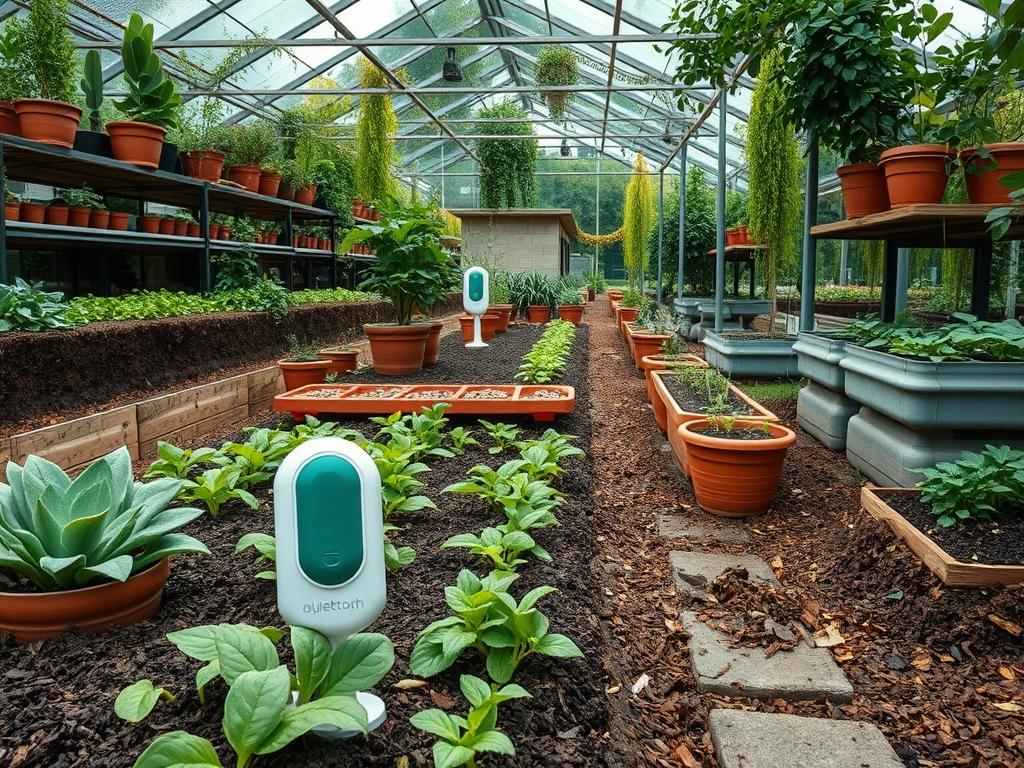
Modern landscape architecture requires a delicate balance between artistic vision and biological reality. While the aesthetic appeal of a property relies on symmetry and structural focal points, the longevity of that beauty is entirely dependent on the health of the living soil and the hydration levels of the root zones. The primary challenge for any high end outdoor environment is the invisible variation in microclimates. One corner of a yard might retain excessive moisture due to a slight depression in the Grading, while another area ten feet away experiences rapid evaporation because of wind tunnels or reflected heat from Retaining Walls. To bridge this gap, Bluetooth Garden Sensors have become indispensable tools for the modern landscape consultant. These devices offer real time data on soil moisture, ambient temperature, and sunlight intensity, allowing for a precise management strategy that protects the initial capital investment of a major planting project. By integrating these sensors into the initial planning phases, we move away from speculative irrigation and toward a data driven approach that enhances curb appeal while prioritizing sustainability and water conservation.
Landscape Design Principles
Effective landscape design begins with a clear understanding of spatial hierarchy and the functional needs of the inhabitants. Symmetry and focal points often dominate the initial sketches, but the long term success of these features depends on ecological compatibility. For instance, a series of Emerald Green Arborvitae planted as a privacy screen must have uniform growth to maintain visual balance. If one section of the soil is more compacted than another, the sensors will reveal discrepancies in moisture absorption long before the foliage begins to yellow. This allows the designer to adjust the Irrigation System or soil composition during the installation phase rather than reacting to a failing plant later.
Elevation layers constitute another pillar of professional design. By using Retaining Walls and terraced beds, a landscape architect creates visual depth and interest. However, elevation changes significantly alter drainage patterns. Water naturally migrates toward the lowest points, often saturating the roots of plants at the base of a slope. Placing Bluetooth Garden Sensors at varying elevations provides a map of how water moves through the site. This data informs the placement of Catch Basins and French Drains, ensuring that the structural integrity of the hardscape remains intact and the softscape does not suffer from waterlogged conditions.
Walkways and hardscaping also play a role in environmental mapping. Stone or concrete surfaces absorb heat throughout the day and radiate it back toward nearby plants at night. This “heat island” effect can desiccate sensitive species like Hydrangeas or Hostas. By utilizing sensors near these thermal masses, we can determine the exact cooling requirements and choose species that are resilient to fluctuating temperatures. Visual balance is not just about the size of the plants, it is also about their vitality. A vibrant, green garden with data backed health will always look more balanced than a symmetrical design where several specimens are struggling to survive.
Plant and Material Selection
| Plant Type | Sun Exposure | Soil Needs | Water Demand | Growth Speed | Maintenance Level |
| :— | :— | :— | :— | :— | :— |
| Japanese Maple | Partial Shade | Well-drained, Acidic | Moderate | Slow | Moderate |
| Boxwood | Full Sun to Shade | Loamy, Neutral pH | Low | Slow | Moderate |
| Lavender | Full Sun | Sandy, Alkaline | Low | Moderate | High |
| River Birch | Full Sun | Moist, Clay-heavy | High | Fast | Low |
| Coneflower | Full Sun | Poor to Average | Low | Moderate | Minimal |
| Dwarf Mondo Grass | Full Sun to Shade | Moist, Well-drained | Moderate | Slow | Low |
Implementation Strategy
The successful implementation of a landscape plan requires a systematic approach to site preparation and technology integration. The first step involves professional Grading. Before any plants are placed, the soil must be sloped away from the home foundation at a minimum of a 2 percent grade to prevent structural damage. Once the general contours are established, Bluetooth Garden Sensors should be temporarily placed in key zones to measure the baseline environmental conditions. This “testing phase” allows the landscaper to confirm that the planned species are actually suited for their specific locations.
Next comes the hardscaping phase. During the excavation for walkways and Retaining Walls, it is essential to install PVC Conduit for future electrical needs or expanded irrigation lines. Once the hardscape is set, soil amendment begins. Most residential sites suffer from heavy compaction due to construction machinery. Using a Tiller and incorporating organic matter such as Peat Moss or Compost improves air porosity. When planting, each hole should be dug at least twice as wide as the root ball but no deeper than the original container depth. This prevents the plant from settling too deep, which often leads to crown rot.
After the plants are in the ground, a layer of Hardwood Mulch should be applied at a depth of 3 inches. This preserves moisture and suppresses weeds, but it can also mask the soil’s true condition. Here, the Bluetooth Garden Sensors are permanently installed at the root zone depth, usually 4 to 6 inches deep. The sensors should be synced to a central gateway or a mobile device to establish a “dashboard” of the garden’s health. Finally, Edging should be installed to create a clean transition between lawn areas and planting beds, preventing grass from encroaching on the sensitive sensor zones and the base of the new plants.
Common Landscaping Failures
The most common failure in high end landscaping is a lack of proper drainage. Many homeowners assume that more water is always better, but stagnant water in the root zone is the leading cause of Root Rot and fungal pathogens like Phytophthora. Without Bluetooth Garden Sensors, it is nearly impossible to tell if the soil six inches down is a swamp while the surface appears dry. Soil compaction is another silent killer. When soil is packed too tightly, oxygen cannot reach the root system, causing the plant to slowly suffocate. Heavy foot traffic or the use of improper equipment during installation are usually the culprits.
Improper spacing and root overcrowding also plague many projects. Designers often want a “full” look immediately, so they plant specimens too close together. As the plants mature, they compete for the same limited pool of nutrients and water. This competition stresses the plants and makes them more susceptible to pests. Sensors can detect the resulting drop in soil fertility and moisture levels long before visual symptoms appear. Additionally, irrigation inefficiencies, such as misaligned Sprinkler Heads or clogged Drip Emitters, can lead to uneven growth. A sensor placed at the end of an irrigation line is an excellent way to verify that the entire zone is receiving the intended volume of water.
Seasonal Maintenance
Seasonal care is vital for protecting the longevity of both the equipment and the ecosystem. During the spring, focus on sensor recalibration and battery replacement. As the ground thaws, check for frost heave which might have pushed Bluetooth Garden Sensors or Irrigation Pipes closer to the surface. Apply a fresh layer of Mulch and begin monitoring the moisture levels as the new growth begins to pull more water from the soil.
Summer maintenance is dominated by heat management. During periods of extreme temperatures, use the sensor data to implement “deep watering” cycles. Rather than watering for fifteen minutes every day, it is better to water for an hour once or twice a week to encourage roots to grow deeper into the cooler soil layers. Check the probes for mineral buildup from hard water, which can interfere with the accuracy of the moisture readings. Use a soft cloth and Rubbing Alcohol to clean the metal contacts on the sensor units.
Autumn brings the transition to dormancy. As the days shorten, the water requirements of most plants drop significantly. Use your sensors to prevent overwatering during this period, as excess moisture in the fall can lead to fungal issues as temperatures drop. This is also the time to apply a fall fertilizer and measure the soil’s Electrical Conductivity (EC) to ensure nutrient levels are sufficient for winter survival.
Winter landscape management involves preparing for the freeze. If your Bluetooth Garden Sensors are not rated for sub zero temperatures, they should be removed, cleaned, and stored indoors. For those that stay in the ground, ensure they are well covered with a thick layer of straw or Mulch to insulate the internal electronics. Monitor the moisture level during winter droughts, as evergreens can still lose water through their needles and may require a manual watering session on warmer days to prevent winter burn.
Professional Landscaping FAQ
How many sensors do I need for a standard backyard?
Typically, you should place one sensor per irrigation zone or microclimate. For a standard backyard, three to five sensors usually cover the high value specimens, sunny patches, and low lying areas where water collects.
Can these sensors connect to my existing irrigation timer?
Many high end models can bridge to smart irrigation controllers. This allows the system to skip a scheduled watering cycle if the sensors detect that the soil already has sufficient moisture, saving water and preventing root rot.
How deep should I bury the Bluetooth garden sensors?
Most sensors work best when the active probes are placed at the depth of the active root zone. For perennials, this is usually 4 inches, while for larger shrubs and trees, you may need to go 8 to 12 inches deep.
Do sensors work in heavy clay or rocky soil?
Yes, but you must ensure firm contact between the soil and the sensor probes. In rocky soil, use a Soil Probe to create a pilot hole and backfill with some potting soil to ensure the sensor gets an accurate reading.
How long do the batteries usually last in these devices?
Most professional grade sensors use Bluetooth Low Energy and can last for an entire growing season of 6 to 9 months. It is best practice to replace batteries every spring during your initial garden cleanup and setup.