
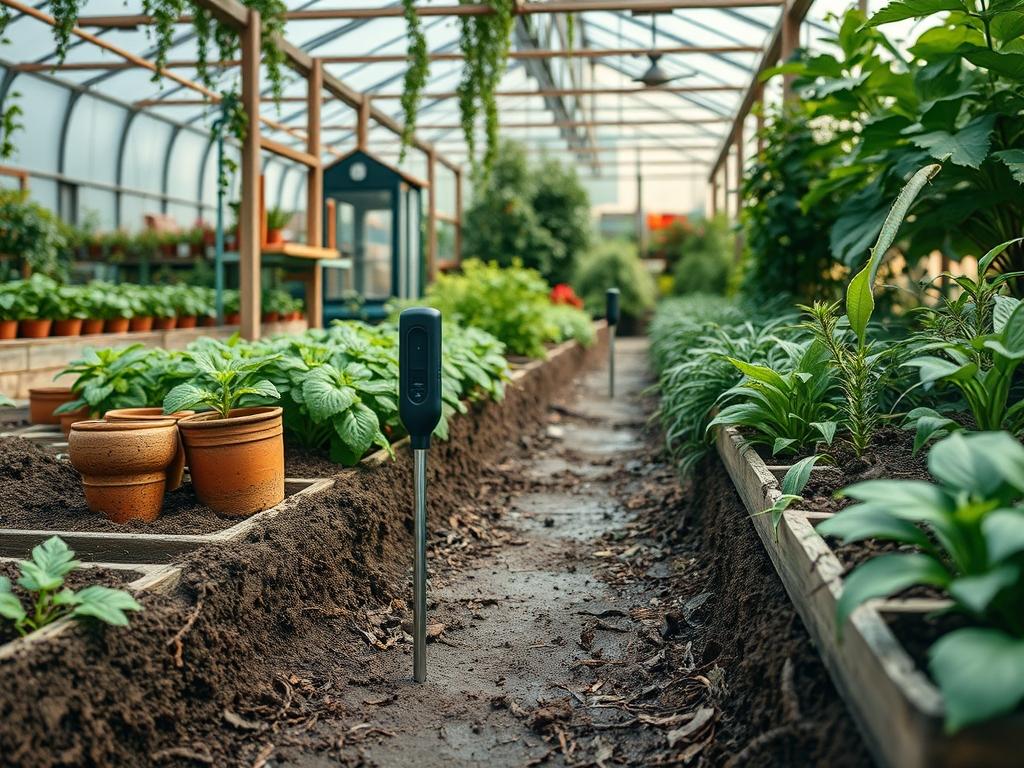
Precision in modern landscape architecture relies increasingly on the integration of data and biological reality. While the aesthetic appeal of a property identifies its value, the longevity of that investment depends on the health of the soil and the efficiency of the hydration systems. Incorporating Smart Garden Soil Probes into a professional landscape design allows for a level of micro-management that was previously impossible. These devices provide real-time data on moisture, temperature, and nutrient levels, yet their effectiveness is entirely dependent on proper calibration. Without accurate baseline readings, even the most expensive Irrigation Controllers can fail to deliver the specific needs of a diverse plant palette. This technological layer ensures that the outdoor environment remains functional and vibrant, reducing water waste while maximizing the health of high-value specimens.
The challenge in high-end landscaping often involves managing disparate microclimates within a single property. A north-facing slope with heavy clay soil requires a different management profile than a sun-drenched terrace with sandy loam. Modern probes bridge this gap, but they must be tuned to the specific geological characteristics of the site. When a landscape architect designs for curb appeal, they are creating a visual narrative that must be sustained through varying environmental stressors. Calibrating your sensors against the actual physical state of the soil ensures that the data informs proper decision-making. This process prevents the common pitfall of over-watering, which leads to root rot and fungal pathogens, or under-watering, which results in leaf scorch and stunted growth.
Landscape Design Principles
Successful landscape design rests on the mastery of symmetry and the strategic placement of focal points. When planning a layout, the architect must consider how elevation layers interact with the horizon. Using Retaining Walls or tiered garden beds can create a sense of depth, but these structural changes alter how water moves through the earth. Probes should be placed at varying depths and locations to monitor these elevation changes. A focal point, such as a Japanese Maple, may require precise moisture levels that differ from the surrounding groundcover. By mapping the site through a grid of sensors, the designer can ensure that visual balance is maintained through uniform plant health rather than just structural placement.
Irrigation planning is perhaps the most critical component of the design phase. A well-designed system incorporates Drip Emitters, Rotary Sprinklers, and Subsurface Irrigation tailored to specific zones. Calibration of Smart Garden Soil Probes within these zones allows the system to adjust for evapotranspiration rates and soil permeability. Symmetrical plantings, such as twin rows of Boxwood Hedge, lose their impact if one side receives more water than the other due to a slight grade change. Sensors placed in both locations, properly calibrated to the same baseline, allow the irrigation logic to compensate for these environmental variables.
Visual balance also extends to the transition between hardscaping and softscaping. Walkways and patios create heat islands that can rapidly dry out adjacent soil. When installing Pavers or Flagstone, it is essential to place sensors near the edges to monitor the thermal impact on the plant roots. The calibration process here must account for the reflected heat and the potential for soil compaction that occurs during the construction of Walkway Bases. By understanding the specific needs of each zone, the landscape consultant can create an environment that looks effortless but is actually governed by rigorous data.
Plant and Material Selection
Selecting the right materials involves more than just picking beautiful flowers; it requires a deep understanding of how different species interact with their environment. The following table provides a breakdown of common plants used in high-end professional landscapes and their environmental requirements.
| Plant Type | Sun Exposure | Soil Needs | Water Demand | Growth Speed | Maintenance Level |
| :— | :— | :— | :— | :— | :— |
| English Lavender | Full Sun | Well-Drained | Low | Moderate | Low |
| Hydrangea Macrophylla | Part Shade | Rich Organic | High | Fast | Medium |
| Emerald Green Arborvitae | Full/Part Sun | Loamy/Moist | Moderate | Moderate | Low |
| Japanese Forest Grass | Full Shade | Humus Rich | Moderate | Slow | Low |
| Dwarf Fountain Grass | Full Sun | Adaptable | Low | Fast | Medium |
| Hosta Sieboldiana | Full Shade | Moist Clay | Moderate | Moderate | Low |
When selecting plants, it is vital to match the Smart Garden Soil Probes to the root zone of the selected species. For instance, English Lavender requires sensors that are sensitive to over-saturation, as the plant is highly susceptible to root rot in poorly drained soils. Conversely, the Hydrangea Macrophylla needs sensors that can trigger an irrigation event before the plant experiences wilting, which can cause permanent damage to the blooms. Using high-quality Organic Mulch and Topsoil also changes how these sensors should be calibrated, as the organic matter retains moisture differently than mineral soil.
Implementation Strategy
Implementing a professional garden layout begins with grading and site preparation. Proper drainage must be established before any plants go into the ground. A Grade Stake and String Line are often used to ensure a 2 percent slope away from structural foundations. Once the grading is complete, Smart Garden Soil Probes should be installed during the planting process rather than as an afterthought. This ensures the sensors are placed at the correct depth relative to the Root Ball of the new specimens. For large trees, probes should be placed at the edge of the Drip Line to monitor the expansion of the root system over time.
Edging and mulch depth play a significant role in sensor accuracy. A clean edge created with a Spade or Manual Edger prevents grass from encroaching on the sensor site, which could skew the data with surface-level moisture readings. A consistent layer of Bark Mulch or Wood Chips, typically 3 inches deep, helps stabilize soil temperature. The sensors should be calibrated after the mulch is applied, as the insulation layer changes the rate of moisture evaporation. Hardscaping elements like Boulder Outcroppings or Steel Edging should be mapped so that probes are not placed in “rain shadows” created by these structures.
Finally, the calibration itself should involve a two-point check. First, test the probe in a bucket of distilled water to check the “saturated” reading. Second, test it in a sample of air-dried site soil to establish the “dry” baseline. Most professional-grade apps allow you to input these offsets manually. This site-specific tuning ensures that the Irrigation Controller receives a true representation of the available water in the specific texture of your garden soil.
Common Landscaping Failures
The most frequent failure in landscape management is the misunderstanding of drainage and soil compaction. Many homeowners install beautiful plants only to have them fail within a year because the soil was compacted by heavy machinery during construction. Compacted soil lacks the pore space necessary for oxygen and water movement, which causes Smart Garden Soil Probes to give false readings of high moisture when the roots are actually starving for air. Using a Broadfork or Core Aerator before planting can mitigate this issue, but the probes must be monitored for “ponding” effects that indicate a sub-surface drainage problem.
Root overcrowding and improper spacing are also significant issues. When plants are placed too close together to achieve an immediate “full” look, they compete for resources. In these scenarios, a single probe may not accurately reflect the stress levels of all plants in a cluster. Furthermore, irrigation inefficiencies often stem from clogged Nozzles or misaligned Spray Heads. If a sensor is placed in a spot that receives double-coverage from the sprinklers, it will shut off the system while other areas remain bone dry. Strategic placement and regular physical inspections are required to supplement the digital data provided by the sensors.
Seasonal Maintenance
Maintenance requirements shift as the seasons change, and so do the calibration needs of your technology. In the spring, the focus is on awakening the garden. This involves testing the Smart Garden Soil Probes for battery life and sensor drift after a cold winter. Spring is the time to add Slow-Release Fertilizer, which can temporarily affect the salinity readings of your sensors. Recalibrating the probes after fertilizing ensures that the conductivity readings do not provide false moisture data.
During the summer, the primary goal is heat management. Ensure that probes are buried deep enough to avoid the extreme fluctuations of surface temperature. Autumn requires a shift toward preparing plants for dormancy. You should reduce irrigation frequency, and the sensors should be used to monitor the soil for sufficient moisture before the ground freezes. Finally, in winter, if you live in a climate with hard freezes, it is often best to remove the probes or ensure they are rated for sub-zero temperatures. Storing them in a dry, indoor environment after cleaning the Electrodes with Steel Wool will extend their lifespan for several years.
Professional Landscaping FAQ
How often should I recalibrate my soil probes?
You should calibrate your Smart Garden Soil Probes at the start of every growing season. Changes in soil structure, organic matter decomposition, and mineral accumulation from fertilizers can cause sensor drift over time, leading to inaccurate moisture and nutrient readings.
Where is the best place to install a moisture sensor?
Install the probe in the active root zone of your most sensitive plants. Avoid placing them too close to Irrigation Heads or at the very bottom of a slope where water naturally pools, as this will result in skewed data.
Can mulch interfere with smart probe readings?
Mulch does not interfere with the sensor itself, but it significantly changes the evaporation rate of the soil. Always ensure the probe is pushed through the mulch layer and fully seated in the mineral soil for the most accurate moisture measurements.
Why does my probe show high moisture after I fertilize?
Many sensors measure moisture via electrical conductivity. Because Fertilizer increases the salt content in the soil, it also increases conductivity. High-quality probes allow you to calibrate for these salinity spikes to ensure your moisture data remains reliable and accurate.
Is it necessary to use multiple probes for a small yard?
Yes, because most yards contain different microclimates. A shaded area under a Pergola has vastly different water needs than a sun-exposed flower bed. Using multiple probes ensures that the specific requirements of each distinct zone are met effectively.