
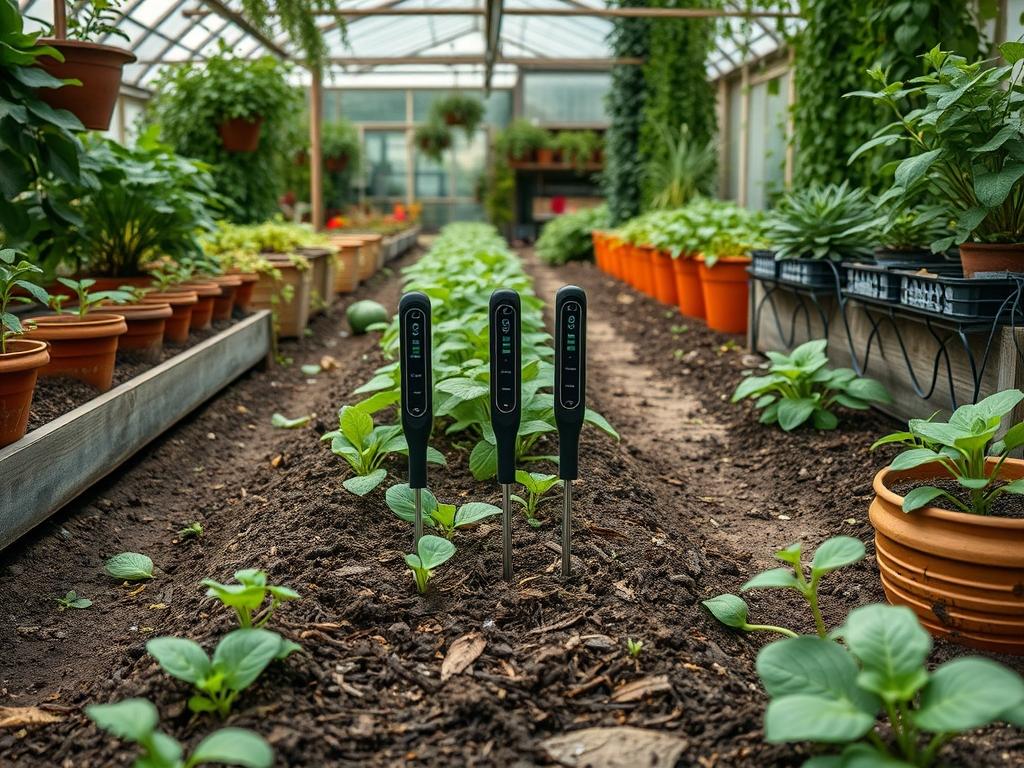
Modern landscape architecture is a delicate synthesis of aesthetic vision and biological precision. Property owners often invest thousands of dollars in mature specimen trees and intricate perennial borders, only to watch their investment dwindle due to invisible soil imbalances. The traditional approach to gardening relied on broad observations or infrequent lab tests that provided a snapshot of the past rather than a roadmap for the future. Today, the integration of Smart Soil Nutrient Probes into residential and commercial designs has shifted the paradigm from reactive maintenance to proactive management. These devices provide real-time data on nitrogen, phosphorus, potassium, and pH levels, allowing a landscape architect to fine tune the environment for specific botanical requirements. This level of control is particularly vital when dealing with varying microclimates across a single estate, where the soil profile near a concrete retaining wall may differ drastically from a low lying drainage basin.
The primary challenge in any high end landscape project is achieving a consistent aesthetic while maneuvering through erratic climate patterns. Curb appeal relies on the health and uniformity of plant life, yet soil health is rarely uniform. By deploying Smart Soil Nutrient Probes, contractors can identify localized nutrient leaching or salt accumulation before visual symptoms like chlorosis or stunted growth appear. This data-driven approach ensures that the outdoor space functions as a living machine, where irrigation and fertilization are delivered precisely when and where they are needed. This efficiency not only preserves the beauty of the site but also reduces the environmental footprint by preventing nitrogen runoff into local waterways.
Landscape Design Principles
A successful landscape begins with a commitment to structural hierarchy and visual balance. Symmetry is a powerful tool in formal designs, such as parterre gardens or entries lined with Italian Cypress, where any deviation in growth rate becomes an immediate eyesore. When one side of a symmetrical planting fails to thrive, it disrupts the entire composition. Using localized sensors allows a gardener to identify if one side of a driveway has lower nutrient bioavailability than the other, enabling site-specific corrections that preserve the intended mirroring effect.
Focal points serve as the anchors of a garden, often consisting of high value specimens like Japanese Maples or ornamental sculptures framed by lush greenery. These areas require the highest level of monitoring to ensure the soil environment remains pristine. Furthermore, layering elevations through the use of Retaining Walls and terraced beds adds depth but complicates moisture and nutrient retention. Elevated beds dry out faster and leach minerals more rapidly than ground level plantings. Integrating sensors at multiple elevation layers provides a comprehensive view of how water and nutrients migrate through the vertical profile of the property.
Walkways and hardscaping elements must be planned alongside the subterranean infrastructure. A well designed path of Bluestone or Pea Gravel should not only guide the visitor but also protect the delicate root zones of nearby plants. During the design phase, irrigation planning must account for the specific needs of different “hydrozones,” which are groups of plants with similar water and nutrient requirements. Smart Soil Nutrient Probes act as the nervous system for these zones, communicating with automated irrigation controllers to adjust cycles based on actual soil conductivity and moisture tension rather than a static timer.
Plant and Material Selection
| Plant Type | Sun Exposure | Soil Needs | Water Demand | Growth Speed | Maintenance Level |
| :— | :— | :— | :— | :— | :— |
| English Boxwood | Full Sun to Part Shade | Well-Drained, Neutral pH | Moderate | Slow | High |
| Lavender | Full Sun | Gritty, Alkaline Soil | Low | Medium | Medium |
| Hydrangea | Part Shade | Rich, Acidic Soil | High | Fast | Medium |
| Hostas | Full Shade | Loamy, Moist Soil | Moderate | Fast | Low |
| Creeping Thyme | Full Sun | Poor, Sandy Soil | Low | Fast | Low |
| Dwarf Alberta Spruce | Full Sun | Consistently Moist | Moderate | Very Slow | Medium |
Implementation Strategy
The transition from a design on paper to a physical landscape requires a systematic implementation strategy that prioritizes site preparation. Before the first Shovel enters the ground, the site must be graded to ensure proper surface drainage. Improper grading leads to standing water, which creates anaerobic soil conditions and effectively suffocates root systems. Once the subgrade is established, the installation of Drainage Pipes or French Drains may be necessary in areas with heavy clay content.
After the structural groundwork is complete, the focus shifts to soil preparation. This involves tilling in high quality Compost and organic matter to a depth of at least 12 Inches. During this phase, the Smart Soil Nutrient Probes should be installed at varying depths, typically at 6 Inches for turf and 18 Inches for larger shrubs and trees. These probes must be positioned in representative areas of each planting bed to ensure the data reflects the average conditions of the zone.
Edging is the next critical step, providing a clean boundary between lawn areas and garden beds. Materials such as Steel Edging or Corten Steel offer a modern, durable transition that prevents aggressive turf grasses from encroaching on delicate perennials. Once the plants are in the ground, a 3-Inch Layer of Hardwood Mulch should be applied to suppress weeds and retain moisture. The sensors will monitor the effectiveness of this mulch layer by tracking how quickly soil moisture evaporates and how nutrient availability changes as the organic mulch decomposes into the topsoil.
Common Landscaping Failures
One of the most frequent failures in professional landscaping is ignore soil compaction. During construction, heavy machinery compresses the earth, destroying the pore spaces required for air and water movement. This leads to high bulk density where even the most expensive Smart Soil Nutrient Probes will show high nutrient levels that the plant simply cannot access because the roots are unable to penetrate the soil. Compacted soil also increases the risk of root rot, as water sits on the surface or in the upper few inches without draining.
Improper spacing is another common pitfall. Designers often plant for immediate impact, placing Arborvitae or Privet too close together to create an instant screen. Within a few years, these plants compete for the same limited pool of nutrients and sunlight, leading to dieback in the lower branches. Overcrowding also restricts airflow, which invites fungal diseases like powdery mildew.
Irrigation inefficiencies often stem from a “set it and forget it” mentality. Over-irrigation is just as damaging as a drought, particularly in heavy soils. It leaches valuable nitrogen deep into the subsoil, beyond the reach of the root zone, and can lead to the accumulation of salts which burn the foliage. By monitoring the soil in real time, a consultant can see exactly when the soil reaches field capacity and turn off the water, saving resources and protecting plant health.
Seasonal Maintenance
Spring is the season of reactivation. As the ground thaws, the primary task is to assess any winter damage and check the calibration of all soil sensors. This is the optimal time for an initial application of Slow-Release Fertilizer based on the data provided by the probes. If the sensors indicate a low pH, an application of Garden Lime may be necessary to sweeten the soil before the peak growing season begins.
Summer maintenance focuses on moisture management and stress reduction. High temperatures accelerate the rate of evaporation and nutrient uptake. During this time, the Smart Soil Nutrient Probes become essential for identifying localized dry spots that the overhead irrigation might be missing. Pruning should be kept to a minimum during extreme heat to avoid further stressing the plants, though light deadheading of flowers can encourage a second flush of blooms.
Autumn is the window for soil remediation and planting. As the growth of the foliage slows, the roots continue to grow, making it an excellent time to add Bone Meal or phosphorus-rich amendments to encourage strong root development before dormancy. It is also the time to apply a fresh layer of Mulch to insulate the root zones against the coming freeze.
Winter identifies the structural integrity of the landscape. While the plants are dormant, the focus shifts to protecting against heavy snow loads and salt spray from nearby roads. Any Burlap Wraps or Anti-Desiccant Sprays should be applied to sensitive evergreens. Data from the sensors during the winter can help a landscape architect understand how the frost line affects the soil and whether the drainage systems are functioning during mid-winter thaws.
Professional Landscaping FAQ
How do smart soil probes improve plant longevity?
By monitoring N-P-K levels in real time, these probes allow for precise nutrient delivery. This prevents the physiological stress caused by over-fertilization or nutrient deficiencies, ensuring plants remain vigorous and resistant to pests and diseases throughout their natural lifespan.
What is the best depth for sensor placement?
For turf and shallow-rooted perennials, a depth of 6 inches is ideal. For ornamental trees and large shrubs, sensors should be placed at 18 inches to monitor the deep root zone where moisture and nutrient storage are most critical.
Can these sensors integrate with existing irrigation systems?
Yes, most professional smart sensors use Wi-Fi or LoRaWAN to connect to smart irrigation controllers. This allows the system to automatically bypass scheduled watering if the soil moisture and conductivity levels indicate that the plants are already at optimal capacity.
How many probes are needed for a standard residential lot?
Generally, one probe per hydrozone or distinct planting bed is recommended. For a standard quarter-acre lot with front and back gardens, roughly 4 to 6 probes provide a comprehensive map of the soil health across different microclimates and elevations.
Do these devices require frequent battery changes?
Most modern smart probes are designed for high efficiency, with batteries lasting between 1 to 2 years depending on the frequency of data transmission. Many professional models also feature solar panels to provide continuous power throughout the entire growing season.