
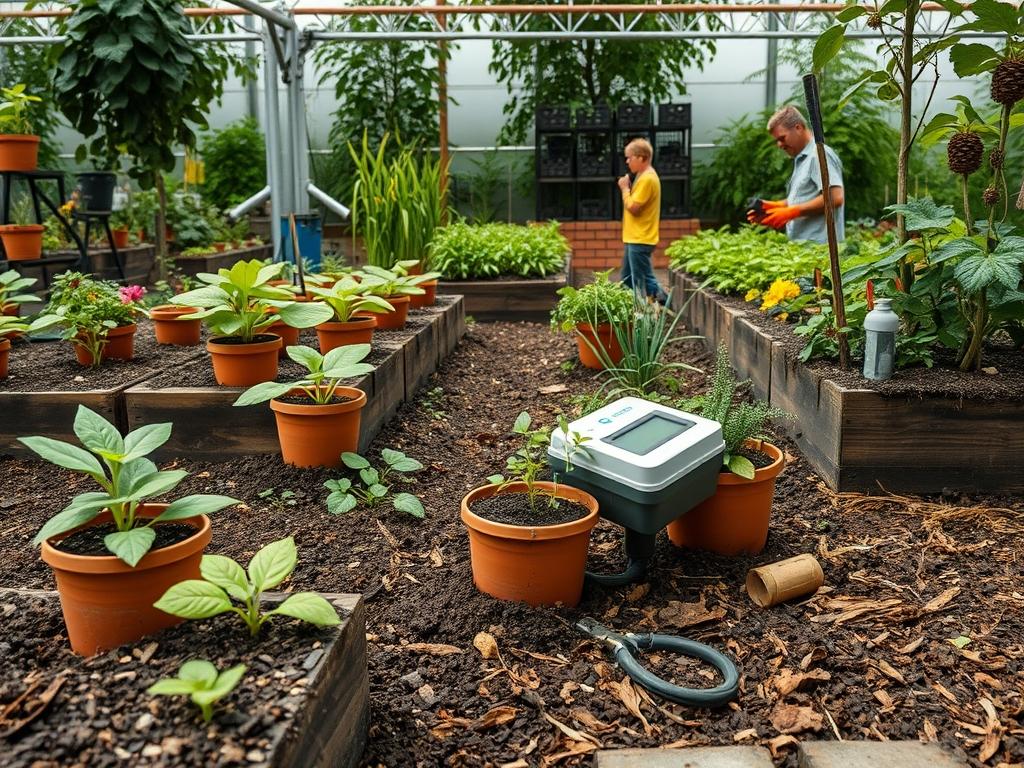
Maintaining a high-end landscape requires a delicate balance between aesthetic perfection and ecological responsibility. Modern curb appeal is no longer just about the symmetry of a hedge or the vibrance of a lawn; it is about the precision of the infrastructure supporting those elements. For many property owners, the greatest threat to a thriving outdoor environment is not drought, but the silent damage of overwatering. Excessive irrigation saturates the root zone, displaces necessary oxygen, and invites a host of fungal pathogens that can compromise even the most robust specimens. Integrating Soil Moisture Sensor Tech into a professional irrigation plan changes the paradigm from a rigid schedule to a responsive, biological feedback loop. This ensures that every drop of water serves a functional purpose, preserving both the health of the plants and the integrity of the soil structure.
In a design context, managing moisture is essential for protecting structural investments like retaining walls, walkways, and outdoor kitchens. When soil becomes oversaturated, it loses its load-bearing capacity and can lead to shifting or subsidence in hardscaped areas. Furthermore, the climate in which a garden exists dictates the rate of evapotranspiration, which is the sum of evaporation from the soil and transpiration from the plant. Without real-time data from Soil Moisture Sensor Tech, a landscape architect is essentially guessing at the needs of the microclimates created by the building’s shadows and wind patterns. By utilizing data-driven irrigation, we can achieve far greater functionality and longevity in our outdoor environments.
Landscape Design Principles
Effective landscape design relies on the core principles of symmetry, focal points, and elevation layers. However, these visual elements must be supported by sound hydraulic planning. A well-designed site uses hydro-zoning, which is the practice of grouping plants with similar water requirements into the same irrigation zones. This prevents a scenario where a high-water plant like a River Birch is on the same line as a drought-tolerant Lavender.
Elevation plays a critical role in the distribution of moisture across a property. Higher ground typically drains faster, while depressions and the base of slopes are prone to pooling. When we design for visual balance, we also plan for the movement of water. French drains and swales are often utilized to direct runoff away from the foundation and toward areas that can absorb it. Soil Moisture Sensor Tech allows us to monitor these specific zones to see how long natural runoff keeps the soil saturated. This information is invaluable when deciding whether to activate a supplemental irrigation cycle or allow the natural moisture levels to suffice.
A focal point, such as a large Japanese Maple, represents a significant financial and emotional investment. These trees are often sensitive to “wet feet,” or prolonged soil saturation. By placing a sensor directly in the root zone of these high-value specimens, we ensure that they remain the healthy centerpiece of the garden. The marriage of aesthetic design and technical monitoring creates a landscape that is both beautiful and resilient.
Plant and Material Selection
The following table outlines several popular landscape plants and their specific environmental requirements. This guide serves as a baseline for determining how to calibrate Soil Moisture Sensor Tech for different zones.
| Plant Type | Sun Exposure | Soil Needs | Water Demand | Growth Speed | Maintenance Level |
| :— | :— | :— | :— | :— | :— |
| Lavender | Full Sun | Sandy, Well-Drained | Low | Moderate | Low |
| Oakleaf Hydrangea | Partial Shade | Rich, Loamy | Moderate | Moderate | Medium |
| Blue Fescue | Full Sun | Well-Drained | Low | Fast | Low |
| American Boxwood | Part Sun | Well-Drained | Moderate | Slow | Medium |
| River Birch | Full Sun | Moist, Heavy | High | Fast | Medium |
| Creeping Thyme | Full Sun | Gritty, Poor Soil | Low | Fast | Low |
| Hostas | Full Shade | Organic, Rich | Moderate | Moderate | Low |
When selecting materials for the landscape, one must also consider the mulch type. Hardwood mulch or pine bark can retain moisture for several days, which may reduce the frequency of irrigation. Conversely, river rock or pea gravel can increase soil temperature and speed up evaporation. These material choices directly influence the readings from the Soil Moisture Sensor Tech and must be factored into the overall irrigation strategy.
Implementation Strategy
The implementation of a sensor-based irrigation system begins with a detailed site analysis. We start by identifying the various soil textures across the property, as sandy soils require more frequent, shorter watering cycles compared to clay-rich soils. The installation of Soil Moisture Sensor Tech should occur at varying depths depending on the plant material. For turfgrass, a sensor depth of 4 inches is usually sufficient. However, for shrubs and ornamental trees, the sensors should be placed at 8 to 12 inches to accurately reflect the moisture available in the deep root zone.
Once the sensors are placed, they must be linked to a Smart Irrigation Controller. This controller acts as the brain of the system, receiving signals from the sensors and overriding the pre-set schedule if the soil moisture is already above the desired threshold. During the grading process, we ensure that the soil slopes away from the residence at a minimum of 2 percent grade to facilitate drainage. Edging should be used to define the borders between turf and planting beds, preventing the migration of water and nutrients across different zones.
In addition to the electronic components, the physical application of water must be refined. Drip irrigation lines should be buried under 3 inches of mulch to prevent evaporation. This method delivers water directly to the soil surface, where sensors can provide the most accurate feedback loop. By combining proper grading, hardscaping, and technical monitoring, we create a landscape that manages itself during the peak of the growing season.
Common Landscaping Failures
The most common failure in modern landscaping is the “set it and forget it” mentality regarding irrigation timers. Even the most expensive system will fail if it does not account for the dynamic nature of the environment. Soil compaction is another frequent issue; when heavy equipment or high foot traffic compresses the soil, the pore spaces vanish. This prevents water from infiltrating properly, meaning a sensor might read “dry” even if there is water sitting on the surface.
Improper placement of Soil Moisture Sensor Tech also leads to failures. If a sensor is placed in a low spot where water naturally collects, it may keep the irrigation off for the entire property, leaving plants on the higher ground to wither. Conversely, placing a sensor too close to a sprinkler head will result in a false “wet” reading that does not reflect the actual moisture level of the surrounding soil.
Furthermore, ignoring the “root ball” of recently transplanted material is a fatal mistake. New plants often have a different soil density than the surrounding earth. If the sensor is too far from the new roots, the plant may dry out and die before the sensor ever detects a problem. Regular calibration and manual soil checks with a soil probe are necessary to verify that the technology and the biology are in sync.
Seasonal Maintenance
Landscape management is a year-round commitment that changes with the tilt of the earth. In the Spring, the focus is on reactivation. We inspect all sensors for damage caused by winter freezes and recalibrate the system to account for seasonal rains. This is the ideal time to add a fresh layer of mulch to help regulate soil temperature as the weather warms.
During the Summer, the demand for precision peaks. Heatwaves can lead to rapid moisture loss, and the Soil Moisture Sensor Tech must be monitored closely to ensure the thresholds are high enough to prevent plant stress without causing waste. Deep, infrequent watering is the goal, encouraging roots to grow deeper into the profile where the soil remains cooler.
In the Autumn, as plants enter dormancy, their water requirements drop significantly. This is when overwatering is most dangerous, as the plants are no longer actively pulling moisture from the soil. The sensor system should be adjusted to allow for longer periods of drying out. Finally, in Winter, many systems need to be winterized. Sensors should be checked to ensure they are rated for freezing temperatures; otherwise, they may need to be disconnected or protected to prevent internal damage from ice expansion.
Professional Landscaping FAQ
How does Soil Moisture Sensor Tech save money?
It prevents the unnecessary application of water, directly reducing utility bills. By preventing overwatering, it also extends the life of expensive nursery stock, saving homeowners from the high costs of tree and shrub replacement due to root rot.
Where is the best place to install a sensor?
Identify a “representative” area for each irrigation zone. Avoid placing sensors near foundations, under heavy eaves, or in localized depressions. Ideally, place them in the root zone of the most water-sensitive plant in that specific zone.
Can I use these sensors in clay soil?
Yes, but they require careful calibration. Clay holds moisture longer than sand, so the sensor thresholds must be set to allow for adequate oxygen infiltration between watering cycles. Clay is particularly prone to compaction, which can affect sensor accuracy.
Does mulch affect the sensor’s readings?
Mulch acts as an insulator, slowing the evaporation of moisture from the top layer of soil. While the sensor measures the soil itself, the presence of mulch will result in more stable, longer-lasting moisture levels between irrigation events.
Is it difficult to connect sensors to old systems?
Many modern Soil Moisture Sensor units are designed for retrofitting. Most professional-grade controllers feature an “auxiliary” or “sensor” port that allows for easy integration, though some older mechanical timers may require a digital controller upgrade for full functionality.