
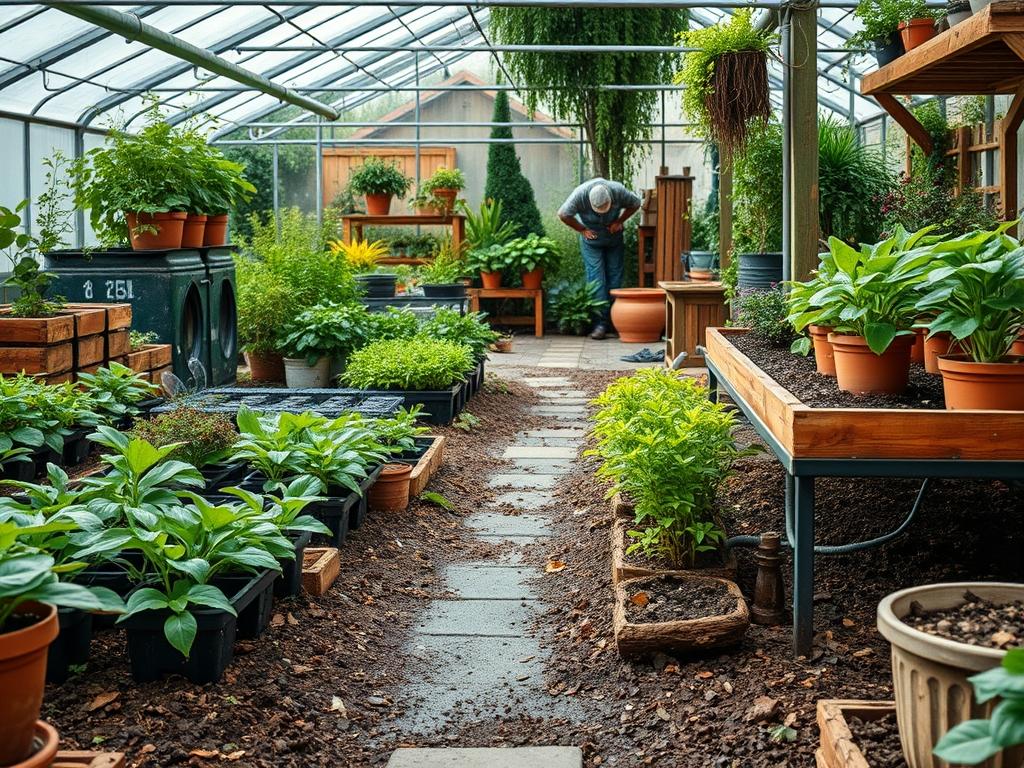
Managing a modern landscape requires a delicate balance between aesthetic ambition and environmental responsibility. Homeowners and commercial property managers often struggle to maintain high curb appeal while facing fluctuating climate patterns and rising utility costs. The solution lies in the sophisticated management of Smart Irrigation Water Usage, a practice that integrates advanced technology with foundational horticultural principles. By shifting from traditional timers to weather-based or sensor-based systems, you can ensure that every drop of water serves a specific architectural or biological purpose. A successful outdoor environment provides more than just visual beauty; it serves as a functional ecosystem where drainage, soil health, and plant selection work in unison to minimize waste.
Effective landscape planning begins with a comprehensive site analysis that considers microclimates and topography. An area that receives six hours of direct afternoon sun requires a significantly different hydration strategy than a shaded corner under a dense canopy. When we track Smart Irrigation Water Usage, we are not just looking at a monthly bill; we are monitoring the health of the soil profile and the efficiency of the delivery system. High-performance landscapes use elevations and grading to direct runoff toward planting beds rather than municipal sewers. This holistic approach ensures that the design remains resilient during droughts and vibrant during peak growing seasons, ultimately protecting the long-term investment in your outdoor living space.
Landscape Design Principles
The foundation of a water-efficient landscape is the principle of hydro-zoning. This involves grouping plants with similar hydration requirements into specific irrigation zones. By separating high-demand turf areas from drought-tolerant shrub borders, you prevent the common mistake of overwatering native species to keep a lawn green. Symmetry and visual balance play a role here; you can create a centerpiece focal point using a high-water feature or specimen plant, provided the surrounding layers consist of low-water groundcovers. This creates a psychological sense of lushness without the systemic water waste associated with uniform high-flow irrigation across the entire property.
Elevation layers add depth and facilitate natural water movement. Utilizing Retaining Walls can help terrace a sloped yard, which prevents erosion and allows water to soak into the subsoil rather than sheeting off the surface. Integrating Walkways made of permeable materials, such as Crushed Granite or Porous Pavers, allows rainfall to recharge the local water table. When planning these hardscape elements, it is vital to coordinate them with the layout of your Mainline Pipes and Lateral Lines. A well-planned design ensures that focal points like Stone Benches or Ornamental Trees are framed by efficient delivery systems that target the root zone rather than the foliage.
Plant and Material Selection
Selecting the right biological components is the most critical step in reducing Smart Irrigation Water Usage. Native plants are typically the best choice because they have evolved to thrive in local rainfall patterns and soil types. The following table outlines various selections that balance aesthetic variety with practical maintenance needs.
| Plant Type | Sun Exposure | Soil Needs | Water Demand | Growth Speed | Maintenance Level |
| :— | :— | :— | :— | :— | :— |
| Purple Coneflower | Full Sun | Well-drained | Low | Moderate | Low |
| Switchgrass | Full to Part Sun | Sandy or Clay | Very Low | Fast | Minimal |
| Japanese Maple | Filtered Shade | Loamy, Moist | Moderate | Slow | Medium |
| Blue Star Creeper | Part Sun | Rich, Moist | Moderate | Fast | Low |
| Agave | High Heat/Full Sun | Gritty, Dry | Minimal | Slow | Very Low |
| Oakleaf Hydrangea | Part Shade | High Organic | Moderate | Moderate | Medium |
When selecting materials for the landscape, consider the impact of Organic Mulch versus Inorganic Stone. Double-Shredded Hardwood Mulch helps retain moisture in the soil, which directly reduces the frequency of necessary irrigation cycles. Conversely, River Rock might be used in drainage swales to move excess water away from the foundation of a home during heavy storms. By matching these materials to the specific needs of the flora, you create a stable environment where your smart controller can operate at peak efficiency.
Implementation Strategy
The transition to a high-efficiency garden begins with professional grading. You must ensure the ground slopes away from structures at a minimum of 2 percent grade. Once the skeleton of the landscape is formed, install a Smart Irrigation Controller equipped with a Wi-Fi Bridge and a Flow Meter. The Flow Meter is the most important tool for tracking Smart Irrigation Water Usage; it detects leaks in real-time and provides precise data on how many gallons each zone consumes.
The next step is the installation of Drip Emitters for garden beds and High-Efficiency Rotary Nozzles for turf areas. Unlike traditional spray heads that lose water to wind drift and evaporation, Rotary Nozzles deliver large droplets at a slower rate, allowing the soil to absorb moisture without runoff. During the planting phase, dig holes that are 2 times the width of the root ball to encourage outward root growth. Apply a layer of Compost to improve soil structure, followed by 3 inches of mulch. Finally, set your smart system to use “Cycle and Soak” settings, which break up a single long watering session into several short bursts, giving the ground time to breathe between applications.
Common Landscaping Failures
The most frequent failure in outdoor environments is poor drainage, which leads to root rot and wasted water. If a site is not properly graded, water pools in low spots, causing Smart Irrigation Water Usage to spike as sensors detect dry soil in other areas while the low spots remain oversaturated. Another common mistake is root overcrowding. When plants are spaced too closely, they compete for the same limited water and nutrients, leading to stunted growth and increased susceptibility to pests. Always follow the mature spread guidelines provided by nurseries, even if the landscape looks a bit sparse during the first year.
Soil compaction is another silent killer of irrigation efficiency. In high-traffic areas, the soil becomes packed tight, preventing water from reaching the roots. This results in runoff even when the system is working perfectly. Failure to install a Rain Sensor or a Soil Moisture Sensor can also lead to redundancy, where the system runs during a downpour. Lastly, many homeowners neglect to clean their Y-Filters and Valve Manifolds, which leads to pressure loss and uneven water distribution, forcing the system to run longer to compensate for dry patches.
Seasonal Maintenance
To keep Smart Irrigation Water Usage at a minimum, you must adopt a seasonal management schedule. In the spring, perform a “system start-up” by inspecting every Sprinkler Head for damage caused by winter frost. Clean the filters and check the Backflow Preventer to ensure compliance with local codes. This is also the time to apply a fresh layer of mulch to prep for the summer heat. As the season progresses into summer, monitor the daily evapotranspiration rates provided by your smart controller. If the weather is exceptionally humid, you can manually override the system to reduce frequency, as plants lose less water through their leaves in high humidity.
Autumn is the season for deep root fertilization and aeration. Aerating the lawn reduces soil compaction and allows the fall rains to penetrate deeper into the earth. If you live in a climate with freezing temperatures, winterizing the system is mandatory. Use an Air Compressor to blow all water out of the lines to prevent pipe bursts. During the winter dormancy, take the time to review the data collected by your Flow Meter throughout the year. Analyze which zones used the most water and consider replacing those plants with more drought-tolerant species in the coming spring.
Professional Landscaping FAQ
How do I detect a leak using my smart controller?
Check your app for “unusually high flow” alerts. Most systems compare current usage against a baseline. If a Valve or Lateral Line breaks, the Flow Meter will sense the surge and shut down the zone automatically to save water.
What is the best time of day to irrigate?
Plan your cycles for the early morning, specifically between 4:00 AM and 7:00 AM. This reduces water loss from evaporation and wind. It also ensures foliage dries quickly once the sun rises, which prevents the development of fungal diseases.
Can I mix drip and spray heads on one zone?
No, this is a major efficiency error. Drip Emitters and Spray Nozzles have different application rates. Mixing them leads to overwatering in one area and underwatering in another, making it impossible to accurately track and reduce Smart Irrigation Water Usage.
How deep should my irrigation lines be buried?
Mainlines should be at least 12 inches deep, while lateral lines leading to heads can be 8 to 10 inches deep. This protects the pipes from Aerators, Shovels, and the weight of garden machinery while ensuring they remain below the frost line.
Does mulch really reduce the need for irrigation?
Yes, a consistent layer of Organic Mulch can reduce soil evaporation by up to 70 percent. It keeps the root zone cool and slowly adds nutrients to the soil as it decomposes, which improves the water-holding capacity of the earth.