
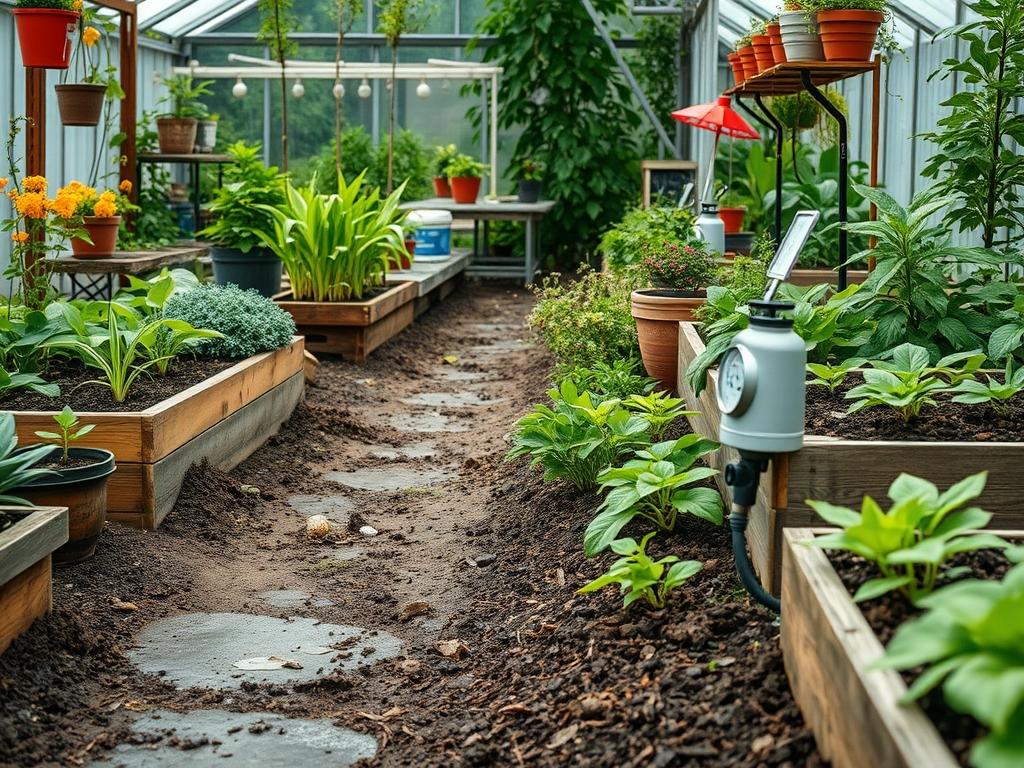
Modern luxury landscapes represent a significant financial and emotional investment, requiring a delicate balance between aesthetic perfection and functional resilience. However, the integrity of a sophisticated outdoor environment is often threatened by a variable that is frequently overlooked during the initial design phase: the failure of irrigation equipment. A burst garden hose or a malfunctioning coupling can release hundreds of gallons of water in a single afternoon, leading to catastrophic soil erosion, the drowning of expensive specimens, and the undermining of structural hardscaping. To mitigate these risks, high-end site planning now frequently incorporates Smart Hose Leak Detectors and automated shutoff systems. These devices serve as a digital insurance policy for the landscape, ensuring that the carefully curated curb appeal remains intact even when the property owner is absent. In an era of increasing climate volatility, where sudden heatwaves may demand more frequent watering and aging infrastructure is prone to failure, integrating smart technology into the irrigation plan is no longer an optional upgrade; it is a fundamental requirement for responsible property management.
The functionality of an outdoor living space depends on its ability to manage water efficiently. When a leak occurs near a retaining wall or a paved walkway, the resulting hydrostatic pressure can lead to shifting stones or cracked concrete. Beyond the immediate structural damage, localized flooding alters the soil chemistry and suffocates root systems, particularly for species that are sensitive to “wet feet.” By deploying Smart Hose Leak Detectors at the spigot or within the hose line, a landscape architect can create a responsive environment that identifies abnormal flow patterns and terminates the water supply instantly. This intervention prevents the saturation of sub-grade materials and protects the professional grading that ensures proper runoff away from the home foundation.
Landscape Design Principles
Effective landscape design starts with a comprehensive understanding of the site topography and the intended visual narrative. Symmetry and focal points are the traditional pillars of classical design, yet they must be supported by a robust underlying infrastructure. When we plan the elevation layers of a garden, we are essentially directing the movement of water. A successful design uses tiered plantings and stone borders to create visual depth, but these same elements must be protected from the scouring effects of an uncontrolled hose leak. By placing Smart Hose Leak Detectors on secondary lines that feed decorative planters or temporary irrigation zones, we preserve the precision of the focal points like specimen trees or custom water features.
Visual balance is achieved through the calculated repetition of form and color, but this harmony is easily disrupted by the yellowing of foliage caused by over-saturation or the unsightly mud pits left behind by a burst pipe. Integrating modern irrigation controls allows for a more daring use of verticality and texture. For instance, when designing a terrace with poured concrete planters, the stakes of a leak are higher due to the limited drainage capacity of the containers. A smart system monitors these isolated zones with high precision. Furthermore, the modern landscape architect views the irrigation plan as a living document that must adapt to the seasonal needs of the vegetation while providing a fail-safe against human error or mechanical fatigue.
Plant and Material Selection
| Plant Type | Sun Exposure | Soil Needs | Water Demand | Growth Speed | Maintenance Level |
| :— | :— | :— | :— | :— | :— |
| Taxus baccata | Full Sun / Shade | Well-Drained | Moderate | Slow | Low |
| Buxus sempervirens | Partial Shade | Loamy / Rich | Consistent | Medium | Moderate |
| Panicum virgatum | Full Sun | Sandy / Clay | Low | Fast | Low |
| Hydrangea macrophylla | Partial Shade | Moist / Organic | High | Medium | High |
| Cornus florida | Partial Sun | Acidic / Moist | Moderate | Medium | Moderate |
| Sedum spectabile | Full Sun | Poor / Dry | Very Low | Fast | Low |
Implementation Strategy
The implementation of a flood-resistant landscape begins with professional grading. The ground must be sloped at a minimum of 2 percent away from the home and any critical hardscape structures. Before the first perennial is placed, the site must be prepared with a network of French Drains or catch basins in low-lying areas. Once the skeleton of the garden is established, we focus on the installation of the smart tech suite. The Smart Hose Leak Detector should be installed directly onto the exterior brass hose bibb. For large estates, multiple detectors are synchronized via a central hub, allowing for zone-specific monitoring.
Next, we establish the edging for the beds. Using steel edging or Belgian block, we create a physical barrier that contains mulch and prevents it from washing away during heavy rain or a minor leak. Mulch should be maintained at a depth of 3 inches to assist with moisture retention and soil temperature regulation. Following the hardscaping, we begin the planting process, grouping species with similar water requirements together, a technique known as hydrozoning. This ensures that the Smart Hose Leak Detector can be calibrated to the specific flow requirements of each zone. High-demand areas, such as those featuring Hydrangea macrophylla, will have higher flow thresholds, while xeriscaped zones with Ornamental Grasses will trigger an alert at much lower volumes.
Finally, the application of geotextile fabric beneath river rock or pea gravel pathways provides an additional layer of protection. This material allows water to permeate into the soil at a controlled rate, preventing the surface-level erosion that typically follows a plumbing failure. By combining these physical barriers with digital monitoring, the garden becomes a self-regulating ecosystem.
Common Landscaping Failures
The most frequent failure in residential landscapes is the neglect of subsurface drainage. Homeowners often focus on the surface aesthetics while ignoring the fact that water always follows the path of least resistance. When a hose fails, if there is no swale or trench to divert the flow, the water will pool against the foundation or drown the root balls of nearby shrubs. Soil compaction is another silent killer; over time, foot traffic and heavy machinery crush the air pockets in the soil, reducing its saturated hydraulic conductivity. This makes the landscape much more susceptible to flooding from even small leaks.
Another common mistake is root overcrowding. When specimen trees are planted too close to irrigation lines or buried pipes, the roots can exert incredible pressure as they grow, eventually causing the pipes to crack. This leads to underground leaks that are difficult to detect without a Smart Hose Leak Detector that monitors flow variations. Improper spacing of plants also leads to poor air circulation, which, when combined with the excess humidity from a leak, creates a breeding ground for fungal diseases like powdery mildew or root rot. By failing to integrate an auto-shutoff mechanism, a minor hardware issue is allowed to escalate into a total landscape loss.
Seasonal Maintenance
Landscape management is a year-round commitment that changes with the tilt of the earth. In the spring, the primary focus is on system reactivation. This involves inspecting every Smart Hose Leak Detector for battery health and sensor accuracy. We also flush the irrigation lines to remove any sediment that accumulated over the winter. This is the ideal time to refresh mulch and clear any debris from drainage grates to ensure the path for runoff remains unobstructed.
During the summer, the demand on the water system is at its peak. Evaporation rates are high, and the pressure on hoses increases due to heat expansion. We recommend adjusting the sensitivity of the leak detectors to account for longer watering cycles while remaining vigilant for the signs of localized saturation. In autumn, the focus shifts to hardening off the plants. We reduce watering frequency to encourage the plants to enter dormancy. This is also the time to clean out gutters and downspouts, as leaf clogs can exacerbate the damage caused by an unexpected hose leak.
Winter maintenance is perhaps the most critical for technical components. In regions where temperatures drop below freezing, Smart Hose Leak Detectors and all brass fittings must be detached from the exterior spigots. The lines should be drained and blown out with compressed air to prevent ice from bursting the pipes. Leaving a smart device attached during a hard frost can damage the internal solenoid valve, rendering the leak detection capabilities useless for the following spring.
Professional Landscaping FAQ
How do smart leak detectors distinguish between a leak and normal watering?
These devices use algorithms to monitor flow rate and duration. By setting custom parameters in a smartphone app, the system recognizes your typical irrigation schedule and only triggers an auto-shutoff when the flow exceeds those specific predefined limits.
Can these devices be integrated with existing inground sprinkler systems?
While many are designed for standard hose bibbs, professional versions can be plumbed into the main irrigation header. This allows for property-wide monitoring, protecting both your garden hoses and the buried PVC lines from unexpected pressure spikes or pipe failures.
What is the best way to hide these devices for better curb appeal?
Landscape architects often use small decorative stones or hollow faux rocks to camouflage spigot attachments. Ensure the enclosure allows for a strong wireless signal, as the device must communicate with your home network to send real-time alerts.
Do these units require a constant power source or professional wiring?
Most residential units are battery-powered, utilizing long-life lithium cells that last an entire growing season. This eliminates the need for trenching electrical wires through your lawn or flower beds, making them an easy retrofit for existing outdoor environments.
Will a smart detector prevent damage from a slow, dripping leak?
High-sensitivity models can detect even minor fluctuations in water pressure and flow. By identifying a slow drip early, you prevent the gradual soil acidification and root decay that occurs in chronically oversaturated areas of the landscape.