
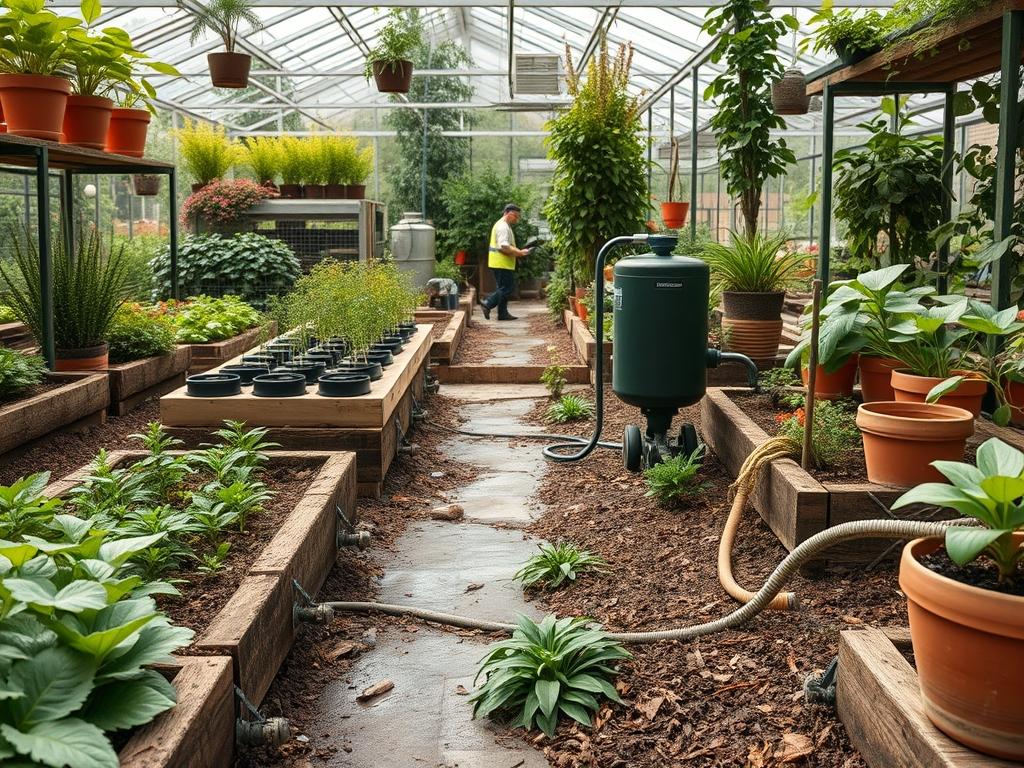
Modern landscape architecture represents a delicate fusion of living organisms and high-performance mechanical systems. When a property owner invests in established specimen trees or intricate hardscaping, they are building a biological ecosystem that relies on the invisible stability of sub-surface infrastructure. The challenge lies in the volatility of environmental variables. While we often think of climate in terms of temperature and rainfall, the most dangerous variable for a mature garden is often the hydraulic pressure within the irrigation lines. Fluctuating municipal water pressure can lead to catastrophic failures, specifically underground pipe bursts that erode soil and destroy root systems. To mitigate these risks, architects now prioritize Smart Irrigation Pressure Tech to ensure that the outdoor environment remains functional and visually striking through every season. This technology serves as more than a convenience; it is a structural necessity that protects the curb appeal and long-term health of the landscape.
Landscape Design Principles
Successful landscape design begins with the principle of visual balance and functional layering. A focal point, such as a large Japanese Maple or a custom-built water feature, requires a supporting cast of plants and materials that provide contrast and depth. Symmetry often dictates the placement of structural elements, but true professional design accounts for the hidden components that keep these elements alive. Elevation layers are critical here. By using Retaining Walls and terraced garden beds, a designer can create a sense of movement and scale. However, changing elevations also change the hydraulic requirements of an irrigation system.
Water must travel uphill or be controlled as it flows down steep slopes to prevent soil erosion. Integration of Smart Irrigation Pressure Tech at the design phase allows for precise control over these elevation changes. This technology ensures that every zone of the garden, from the high-altitude shrubs to the low-lying groundcovers, receives the exact amount of water required without the risk of over-pressurization. Without this planning, the pressure at the lowest point of a property can become high enough to shear off sprinkler heads or cause lateral line ruptures. Walkways and pathways must also be planned with drainage and plumbing in mind, ensuring that heavy stone slabs do not put undue stress on the pressurized lines below.
Plant and Material Selection
| Plant Type | Sun Exposure | Soil Needs | Water Demand | Growth Speed | Maintenance Level |
| :— | :— | :— | :— | :— | :— |
| English Boxwood | Full Sun to Shade | Well-Drained | Moderate | Slow | Medium |
| Drought-Tolerant Lavender | Full Sun | Sandy, Gritty | Low | Moderate | Low |
| Red Sunset Maple | Full Sun | Moist, Acidic | High | Fast | Medium |
| Blue Star Juniper | Full Sun | Versatile | Low | Slow | Low |
| Dwarf Fountain Grass | Full Sun | Loamy | Moderate | Fast | Low |
| Climbing Hydrangea | Partial Shade | Rich, Moist | High | Moderate | High |
Implementation Strategy
The transition from a blueprint to a finished garden requires a disciplined implementation strategy. The first step is grading the site to ensure a 2 percent slope away from the home foundation. This prevents water from pooling near the structure and guides it toward designated drainage areas. Once the grading is complete, the installation of the irrigation backbone begins. Professionals use 1-inch PVC Pipe or high-density polyethylene tubing for the main lines. This is the stage where Smart Irrigation Pressure Tech is integrated into the valve manifold. Each zone is equipped with a pressure-regulating valve that communicates with a central controller, allowing the system to detect if the municipal supply has surged beyond the safe operating limit of 50 PSI.
After the infrastructure is in place, the team begins edging the beds and installing hardscape materials. Steel Edging or Concrete Pavers define the borders of the lawn and planting areas. When planting, the root balls should be positioned so the flare of the trunk is slightly above the soil line to prevent rot. A 3-inch layer of Organic Mulch is then applied to retain moisture and suppress weeds. It is vital to keep mulch away from the direct contact of tree trunks. During this entire phase, the irrigation system is tested for leaks. The pressure technology allows the installer to fine-tune the output so that Rotary Nozzles operate at their peak efficiency, preventing the misting and wind drift that occurs when water pressure is too high.
Common Landscaping Failures
The most frequent failures in residential gardens often stem from invisible mechanical issues. Drainage mistakes are at the top of the list. If the soil is not properly amended, it can suffer from heavy compaction, such as in high-clay regions. This prevents water from reaching the roots and causes surface runoff. Overcrowding is another issue, where a designer fails to account for the mature width of a Spruce Tree, leading to root systems that eventually crush irrigation lines or lift expensive pavers.
However, the most destructive failure is a pipe burst caused by hydraulic shock, often called water hammer. When a standard irrigation valve closes quickly, the kinetic energy of the moving water has nowhere to go. This sends a shockwave back through the pipes. Over time, these surges weaken the solvent-weld joints of the PVC. Smart Irrigation Pressure Tech uses specialized sensors and slow-closing valves to dissipate this energy. Furthermore, if a leak does occur, the smart system can detect the sudden drop in pressure and shut off the main water supply immediately. This prevents the thousands of gallons of water waste and the localized flooding that can wash away a summer’s worth of landscape growth.
Seasonal Maintenance
Landscape management is a year-round commitment that changes with the weather. In the spring, the focus is on reactivation and debris removal. This is the time to check all irrigation filters and ensure that no nozzles were damaged by winter frost. Applying a pre-emergent herbicide and a slow-release fertilizer provides the nutrients needed for the spring growth spurt. By early summer, the priority shifts to hydration. This is when Smart Irrigation Pressure Tech proves its worth, as municipal water usage peaks and neighborhood pressure fluctuations are most common. Monitoring the system for consistent PSI ensures that the lawn remains green even during heat waves.
Autumn is the season for preparation and renovation. This is the ideal time for aerating the lawn and overseeding with Kentucky Bluegrass or Tall Fescue. It is also the window for planting new trees, as the cooler air and warm soil encourage root development before dormancy. Finally, winter maintenance is about protection. In colder climates, irrigation lines must be blown out with a 100 CFM Air Compressor to remove all standing water, preventing the expansion that leads to cracked pipes. For the plants, applying a layer of Pine Straw helps insulate the root zones of tender perennials against the freeze-thaw cycle.
Professional Landscaping FAQ
How does pressure regulation save money?
Excessive pressure causes water to atomize into a fine mist that evaporates before it hits the ground. By using Smart Irrigation Pressure Tech, you maintain optimal droplet size, reducing water waste by up to 30 percent.
Will high water pressure damage my plants?
Yes, indirectly. High pressure can cause pipe bursts that flood the soil, leading to root rot and soil erosion. It can also cause sprinkler heads to vibrate excessively, damaging the surrounding plant structure and soil beds.
What is the ideal pressure for a home irrigation system?
Most residential systems perform best between 35 and 50 PSI. If your street pressure exceeds 60 PSI, the risk of pipe fatigue and mechanical failure increases significantly without professional regulation technology.
Can I retrofit an old system with smart technology?
Most existing manifolds can be upgraded with smart controllers and pressure-regulating valves. This process involves swapping the main valves and installing a Wi-Fi enabled controller to monitor flow rates and pressure spikes in real time.
How do I know if my pipes are under too much stress?
Listen for a loud banging sound when the irrigation turns off. This is water hammer. Also, look for misting at the nozzles or wet spots in the lawn that appear even when the system is not running.