
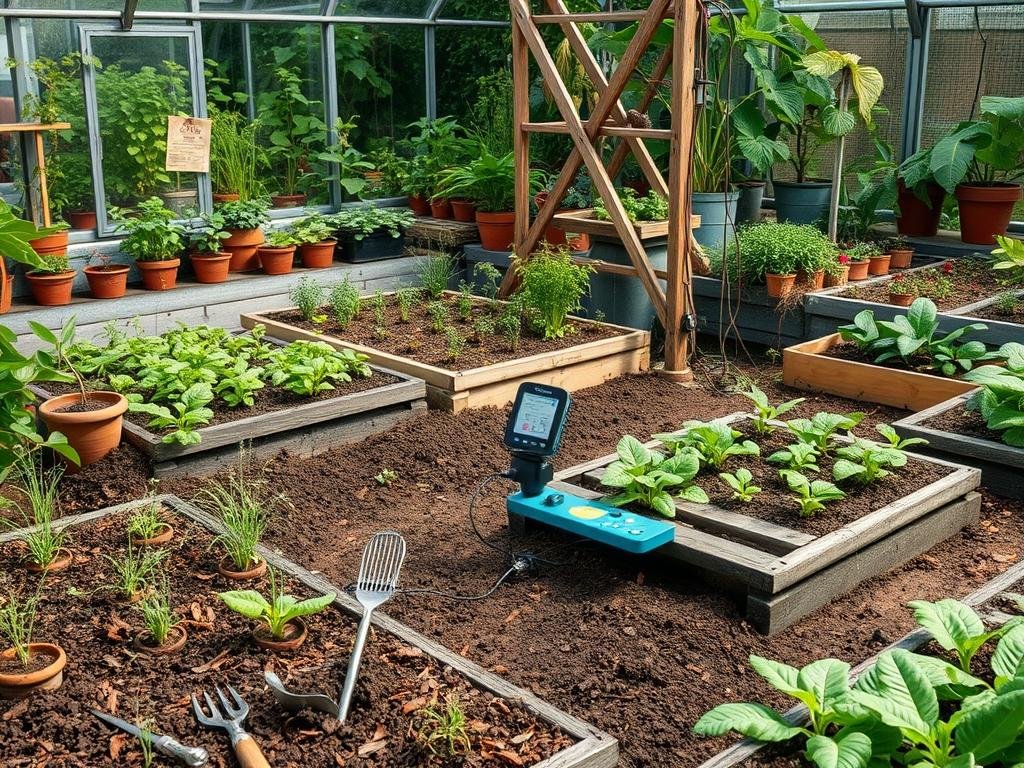
The integration of advanced technology into a living landscape represents the next evolution of residential and commercial property management. Developing a refined outdoor environment requires more than just an aesthetic eye; it demands an understanding of the complex biological processes occurring beneath the soil surface. Homeowners and developers often face the challenge of maintaining lush, high-performance greenery in the face of unpredictable climate shifts and varying microclimates across a single property. A sophisticated Smart Garden Sensor Setup serves as the central nervous system for these environments, bridging the gap between passive observation and precision horticulture. By capturing real-time data on soil moisture, ambient temperature, and light intensity, these systems ensure that every horticultural investment contributes to the long term curb appeal and ecological health of the site.
Successfully managing the landscape requires a focus on outdoor functionality and environmental stewardship. When a landscape architect designs a space, the primary goal involves creating a sustainable ecosystem that thrives with minimal waste. The challenge lies in the fact that different zones of a yard possess unique drainage patterns and sun exposure profiles. A north-facing slope with heavy clay soil maintains a vastly different moisture profile than a sandy, south-facing flower bed. Without a Smart Garden Sensor Setup, irrigation schedules are often set to a default timer, leading to localized overwatering or drought stress. Utilizing data-driven insights allows for the precise application of resources, which not only saves water but also prevents the root rot and fungal issues that plague poorly managed gardens.
Landscape Design Principles
Professional landscape design relies on fundamental concepts such as symmetry, focal points, and elevation layers. When planning for a Smart Garden Sensor Setup, these principles must be considered to ensure the technology is both effective and discrete. Symmetry in a formal garden demands uniform growth; if one side of a gated entrance receives more sun, its growth rate will outpace the shaded side. Sensors placed in both zones allow the irrigation controller to compensate for these variances, maintaining a balanced visual weight.
Elevation layers also play a critical role in sensor placement and irrigation planning. In a tiered landscape featuring Retaining Walls, water naturally migrates toward the lower levels. Placing sensors at different elevations provides a comprehensive view of the moisture gradient. This prevents the “swamp effect” in lower terraces while the upper levels remain desiccated. Visual balance is further maintained by concealing the hardware within the foliage or near Hardscaping elements, ensuring that the focus remains on the plant material rather than the technology.
Irrigation planning must be integrated into the initial design phase. A high-quality Smart Garden Sensor Setup should communicate directly with a smart irrigation controller to adjust flow based on the actual needs of the soil. This prevents the common mistake of watering during rain events or when the ground is already saturated. Furthermore, well-planned walkways and paths provide logical access points for sensor maintenance and battery replacement, ensuring the system remains operational throughout the growing season without disturbing the established root systems of delicate perennials.
Plant and Material Selection
The following table outlines common plant selections for professional landscapes and their specific requirements, which a Smart Garden Sensor Setup can monitor with precision.
| Plant Type | Sun Exposure | Soil Needs | Water Demand | Growth Speed | Maintenance Level |
| :— | :— | :— | :— | :— | :— |
| English Lavender | Full Sun | Well-Drained | Low | Moderate | Medium |
| Japanese Maple | Partial Shade | Loamy, Acidic | Moderate | Slow | High |
| Dwarf Fountain Grass | Full Sun | Versatile | Low to Medium | Fast | Low |
| Hostas | Full Shade | Rich, Moist | High | Moderate | Low |
| Boxwood Hedge | Sun to Part Shade | Well-Drained | Moderate | Slow | Medium |
| Creeping Thyme | Full Sun | Sandy/Gritty | Low | Fast | Low |
Selecting the right Native Plants significantly reduces the dependency on supplemental irrigation, but even these species require monitoring during their initial establishment phase. For instance, Boxwood Hedge installations are sensitive to root rot if the soil remains waterlogged. A sensor capable of measuring soil oxygen levels or high-frequency moisture levels is essential for these species. In contrast, Dwarf Fountain Grass is highly drought-tolerant once established, but it may require closer monitoring during extreme heatwaves to prevent browning. By matching plant requirements with specific sensor triggers, you ensure that your materials reach their full maturity and aesthetic potential.
Implementation Strategy
A successful implementation starts with a detailed garden layout plan that accounts for grading and drainage. Before installing any plant material or Mulch, the site must be surveyed to identify “sinkholes” or areas where compaction might occur. Grading should always direct water away from the foundation of the home and toward designated drainage basins or rain gardens. Once the soil topography is established, the Smart Garden Sensor Setup should be mapped out. Use one sensor for each distinct hydro-zone, which is a grouping of plants with similar water and light needs.
When installing the sensors, depth is a critical factor. For turf grass, a sensor placed 4 to 6 inches deep is sufficient to monitor the primary root zone. For shrubs and ornamental trees, the sensor should be placed deeper, perhaps 10 to 12 inches, to capture the moisture levels where the deep roots reside. Edging should be used to define garden beds and protect the sensors from lawn mowers or string trimmers. Apply a layer of Mulch at a depth of 2 to 3 inches around the sensors to help regulate soil temperature and moisture, but ensure the mulch does not cover the light-sensing component of the device.
Hardscaping also influences sensor performance. Concrete patios and stone paths can reflect heat, creating localized “heat islands.” If you have a sensor near a stone wall, it may record higher ambient temperatures than a sensor in the middle of a lawn. Ensure your wireless gateway or hub is positioned within range of all sensors, keeping in mind that thick foliage, stone walls, and metal fencing can occasionally interfere with signal strength.
Common Landscaping Failures
The most frequent failure in modern landscaping is improper drainage. Many homeowners install beautiful plants only to have them succumb to “wet feet” because the subsoil was never properly tested for percolation. A Smart Garden Sensor Setup can diagnose this issue early by showing that moisture levels remain at 100% saturation hours or days after a rainfall. Soil compaction is another silent killer. In high-traffic areas, the soil particles are pressed together, removing the air pockets necessary for root respiration. Sensors that track soil tension can indicate when the ground has become too dense for healthy growth.
Root overcrowding often occurs when plants are spaced according to their size at the time of purchase rather than their mature dimensions. This creates competition for water and nutrients that even the best irrigation system cannot fully resolve. Furthermore, placing sensors too close to irrigation heads leads to “false positives,” where the sensor thinks the entire zone is soaked while the periphery remains dry. Strategic placement at the midpoint between heads or in the driest part of the zone provides a more accurate representation of the landscape’s needs.
Seasonal Maintenance
Landscape management is a year-round commitment that changes with the tilt of the earth’s axis. During the spring, the primary focus is on awakening the garden. This is the time to calibrate your Smart Garden Sensor Setup, replace batteries, and check for any hardware damage caused by frost. As the ground thaws, sensors help identify the exact moment when the soil temperature is high enough to begin planting warm-season annuals.
Summer maintenance is dominated by heat management. During July and August, data from your sensors will likely show rapid moisture depletion. This is when the automation features of your sensor setup prove their value, triggering “cycle and soak” irrigation methods that allow water to penetrate deeply without running off the surface.
In autumn, the goal shifts to hardening off plants for the coming cold. Irrigation should be gradually reduced to encourage dormancy. Sensors are vital here to ensure the soil doesn’t become bone-dry before the first hard freeze, as hydrated roots survive cold temperatures better than dry ones. Finally, winter landscape management involves protecting the hardware. In climates with deep freezes, some sensors may need to be removed from the ground to prevent damage from frost heave, while others are built to withstand the cold and provide valuable data on soil frost depth.
Professional Landscaping FAQ
How many sensors do I need for a standard backyard?
Most residential landscapes require one sensor per irrigation zone or distinct microclimate. If you have a shaded woodland area and a sunny perennial border, you need at least two sensors to manage the differing water and light requirements accurately.
Can smart sensors help reduce my monthly water bill?
Yes, integrated systems typically reduce water consumption by 30% to 50%. By preventing irrigation during rain and only watering when soil moisture drops below a specific threshold, you eliminate the waste associated with traditional, clock-based timers.
Do sensors work in heavy clay or very sandy soils?
Modern sensors are designed to be calibrated for various soil textures. Most high-end units allow you to input the soil type in the mobile app, which adjusts the moisture algorithms to account for the unique water-holding capacity of clay or sand.
Where is the best place to install the communication hub?
The hub should be placed near a window or an exterior wall closest to the garden. It requires a stable Wi-Fi connection and a clear line of sight to as many sensors as possible to ensure consistent data transmission.
How long do the batteries in garden sensors typically last?
Most professional-grade sensors use low-energy Bluetooth or Zigbee protocols, allowing batteries to last between one and two years. Many units now feature integrated solar panels, which can extend the battery life indefinitely in sunny locations.