
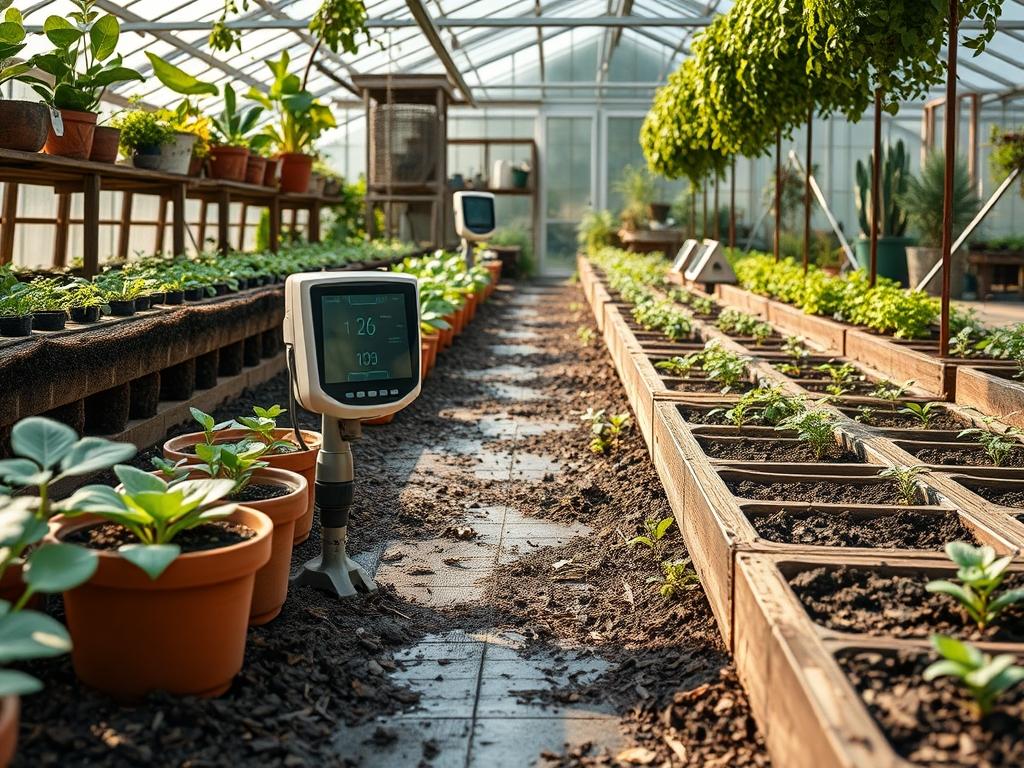
Achieving a professional-grade landscape requires more than just an aesthetic eye; it demands a deep understanding of the invisible biological and environmental forces at play. Every outdoor environment is a complex ecosystem where soil chemistry, moisture levels, and sunlight interact to determine the success or failure of your design. For the modern landscape architect, the greatest challenge is moving beyond the guesswork of traditional maintenance. This is where the integration of Solar Powered Garden Monitors becomes a transformative strategy. These devices provide real-time data on the specific microclimates within your yard, allowing for precision management that protects your investment and ensures high-level curb appeal throughout the year. By monitoring the soil conditions of high-value specimens or sensitive groundcovers, you can adjust irrigation and fertilization with surgical accuracy.
The functionality of a modern outdoor space hinges on the balance between hardscaping and softscaping. A beautiful Retaining Wall or a perfectly leveled Stone Walkway provides the structural skeleton of the landscape, but the living elements provide the soul. When plants fail due to improper hydration or light exposure, the entire visual composition collapses. We often see high-end installations where expensive Specimen Trees decline simply because the subterranean conditions were not monitored. To prevent this, we now treat the garden as a data-driven environment. We look at the interplay of shade patterns, wind tunnels, and drainage gradients to create a resilient outdoor living space. Modern monitors ensure that your Irrigation system is not just running on a timer, but responding to the actual needs of the earth.
Landscape Design Principles
Symmetry is the hallmark of formal landscape design, yet it is often the most difficult to maintain. If one side of a symmetrical Hedge receives more moisture or sunlight than the other, the growth rates will diverge, ruining the visual balance. We use Solar Powered Garden Monitors to ensure that environmental inputs remain consistent across mirrored zones. This allows for uniform growth and reduces the need for aggressive corrective pruning. When designing, we focus on focal points like a Pergola or an architectural Water Feature, but we also consider the elevation layers. These layers transition from low-growing groundcovers to mid-level shrubs and high-canopy trees. Each of these layers has distinct atmospheric requirements.
Elevation layers offer more than just aesthetic depth; they create microclimates. Low-lying areas often collect more water and experience slower evaporation, while elevated berms dry out quickly. By placing sensors at various heights and locations, we can map the “stress zones” of a property. This mapping informs the placement of French Drains or Catch Basins in areas where water pools, as well as the implementation of additional Mulch to retain moisture on slopes. Visual balance is achieved when every plant in the composition looks equally vibrant. Achieving this requires a decentralized approach to monitoring where each major plant cluster is treated as its own unit.
Plant and Material Selection
Selecting the right plant for the right place is the most important decision in any landscaping project. We emphasize the use of Native Plants because they are naturally adapted to the local climate. However, even natives require specific soil conditions to thrive in a residential setting where the native soil may have been disturbed by construction. The following table outlines a selection of versatile plants and their requirements, which can be monitored via smart systems to ensure longevity.
| Plant Type | Sun Exposure | Soil Needs | Water Demand | Growth Speed | Maintenance Level |
| :— | :— | :— | :— | :— | :— |
| English Boxwood | Full Sun to Partial Shade | Well-drained, Loamy | Moderate | Slow | High |
| Blue Star Creeper | Full Sun to Partial Shade | Moist, Well-drained | Moderate | Fast | Low |
| Japanese Maple | Partial Shade | Acidic, Humus-rich | Moderate | Slow to Moderate | Medium |
| Lavender | Full Sun | Sandy, Alkaline | Low | Moderate | Low |
| Hydrangea Macrophylla | Partial Shade | Rich, Consistent Moisture | High | Fast | Medium |
| Switchgrass | Full Sun | Varied, Well-drained | Low | Fast | Low |
| Hostas | Full Shade to Partial Shade | Rich, Organic | Moderate | Moderate | Low |
Effective material selection extends beyond plants. We utilize different grades of Mulch, such as triple-shredded hardwood or cedar, to assist with moisture retention and soil temperature regulation. For hardscapes, we recommend Permeable Pavers to allow rainwater to infiltrate the ground naturally, reducing runoff and supporting the local water table. When these materials are combined with smart monitoring, the garden becomes a self-regulating system that requires less manual intervention.
Implementation Strategy
Planning a layout begins with a comprehensive site analysis. This involves measuring the pH levels of the soil and assessing the existing Grading to understand how water moves across the property. Once the site is mapped, we establish the Hardscaping elements, such as Patio Stones and Walkway Edging, first. These involve heavy materials and equipment, so they must be finalized before any delicate planting begins. During the grading process, we ensure a slope of at least 2 percent away from the home’s foundation to prevent water damage.
After the structure is set, we install the Irrigation lines and individual Solar Powered Garden Monitors. We place the monitors near the root balls of our most expensive Ornamental Trees and within the major flower beds. The next step is the application of a 2-inch or 3-inch layer of Mulch, which suppresses weeds and provides a buffer for the sensors against extreme temperature swings. We focus on “hydro-zoning,” which is the practice of grouping plants with similar water needs together. This simplifies the irrigation logic and ensures that a Drought-Tolerant Grass is not being overwatered alongside a thirsty Hydrangea.
Common Landscaping Failures
The most frequent error in residential landscaping is poor Drainage. When water remains stagnant around the root zone, it deprives the plant of oxygen, leading to root rot and eventual death. Many homeowners mistake the signs of root rot for dehydration and respond by adding more water, which accelerates the decline. This is why data from a monitor is so vital; it distinguishes between a dry surface and a saturated subsoil. Another common failure is root overcrowding. When plants are placed too closely together to create an “instant” full look, they quickly begin to compete for nutrients and water. This competition weakens the entire stand and makes them more susceptible to pests.
Soil compaction is another silent killer. During construction or heavy lawn use, the air pockets in the soil are crushed. This makes it impossible for roots to penetrate or for water to soak in. High-quality landscape planning always includes a plan for aeration and the incorporation of Organic Matter to maintain soil structure. High-tech monitors can detect the resulting drop in moisture infiltration, alerting the gardener that the soil has become too dense. Finally, improper Mulch application, often called “mulch volcanoes” where material is piled against the trunk of a tree, can suffocate the bark and lead to fungal infections.
Seasonal Maintenance
Landscape management is a year-round discipline. In the Spring, the focus is on “awakening” the garden. This involves removing winter debris, checking the Irrigation heads for clogs, and applying a pre-emergent herbicide. This is also the time to calibrate your Solar Powered Garden Monitors to ensure the batteries are charging correctly as the sun’s angle shifts.
During the Summer, the priority shifts to hydration and heat management. We use the data from our sensors to time irrigation for early morning hours, which reduces evaporation loss. Autumn is the season for soil replenishment. We add Compost and fresh mulch to insulate the roots before the first frost. This is also the best time for planting new trees, as the cooler air and warm soil encourage root growth without the stress of summer heat. In the Winter, maintenance involves protecting sensitive species with burlap screens and ensuring that hardscape surfaces are clear of salt, which can damage soil chemistry when it melts into the garden beds.
Professional Landscaping FAQ
How do solar monitors help with irrigation efficiency?
They provide real-time moisture data, allowing you to water only when the soil reaches a specific depletion point. This prevents overwatering, reduces your water bill, and ensures that plants receive the exact amount of hydration required for their specific species.
What is the ideal mulch depth for a healthy garden?
A depth of 2 to 3 inches is generally recommended. This thickness is sufficient to suppress weed growth and retain soil moisture without preventing oxygen from reaching the root systems or causing issues with crown rot in delicate perennials.
Can these monitors work in shaded areas?
Yes, most high-quality Solar Powered Garden Monitors are designed to operate on ambient light. While they perform best in direct sun, they can usually maintain a charge in partial shade or through the filtered light found under a forest canopy.
Why is soil pH important for my landscape?
Soil pH dictates the availability of nutrients to your plants. If the soil is too acidic or too alkaline, plants cannot absorb essential minerals, even if they are present in the soil. Tracking pH helps you decide when to add lime or sulfur.
How often should I check my landscape data?
For an established landscape, a weekly review of the data trends is usually sufficient. However, during periods of extreme heat or after a major planting project, checking the data daily ensures you can respond immediately to any signs of environmental stress.