
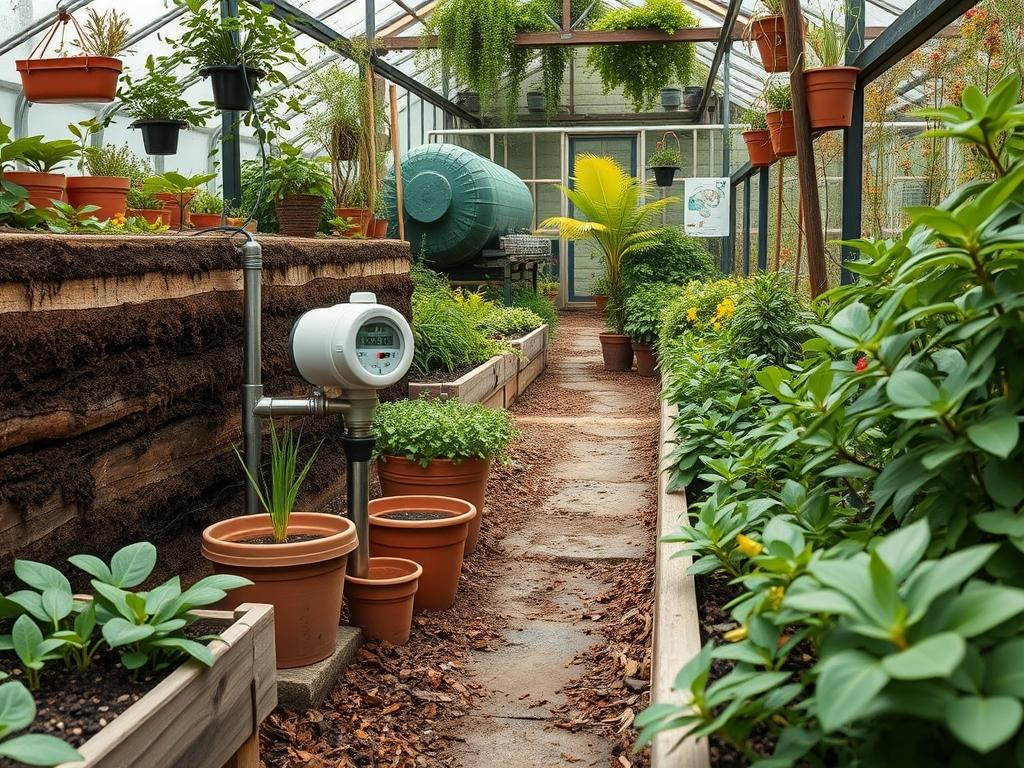
Managing a high-end landscape requires more than just an eye for aesthetic beauty and a collection of expensive greenery. It demands a rigorous understanding of the invisible infrastructure that keeps the environment thriving. The modern landscape architect views water as both a precious resource and a potential liability. When irrigation systems fail, the results can be catastrophic for curb appeal, structural integrity, and the financial bottom line. Hidden leaks beneath the surface of a lush lawn or a professional hardscape can lead to soil saturation, the death of specimen trees, and even the destabilization of retaining walls. To combat these risks, sophisticated designers now integrate Smart Water Flow Meters into their projects. These devices provide the real-time data necessary to detect minute discrepancies in water usage before they become visible problems at the surface level.
The challenge of modern landscaping is found in the balance between lush, vibrant growth and sustainable resource management. In many climates, irrigation is not optional. It is the lifeblood of the property. However, traditional systems are often passive, running on simple timers that do not account for pipe bursts or slow weeping at a joint. A single leak can waste thousands of gallons of water in a week, often going unnoticed until the soil becomes a swamp or the monthly utility bill arrives. By implementing a proactive monitoring strategy, homeowners can protect their investment and ensure that every drop of water is directed toward the health of their native plants and turf. The integration of technology into the natural environment is no longer a luxury. It is a fundamental requirement for any resilient outdoor space.
Landscape Design Principles
Successful landscape design begins with a clear understanding of the site’s topography and the desired visual outcome. Symmetry and focal points are the two primary pillars of a formal landscape. When creating a symmetrical layout, an architect might use pairs of Italian Cypress to frame a view or lead the eye toward a central sculpture. This balance provides a sense of order and tranquility. However, visual symmetry must be backed by hydraulic symmetry. Effective irrigation planning ensures that water pressure is distributed evenly across all zones. This prevents the “dry spot” phenomenon that often tempts homeowners to increase the run time for the entire system, leading to over-watering in other areas.
Elevation layers and grading are the next critical considerations. A property is rarely perfectly flat, and a professional designer uses these natural slopes to create interest. We utilize retaining walls to create tiered planting beds, which add depth and allow for a more diverse plant palette. These changes in elevation require careful drainage planning to prevent water from pooling at the base of walls or near the foundation of the home. Integrating Smart Water Flow Meters allows the architect to monitor the “hydraulic load” on these tiered systems. If a meter detects water movement during an off-cycle, it provides an immediate alert that a line buried behind a wall may have been compromised by shifting soil or root intrusion.
Walkways and hardscaping provide the essential “bones” of the garden. They define the circulation of the space and provide areas for outdoor living. Whether using Natural Flagstone, Permeable Pavers, or Poured Concrete, the intersection where the hardscape meets the softscape is a high-risk area for irrigation issues. Piping often runs directly beneath these expensive surfaces. A leak in this location can cause the ground to shift, leading to cracked stone or uneven paths. By monitoring the baseline flow, a smart meter identifies these localized failures early. This allows for targeted repairs that minimize the need to tear up large sections of the walkway to find the source of the problem.
Plant and Material Selection
Choosing the right materials and flora is essential for both the aesthetic and the functionality of the landscape. Designers must match the plant’s physiological needs with the micro-climate of the specific site. The following table outlines several popular choices and their requirements.
| Plant Type | Sun Exposure | Soil Needs | Water Demand | Growth Speed | Maintenance |
| :— | :— | :— | :— | :— | :— |
| Dwarf Boxwood | Full to Partial Sun | Well-drained, Loamy | Moderate | Slow | Medium |
| Lavender | Full Sun | Gritty, Sandy soil | Low | Medium | Low |
| Hydrangea | Partial Shade | Rich, Moist soil | High | Fast | High |
| Feather Reed Grass | Full Sun | Adaptable, Clay-heavy | Moderate | Fast | Low |
| Japanese Maple | Dappled Shade | Acidic, Well-drained | Moderate | Slow | Medium |
| Blue Star Creeper | Full to Partial Sun | Consistently Moist | High | Fast | Medium |
Implementation Strategy
The transition from a design on paper to a physical landscape requires a structured implementation strategy. The process starts with site grading. Proper grading ensures that surface water moves away from the home and into designated drainage areas or subterranean “dry wells.” Once the rough grade is established, the main irrigation lines and Smart Water Flow Meters should be installed. Placing the meter near the Main Shut-off Valve allows it to monitor the entire system, from the primary feed to the smallest drip emitters.
Next comes the installation of hardscape elements. This includes the building of retaining walls and the laying of paths. During this phase, it is vital to protect the newly installed irrigation lines from heavy machinery. Soil compaction caused by skid steers or excavators can weaken PVC pipes, leading to delayed failures. Professionals often conduct a “pressure test” on the irrigation lines before the final stone is laid. After the hardscape is secure, the planting beds are prepared with a layer of high-quality Organic Mulch to a depth of 3 inches. This mulch helps retain moisture and regulates soil temperature, reducing the overall demand on the irrigation system.
The final step is the zoning of the plants. By grouping plants with similar water needs into specific “hydro-zones,” the irrigation system can be programmed with precision. For example, high-demand Hydrangeas should be on a separate zone from drought-tolerant Lavender. The flow meter plays a crucial role here by providing a “gallons-per-minute” (GPM) baseline for each zone. If the GPM for a specific zone suddenly increases by 10 percent, the system can automatically flag a potential leak or a missing sprinkler head.
Common Landscaping Failures
Many landscaping projects fail not because of poor design, but because of poor technical execution. One of the most frequent mistakes is improper drainage. When water has nowhere to go, it sits against root balls, causing root rot and the eventual death of the plant. Furthermore, soil compaction is a silent killer. When soil is packed too tightly, oxygen cannot reach the roots, and water cannot penetrate the surface. This leads to runoff and wasted water, which a flow meter will detect as high usage with poor results in plant health.
Root overcrowding is another common issue. Designers often plant for immediate impact, placing shrubs too close together. As these plants mature, their roots compete for resources and can even crush irrigation lines or lift paving stones. Furthermore, irrigation inefficiencies often stem from “ghost leaks.” These are small drips at a coupling or a cracked nozzle that don’t cause a visible puddle but waste significant amounts of water over time. Without Smart Water Flow Meters, these leaks can persist for years, slowly eroding the soil structure and increasing the property’s ecological footprint.
Seasonal Maintenance
A landscape is a living entity that changes with the seasons. In the Spring, the focus is on reactivation. This involves flushing the irrigation lines, cleaning filters, and checking the flow meter for any damage caused by winter freezes. This is the best time to recalibrate the software to account for new plantings. During the Summer, high temperatures and increased transpiration rates mean that water demand is at its peak. This is when the leak detection capabilities of the meter are most valuable, as the system is working at its maximum capacity.
As we move into Autumn, irrigation should be scaled back. Plants are preparing for dormancy and require less supplemental water. Over-watering during this period can lead to fungal issues and can make plants more susceptible to frost damage. Finally, in Winter, the primary goal is protection. In colder climates, irrigation systems must be “blown out” with compressed air to prevent pipes from bursting. Smart meters should be monitored one last time to ensure the system is completely dry and that the shut-off valves are holding firm against the main supply.
Professional Landscaping FAQ
How do smart flow meters detect very small leaks?
These devices monitor the ultrasonic or mechanical movement of water. By establishing a “zero-flow” baseline during times when the irrigation is scheduled to be off, the meter can detect even a tiny drip that persists for several minutes.
Will a flow meter help me save money on my water bill?
Yes. By identifying leaks immediately and providing data to optimize your watering schedule, you can reduce water waste by up to 50 percent. This ensures you only pay for the water your landscape actually utilizes.
Can I install these meters on an existing irrigation system?
Most Smart Water Flow Meters are designed for easy retrofitting. They are typically installed near the primary backflow preventer. Once connected to your home’s Wi-Fi, they can begin monitoring your existing zones and providing real-time alerts.
Does mulch really help with water conservation?
A 3 inch layer of mulch acts as an insulator for the soil. It drastically reduces evaporation from the surface and prevents soil crusting. This allows water to penetrate deeper into the root zone with less total volume.
What is the most common cause of irrigation leaks?
Aside from physical damage from digging, the most common causes are environmental stress and age. Temperature fluctuations cause pipes to expand and contract, which eventually weakens the glued joints and threaded connections throughout the system.