
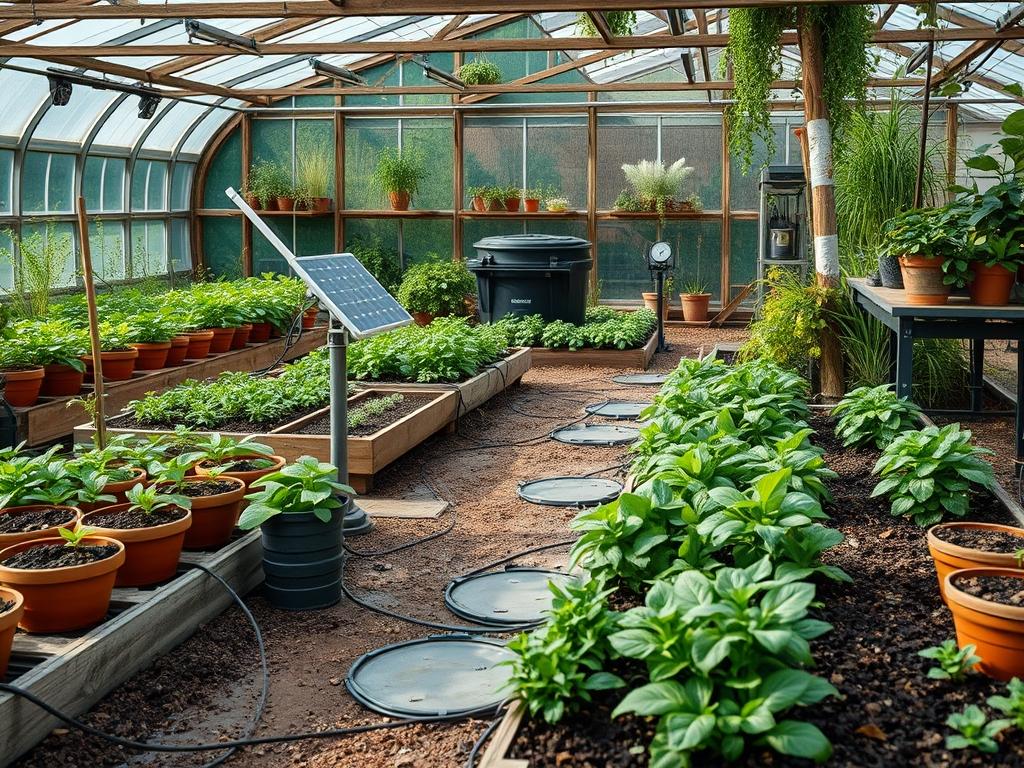
Modern landscape architecture increasingly demands a marriage between aesthetic elegance and technological autonomy. Homeowners and commercial developers are no longer satisfied with static gardens that require constant manual intervention; they seek a self-sustaining ecosystem that thrives regardless of municipal water restrictions or remote location challenges. Achieving this balance involves a deep understanding of climate resilience, where the visual impact of lush foliage is supported by invisible but robust infrastructure. High-performance landscapes must address the specific microclimates of a property, ensuring that the curb appeal remains consistent during peak summer heat. By integrating Solar Powered Irrigation Tech, designers can create sophisticated environments that manage water resources with surgical precision. This transition toward automated, renewable-energy-driven systems represents the future of outdoor environment consultancy, where luxury is defined by both the beauty of the design and the efficiency of its operation.
Designing a landscape that functions as a cohesive unit requires more than just placing plants in the ground. It involves the strategic manipulation of space, light, and topography to create a sensory experience that feels both natural and intentional. The challenge for many modern properties lies in maintaining these expansive or intricate designs without inflating utility costs or environmental footprints. Solar-powered solutions offer a unique advantage here, allowing for the irrigation of remote zones, steep slopes, or “off-grid” garden pockets where running traditional electrical conduit would be cost-prohibitive. As the focus shifts toward sustainability, the role of the landscape architect is to ensure that every retaining wall, swale, and walkway serves a dual purpose of beauty and function, supported by a power source that is as consistent as the sun itself.
Landscape Design Principles
Effective landscape design starts with the principle of visual balance. This involves the distribution of “weight” through color, texture, and mass. Symmetry provides a sense of formality and order, often used in entryways to create a welcoming atmosphere. Conversely, asymmetrical designs offer a more relaxed, organic feel that mimics natural woodland or meadow settings. Within these frameworks, focal points serve as the anchor for the eye. A large multi-stem specimen tree, a bespoke water feature, or a structural pergola can define the character of the entire space. To ensure these focal points remain vibrant, the underlying irrigation plan must be established before the first shovel hits the dirt.
Elevation layers are equally critical in modern planning. By utilizing boulders, terraced beds, and varied plant heights, a designer can create a sense of depth even on flat lots. This verticality is not just for show; it assists with natural drainage and helps define distinct “outdoor rooms.” When planning these layers, the placement of Solar Powered Irrigation Tech is a primary consideration. For instance, solar collectors must be positioned to receive at least 6 hours of direct sunlight, ideally on a South-facing aspect in the Northern Hemisphere. These collectors power the controllers and solenoid valves that regulate water flow, ensuring that even the most elevated, sun-drenched containers receive adequate moisture without the need for unsightly extension cords stretching across the lawn.
The layout of walkways and paths should guide the visitor through these layers while respecting the natural flow of the land. Using materials like decomposed granite, flagstone, or permeable pavers allows for groundwater recharge, which complements the mission of a solar-run garden. Visual balance is further enhanced by repeating certain species or colors throughout the design, creating a rhythmic harmony that ties the different zones together. In this context, the irrigation system acts as the silent conductor, providing the lifeblood needed to maintain the integrity of the architect’s vision through every season.
Plant and Material Selection
| Plant Type | Sun Exposure | Soil Needs | Water Demand | Growth Speed | Maintenance |
| :— | :— | :— | :— | :— | :— |
| Lavender (Lavandula) | Full Sun | Well-drained, Sandy | Low | Medium | Light Pruning |
| Hostas (Hosta) | Full to Part Shade | Rich, Loamy | Medium-High | Medium | Division Every 3 Years |
| Black-Eyed Susan | Full Sun | Adaptable/Clay | Moderate | Fast | Deadheading |
| Japanese Maple | Partial Sun | Slightly Acidic | Moderate | Slow | Structural Pruning |
| Dwarf Fountain Grass | Full Sun | Well-drained | Low | Fast | Annual Cutback |
| Boxwood (Buxus) | Full to Part Sun | Loamy, Neutral | Moderate | Slow | Shaping/Shearing |
| Coneflower (Echinacea) | Full Sun | Poor to Average | Low | Medium | Minimal |
Implementation Strategy
The transition from a blueprint to a finished landscape requires a disciplined, step-by-step approach. The first phase is always site grading. Proper grading ensures that water moves away from the home’s foundation and toward designated drainage areas or rain gardens. Use a laser level to establish a 2 percent minimum slope for all turf areas. Once the “bones” of the landscape are shaped, the installation of hardscaping begins. This includes laying the base for retaining walls and setting the borders for patios. During this phase, it is vital to bury the mainlines for the Solar Powered Irrigation Tech. Using 1 inch PVC piping for the primary headers and high-density polyethylene (HDPE) tubing for the lateral lines ensures a durable, leak-resistant system.
Edging provides the crisp definition between lawn and garden beds. Materials such as powder-coated steel or paver stones offer longevity and prevent grass encroachment. After the structural elements are in place, the solar infrastructure is installed. This includes mounting the photovoltaic (PV) panel on a dedicated post or a discreet roof section. The panel connects to a lithium-ion battery housing, which stores energy to run the submersible pump or diaphragm pump during overcast days or nighttime cycles. Testing the pressure at each emitter is crucial; different plants require different flow rates, typically ranging from 0.5 to 2.0 gallons per hour.
Finally, the planting and mulching phase completes the transformation. When placing plants, group them according to their “hydrozones” or similar water needs. This grouping allows the solar controller to deliver the exact amount of water required for each zone, preventing waste. A 3-inch layer of hardwood mulch or pine bark nuggets should be applied across all beds. This layer suppresses weeds, regulates soil temperature, and significantly reduces evaporation, allowing the solar-powered system to operate more efficiently.
Common Landscaping Failures
The most frequent failure in high-end landscaping is poor drainage management. Even the most advanced irrigation tech cannot save a plant whose roots are constantly sitting in standing water. When soil becomes saturated, oxygen is pushed out, leading to root rot and eventual plant death. Another common mistake is soil compaction, often caused by heavy machinery during the construction phase. Compacted soil prevents water and nutrients from reaching the root zone. To mitigate this, professionals use a power tiller or aerator to loosen the soil and incorporate organic compost before planting.
Improper spacing is another hallmark of amateur design. Homeowners often want “instant” fullness and plant species too close together. Within three years, root overcrowding occurs, and the plants compete for resources, leading to stunted growth and increased disease susceptibility. Furthermore, in the realm of Solar Powered Irrigation Tech, a frequent failure is the improper placement of soil moisture sensors. If a sensor is placed in a low spot that naturally collects water, it will tell the system to stay off, even while the rest of the garden is parched. Conversely, sensors placed in too much sun may trigger over-watering. Precision in calibration and placement is the only way to avoid these technical pitfalls.
Seasonal Maintenance
Spring is the season of activation. Begin by inspecting the solar panels for any debris or pollen buildup that could reduce efficiency. Flush out the irrigation lines to remove any sediment that accumulated over the winter. This is also the time to apply a slow-release fertilizer and refresh the mulch layers to a depth of 3 inches. Check all nozzles and sprinkler heads for damage caused by frost or lawn equipment.
During the Summer, the focus shifts to monitoring. As temperatures rise, the evapotranspiration rate increases. Use the solar controller to adjust watering frequency, preferably scheduling cycles for the early morning to minimize evaporation. Monitor soil moisture sensors weekly to ensure they are providing accurate data. For the plants, regular deadheading and light pruning of fast-growing species like Dwarf Fountain Grass will keep the landscape looking sharp.
Autumn is the period of preparation. Reduce watering frequency as plants enter dormancy. This is the ideal time to plant new perennials or shrubs, as the cooler air and warm soil encourage root development. Clear fallen leaves from drainage grates and swales to prevent clogging during fall rains.
In Winter, maintenance is about protection. For regions with freezing temperatures, the irrigation system must be winterized to prevent pipes from bursting. Use an air compressor to blow out any remaining water from the lines. If your Solar Powered Irrigation Tech includes portable components, store the battery and controller in a climate-controlled environment. Fixed solar arrays should be cleared of snow to ensure they can still trickle-charge the system throughout the colder months.
Professional Landscaping FAQ
How does solar irrigation work on cloudy days?
The system relies on a battery backup that stores energy collected during sunny periods. This ensures the pump and controller function consistently, even during several consecutive days of overcast weather or through the night.
Is solar irrigation powerful enough for large lawns?
Yes, modern high-efficiency DC pumps can move significant volumes of water. By using multiple solar arrays and larger storage tanks, these systems can easily manage expansive turf areas and complex commercial landscapes.
Do I need a plumber for solar irrigation?
While basic kits are DIY-friendly, professional installations involving backflow preventers or complex mainline connections often require a licensed contractor. This ensures adherence to local building codes and protects the potable water supply.
How long do the solar components typically last?
High-quality monocrystalline panels can last 25 years or more. The lithium-ion batteries usually require replacement every 5 to 7 years, while the pumps and actuators have lifespans depending on water quality and usage.
Can I integrate solar units into existing systems?
Most current irrigation valves can be retrofitted with solar-powered DC-latching solenoids. This allows you to convert a traditional hard-wired grid into a solar-assisted system without digging up the entire underground pipe network.