
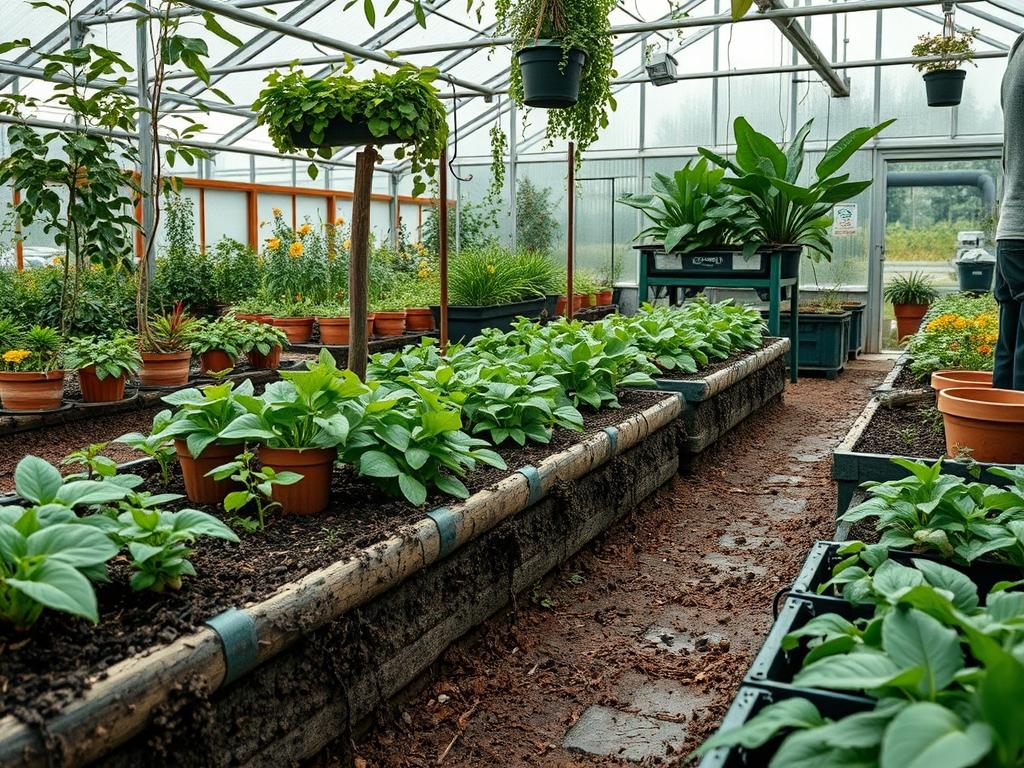
The integration of high-performance agricultural technology into residential and commercial landscapes represents a significant shift in modern outdoor environment consulting. As a landscape architect, the challenge lies in harmonizing the rigid, functional requirements of a controlled environment with the fluid beauty of a natural garden layout. A central element in this evolution is the use of Smart Greenhouse CO2 Tech, which allows for accelerated plant growth and increased photosynthetic efficiency within a structured footprint. This technology demands a sophisticated approach to site planning, as the infrastructure required for carbon dioxide enrichment must be discreetly embedded within the landscape without compromising curb appeal or outdoor functionality. Properly managing growth means looking beyond the glass walls of the greenhouse to ensure the surrounding terrain supports the weight of the structure, manages the increased runoff from high-yield irrigation, and maintains a visual flow that connects the interior production space to the exterior aesthetic.
Navigating the climate considerations of such a project requires an understanding of microclimates. A greenhouse acts as a heat sink, and the introduction of CO2 enrichment often leads to denser foliage and higher transpiration rates. This can alter the humidity levels in the immediate vicinity of the structure. When planning the landscape, one must consider how the prevailing winds will move air around the greenhouse and how the placement of Deciduous Trees can provide shade during peak summer hours while allowing light penetration in the winter. The goal is to create a seamless transition where the backyard serves as both a high-tech laboratory for cultivation and a tranquil retreat for the property owner. By focusing on site-specific drainage and the placement of utility lines for the CO2 Regulators and Sensory Arrays, we ensure that the technology enhances rather than detracts from the environment.
Landscape Design Principles
Effective landscape design for a site featuring a high-tech greenhouse begins with visual balance and symmetry. The structure itself often possesses a geometric, industrial aesthetic, so the surrounding plant beds should either lean into this modernism with clean lines or soften it with organic, layered plantings. Focal points are essential; the greenhouse serves as the primary anchor, but secondary elements like a Stone Fire Pit or a custom Pergola can help distribute visual weight across the property. Elevation layers play a critical role here. By utilizing Retaining Walls built from Natural Limestone or Stacked Slate, a designer can create tiered garden beds that draw the eye upward toward the greenhouse, making it feel integrated into the hillside rather than placed precially on top of it.
Irrigation planning must be precise when dealing with the high-output demands of Smart Greenhouse CO2 Tech. Inside the structure, water is delivered with surgical accuracy, but the exterior must handle the drainage from daily flushing and cooling systems. We utilize French Drains and Surface Grates to direct water away from the foundation and toward lower-lying Rain Gardens. This prevents soil saturation and protects the structural integrity of the greenhouse. Walkways should be constructed from durable materials like Thermal Bluestone or Decomposed Granite to provide a stable path for the frequent transport of supplies and harvested crops. These paths also serve as functional borders, defining the transition between the wilder sections of the landscape and the highly controlled cultivation zones.
Plant and Material Selection
Selecting the right plant palette requires a balance between native resilience and aesthetic compatibility with the greenhouse structure. The following table provides a guide for choosing species that complement a high-tech garden environment.
| Plant Type | Sun Exposure | Soil Needs | Water Demand | Growth Speed | Maintenance Level |
| :— | :— | :— | :— | :— | :— |
| Japanese Maple | Partial Shade | Well-Drained | Moderate | Slow | Low |
| Lavender | Full Sun | Sandy/Loamy | Low | Moderate | Low |
| Boxwood Hedging | Full Sun/Part Shade | Loamy | Moderate | Slow | High |
| Switchgrass | Full Sun | Variety | Low | Fast | Low |
| Creeping Thyme | Full Sun | Poor/Rocky | Low | Fast | Low |
| Hydrangea | Partial Shade | Rich/Moist | High | Moderate | Moderate |
| Dwarf Alberta Spruce| Full Sun | Well-Drained | Moderate | Very Slow | Low |
Implementation Strategy
The implementation of a tech-forward landscape starts with rigorous site grading. The area designated for the greenhouse must be leveled to within a fraction of an Inch to ensure that the frame does not warp and the CO2 Distribution Lines function at peak efficiency. We begin by stripping the topsoil and stockpiling it for later use in the ornamental beds. Once the sub-grade is established, we install Perforated PVC Piping for the drainage system, backfilling with Clean Crushed Stone to provide a stable, permeable base. This prevents hydrostatic pressure from building up against the greenhouse foundation during heavy rain events.
After the structural base is set, we move to hardscaping and edging. Using Steel Edging or Paver Restraints, we define the boundaries of the paths and planting areas. This creates a clean “curb” that hides the transition from the gravel base of the greenhouse to the organic mulch of the garden. For mulch, we recommend a depth of 3 Inches of Double-Grounded Hardwood Mulch; this depth is sufficient to suppress weeds and retain moisture without suffocating the root zones of the newly installed plants. Finally, we install the Drip Irrigation System for the exterior landscape, ensuring that all Solenoid Valves are housed in accessible Valve Boxes for easy seasonal maintenance.
Common Landscaping Failures
One of the most frequent failures in landscaping for high-tech environments is improper drainage management. When a greenhouse is installed, it creates a large, impermeable surface area. If the site is not graded to direct runoff away from the entry points, water will pool, leading to moss growth, foundation erosion, and potential flooding of the Control Systems. Another common error is root overcrowding. Designers often place fast-growing shrubs too close to the greenhouse walls in an attempt to hide the foundation quickly. Within a few seasons, the aggressive root systems of these plants can interfere with underground utility lines or even uplift the flooring of the structure.
Soil compaction is another silent killer in professional landscaping. During the construction of a smart greenhouse, heavy machinery like Skid Steer Loaders and Mini-Excavators often traverse the site repeatedly. This collapses the pore spaces in the soil, making it impossible for the roots of surrounding plants to breathe or absorb water. To prevent this, we use Plywood Mats to distribute weight and perform a thorough Core Aeration of the surrounding area once the heavy construction is complete. Lastly, irrigation inefficiencies often stem from mixing plant species with vastly different water needs on the same zone, leading to either root rot or drought stress in the ornamental landscape.
Seasonal Maintenance
Managing a landscape that incorporates Smart Greenhouse CO2 Tech requires a proactive four-season approach. In the spring, the focus is on “unwaking” the garden. This involves clearing dead foliage from the previous year, checking the Irrigation Backflow Preventer, and testing all Outdoor Lighting fixtures. It is also the time to apply a pre-emergent herbicide to the planting beds to reduce weed competition. As we move into summer, the priority shifts to moisture management and monitoring the greenhouse cooling systems. We ensure that the peripheral plants are not blocking the intake fans of the greenhouse, as restricted airflow can cause the internal temperature to spike and the CO2 levels to become unstable.
Autumn is the season for structural maintenance and soil health. We clean out the Gutters and Downspouts of the greenhouse to prepare for winter precipitation. This is also the best time to add Compost to the garden beds, providing a slow-release nutrient boost for the following spring. In the winter, the focus turns to protection. We use Burlap Wraps for sensitive evergreens and ensure that any exposed pipes are properly insulated or blown out to prevent freezing. Inside the greenhouse, the Smart Greenhouse CO2 Tech continues to run, but the external landscape enters a dormant phase where the architectural bones of the garden, the stone walls and walkways, become the primary visual interest.
Professional Landscaping FAQ
How does CO2 tech affect the outdoor air quality?
The carbon dioxide enrichment is contained within the greenhouse structure. Residual venting dissipates quickly into the atmosphere; it does not harm surrounding ornamental plants. In fact, nearby vegetation may experience a slight, localized growth boost due to the enriched exhaust.
What is the best foundation for a smart greenhouse?
A Reinforced Concrete Slab or a Perimeter Footing with a gravel interior is best. This provides the stability required for heavy tech equipment while allowing for adequate drainage of the nutrient-rich water used in high-output cultivation.
Can I hide the CO2 tanks in the landscape?
Yes, we use Privacy Screening or Living Walls made of Evergreen Arborvitae to conceal tanks. It is vital to maintain a 36-inch Clearance around the equipment for technician access and safety ventilation.
How do I manage the increased runoff from the structure?
Installing a Bioswale or a Dry Well is the most effective method. These features capture the concentrated runoff from the greenhouse roof and slowly filter it back into the water table, preventing erosion and protecting downstream landscapes.
Does high-tech gardening require special lighting outdoors?
Low-voltage LED Path Lights and Tree Uplights are recommended. They provide safety for nighttime greenhouse access without creating significant light pollution that could interfere with the photoperiod requirements of the plants inside the controlled environment.