
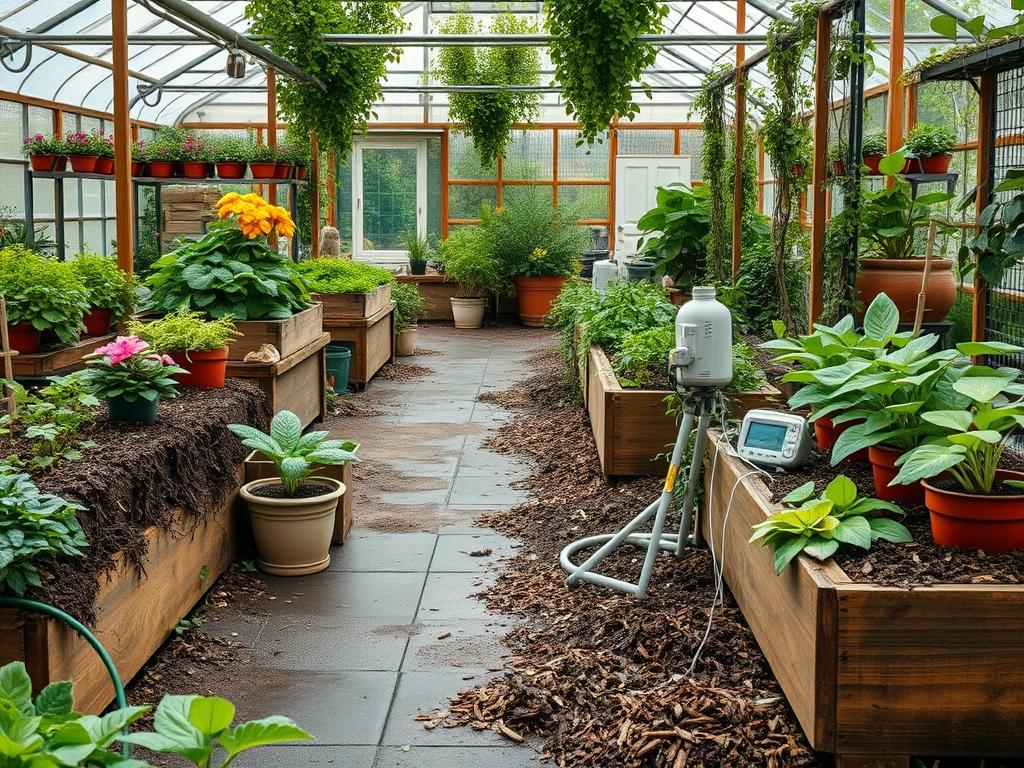
Large scale landscape management presents a unique set of logistical challenges that standard residential gardening techniques simply cannot address. When a property spans several acres, the transition from aesthetic hobbyism to complex environmental engineering becomes necessary. Maintaining curb appeal across massive estates requires a deep understanding of microclimates, where conditions on a western slope may differ drastically from a shaded valley just a few hundred yards away. For the modern estate manager or landscape architect, the primary hurdle is data acquisition. Monitoring the health of thousands of plants and sprawling turf sections manually is labor intensive and prone to human error. This is where the integration of LoRaWAN Garden Sensors becomes transformative. By utilizing Long Range Wide Area Network technology, these sensors transmit critical data over distances of several miles while consuming minimal power. Unlike Wi-Fi, which fails behind thick stone walls or across vast meadows, LoRaWAN provides the architectural backbone for a truly responsive outdoor environment.
The functionality of an expansive outdoor space relies on the synergy between hardscaping and softscaping. A property must serve as an extension of the home, providing functional living areas while maintaining a cohesive visual narrative. Landscape architects prioritize the longevity of these environments, ensuring that every maple tree or retaining wall serves a purpose within the broader ecological context. Without precise monitoring of soil moisture, salinity, and temperature, even the most expensive designs can succumb to localized neglect. LoRaWAN Garden Sensors act as the central nervous system of the property, providing the real-time feedback necessary to protect the initial investment in plant material and labor.
Landscape Design Principles
Effective landscape design on massive properties begins with the concept of symmetry and focal points. When the eye is required to travel over long distances, balance prevents the viewer from feeling overwhelmed by the sheer scale of the vegetation. Focal points, such as heavy cast iron fountains or mature white oak specimens, should be placed strategically to guide the viewer through the space. These elements anchor the design, creating a sense of permanence. However, maintaining the health of these focal points requires consistent environmental conditions. If a symmetrical row of emerald green arborvitae experiences uneven watering, the resulting visual gap can ruin the entire perspective of the property.
Elevation layers and irrigation planning are equally vital. Utilizing natural stone retaining walls creates tiered levels that add depth and visual interest. Each tier, however, introduces a new drainage profile. Water naturally migrates to the lower levels, often leaving the higher elevations parched while the lower beds become waterlogged. A professional design includes a comprehensive PVC irrigation network that accounts for these shifts in elevation. By placing LoRaWAN Garden Sensors at varying heights across the property, a manager can identify exactly when the high-altitude azaleas need hydration versus the lower-tier ferns. This data-driven approach ensures that visual balance is maintained through biological health rather than just architectural placement alone.
Plant and Material Selection
Choosing the right materials and flora is a balance of aesthetics and resilience. On large properties, selecting plants that share similar cultural requirements within specific zones simplifies management. The following table outlines standard selections for large-scale professional landscapes.
| Plant Type | Sun Exposure | Soil Needs | Water Demand | Growth Speed | Maintenance Level |
| :— | :— | :— | :— | :— | :— |
| White Oak | Full Sun | Deep, Well-Drained | Moderate | Slow | Low |
| English Lavender | Full Sun | Sandy/Alkaline | Low | Medium | Moderate |
| Panicled Hydrangea | Partial Shade | Rich, Loamy | High | Fast | High |
| Creeping Juniper | Full Sun | Poor/Dry Soil | Very Low | Slow | Low |
| Tall Fescue Grass | Full Sun/Shade | Versatile | Moderate | Fast | High |
| Japanese Maple | Partial Shade | Acidic/Moist | Moderate | Slow | Moderate |
Material selection extends beyond plants. Crushed granite or pea gravel pathways provide navigable routes through the estate, while 3-inch cedar mulch layers protect root systems from temperature extremes. When selecting pavers or flagstone for walkways, the permeability of the material must be considered to prevent runoff during heavy rain events.
Implementation Strategy
The implementation of a large-scale landscape layout begins with grading. Proper grading ensures that water flows away from the home foundation and toward designated drainage basins or swales. Using a laser level and a skid steer, contractors must establish a 2 percent slope in turf areas to prevent standing water. This phase is also the ideal time to install the 4-inch perforated drainage pipe and electrical conduit necessary for future smart features. Once the skeleton of the landscape is in place, the placement of hardscaping elements like limestone borders or fire pits defines the boundaries of the outdoor rooms.
After grading, edging should be installed to create clean transitions between turf and planting beds. A deep 4-inch steel edge prevents aggressive grass roots from encroaching on delicate perennials. When the planting begins, soil amendments such as organic compost and vermiculite should be tilled into the top 12 inches of the soil. As the final layer of shredded hardwood mulch is applied, LoRaWAN Garden Sensors should be buried at the root ball level of key specimen plants. This ensures that the implementation strategy transitions smoothly into a long-term management strategy, where every 10-foot tributary of the irrigation system is monitored for efficiency.
Common Landscaping Failures
The most frequent failure in massive property management is inefficient irrigation. Most systems are set on simple timers that do not account for rainfall or soil saturation levels. This leads to soil compaction and anaerobic conditions, where roots literally suffocate from a lack of oxygen. Without the long-range connectivity of LoRaWAN sensors, managers often fail to notice a broken sprinkler head or a clogged drip emitter until the plant shows signs of necrosis. At that point, the damage is often irreversible.
Another common error is improper spacing and root overcrowding. In an effort to achieve immediate curb appeal, many designers plant Norway spruces or Leyland cypresses too close together. As these trees mature, their root systems compete for the same limited cache of nutrients and water. This competition stresses the plants, making them more susceptible to pests like bagworms or fungal infections. Furthermore, failing to account for the weight of heavy stone boulders on top of uncompacted soil can lead to shifting and the eventual collapse of nearby drainage tiles.
Seasonal Maintenance
Spring is the season of renewal and preparation. This is when the 5-5-5 slow-release fertilizer is applied and the first layer of fresh mulch is spread. It is also the time to test the LoRaWAN signal strength across the property, ensuring that new spring growth or foliage does not obstruct the data transmission from the fields to the central gateway. Summer maintenance shifts to water management. During high-heat periods, sensors provide the data needed to adjust irrigation cycles to the pre-dawn hours, reducing evaporation and preventing leaf scorch on Japanese maples.
Autumn focuses on leaf removal and winterization. It is vital to clear fallen leaves from French drains and catch basins to prevent flooding during late-season storms. As the ground begins to freeze, irrigation systems must be blown out using a high-volume air compressor to prevent the polyethylene pipes from bursting. Winter is the time for dormant pruning of deciduous trees and applying anti-desiccant sprays to evergreens to prevent moisture loss. Throughout these transitions, the historical data collected by the sensors allows the landscape architect to refine the maintenance plan for the following year.
Professional Landscaping FAQ
How do LoRaWAN Garden Sensors differ from Wi-Fi sensors?
LoRaWAN communicates over miles rather than feet. It penetrates dense foliage and soil better than Wi-Fi. The low power consumption allows sensor batteries to last for years, which is essential for remote areas of a massive property.
What is the ideal mulch depth for large planting beds?
A depth of 3 inches is standard for most applications. This thickness provides adequate moisture retention and weed suppression without suffocating the soil. It should be kept a few inches away from the trunks of woody ornamentals to prevent rot.
How do I prevent soil compaction during construction?
Limit the use of heavy machinery to designated access paths. Use plywood sheets or ground protection mats to distribute the weight of mini-excavators. If compaction occurs, utilize a core aerator to restore oxygen flow to the root zone.
When is the best time to plant large specimen trees?
Early spring or late autumn are the ideal windows. These periods allow the root systems of large-caliber trees to establish themselves in cooler temperatures before the heat of summer or the deep freeze of winter places stress on the vascular system.
How can I identify a drainage issue before plants die?
Look for moss growth, persistent damp spots, or algae on the soil surface. LoRaWAN sensors will show soil moisture levels that remain at 100 percent long after a rain event, indicating that water is trapped in the subsurface layers.