
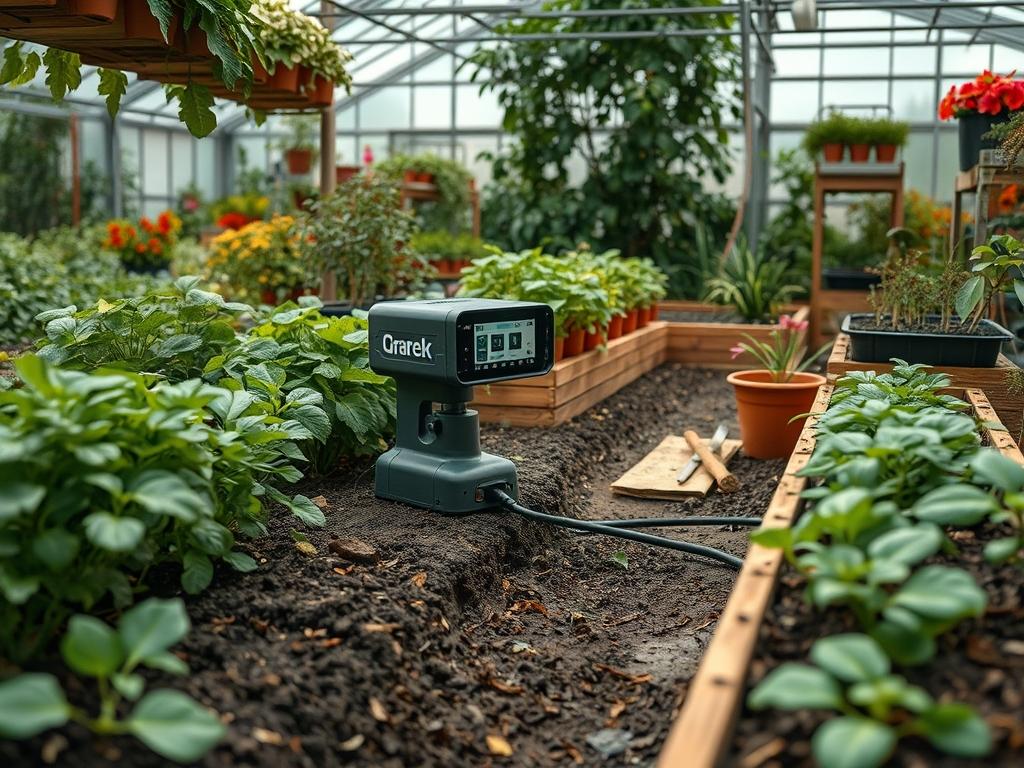
The traditional approach to residential landscaping is undergoing a fundamental shift as homeowners increasingly prioritize efficiency and precision through technology. Creating a sustainable outdoor environment requires more than just aesthetic intuition; it demands a deep understanding of how physical elements interact with modern Automated Garden Device Tech. The primary challenge for the modern landscape architect lies in balancing the organic needs of living flora with the precise requirements of digital infrastructure. High tech gardens provide an opportunity to maximize curb appeal while significantly reducing the labor involved in maintenance. By integrating smart systems, we can ensure that every Perennial and piece of Hardscaping receives exactly what it needs to thrive despite varying climate conditions. The goal is to create a seamless extension of the interior living space that functions as an intelligent, self regulating ecosystem.
While many homeowners focus solely on the visual aspects of their yard, professional planning considers the intersection of topography and technology. For instance, the placement of a Retaining wall is not just about holding back earth; it is also about managing microclimates and signal propagation for wireless sensors. Establishing a functional landscape involves calculating light exposure, soil chemistry, and moisture retention long before the first hole is dug. This proactive methodology ensures that the final design is both beautiful and resilient, capable of adapting to heat waves or unexpected frosts with minimal human intervention.
Landscape Design Principles
Successful landscape design rests on the foundational principles of symmetry and focal points, which guide the viewer’s eye through the space. In a high tech garden, focal points often revolve around structural elements like architectural Steel planters or sculptural Stone boulders. These elements provide a fixed anchor for the design while housing hidden Soil moisture sensors or Low-voltage lighting controllers. Achieving visual balance requires an intentional layering of heights; this is often referred to as the “elevation gradient.” By placing taller Deciduous trees at the perimeter and scaling down to Groundcovers near walkways, you create a sense of depth that makes a property feel more expansive than its actual acreage.
Irrigation planning is perhaps the most critical principle when integrating Automated Garden Device Tech. Instead of a uniform spray pattern that often leads to water waste and rot, modern designs utilize zoned Drip irrigation systems. These zones are mapped according to the specific hydrozones of different plant species. For example, a zone containing Drought tolerant succulents should never be on the same circuit as Hydrangeas. Walkways also play a dual role in the tech forward landscape. Beyond providing passage, they serve as conduits for subterranean wiring and provide clear boundaries for Robotic lawn mowers. A well defined edge made of Concrete pavers or Stone edging ensures that automated equipment can operate without damaging sensitive garden beds.
Plant and Material Selection
Selecting the right materials is the difference between a landscape that matures gracefully and one that requires constant replacement. In the context of automation, we look for plants that respond well to precision monitoring.
| Plant Type | Sun Exposure | Soil Needs | Water Demand | Growth Speed | Maintenance Level |
| :— | :— | :— | :— | :— | :— |
| Lavandula angustifolia | Full Sun | Well-drained, Alkaline | Low | Fast | Low |
| Panicum virgatum | Full Sun | Sandy/Loam | Medium-Low | Moderate | Low |
| Buxus microphylla | Partial Shade | Loamy, Well-drained | Medium | Slow | High |
| Hydrangea quercifolia | Part Shade | Acidic, Rich | Medium-High | Moderate | Medium |
| Acer palmatum | Dappled Sun | Moist, Well-drained | Medium | Slow | Medium |
| Sedum spurium | Full Sun | Poor, Rocky | Very Low | Fast | Low |
Materials such as Shredded cedar mulch and Pea gravel are essential for moisture retention and weed suppression. In an automated system, a consistent layer of 3 inches of mulch prevents the soil from drying out too quickly, which reduces the frequency of irrigation cycles. Furthermore, the use of Non-woven geotextile fabric beneath hardscaped areas prevents soil migration and ensures that drainage systems remains clear over time.
Implementation Strategy
The transition from a design on paper to a functioning backyard requires a systematic implementation strategy. The first step is always Grading, which involves leveling the land to ensure that water flows away from the home foundation and toward designated drainage points. This is often where French drains are installed; these are gravel filled trenches that redirect excess water. Once the grade is established, the placement of the “smart hub” occurs. This central control unit for your Automated Garden Device Tech should be located in a weather protected area with easy access to both power and a strong Wi-Fi signal.
After the infrastructure is in place, the installation move to Edging. Using a Steel spade or a dedicated Power edger, define the borders between turf and garden beds. This clear demarcation is vital if you plan to use automated mowing systems, as it defines the “virtual boundary” the machine will follow. Planting follows, starting with the largest specimens first. When placing Balled and burlapped trees, the hole should be twice as wide as the root ball but no deeper. This ensures proper oxygen exchange in the upper soil layers. Finally, the installation of Subsurface irrigation lines and Soil sensors should be completed before the final layer of Organic mulch is applied. Each sensor should be calibrated to its specific plant zone to ensure accurate data feedback.
Common Landscaping Failures
The most frequent mistakes in modern landscaping often stem from a lack of foresight regarding physical growth and drainage. One common failure is Soil compaction, which occurs when heavy machinery or high foot traffic crushes the air pockets in the soil. Without these pockets, roots cannot breathe and water cannot penetrate, rendering even the most advanced Automated Garden Device Tech ineffective. Another significant issue is Improper spacing. It is easy to plant for how the garden looks today, but a professional architect plants for how it will look in ten years. Root overcrowding can lead to systemic stress, making plants more susceptible to pests and disease.
Drainage mistakes remain a primary cause of landscape death. If Surface runoff is not managed, it can lead to standing water that drowns roots or washes away expensive Topsoil. Similarly, over-reliance on automation without manual oversight can be catastrophic. If an Irrigation valve sticks open or a sensor fails during a heatwave, a garden can be lost in days. Therefore, the tech should be seen as an assistant, not a total replacement for human observation. Finally, improper Mulch depth is a frequent error. Applying mulch too thickly against the trunk of a tree, often called “volcano mulching,” can lead to bark rot and fungal infections.
Seasonal Maintenance
Seasonal management ensures that your investment in Automated Garden Device Tech and living plants continues to yield returns. In the Spring, maintenance focuses on reactivation and calibration. This is the time to check Drip emitters for clogs, test Soil moisture sensors, and apply a fresh layer of Slow-release fertilizer. It is also the ideal window for pruning Deciduous shrubs before they enter their peak growth phase.
During the Summer, the priority shifts to irrigation monitoring. High temperatures may require adjustments to the automation software to prevent heat stress. Autumn is the season for preparation; this involves leaf removal to prevent mold and the planting of Spring-blooming bulbs. It is also the time to perform software updates on your garden controllers and clean any solar panels used for outdoor lighting. In Winter, the focus is on protection. In colder climates, this means blowing out Irrigation lines with compressed air to prevent freezing and wrapping sensitive Evergreens in Burlap to protect them from winter burn. Modern systems may also include heaters for smart birdbaths or automated de-icing cables for walkways.
Professional Landscaping FAQ
How do soil sensors improve plant health?
These devices measure the volumetric water content in the root zone. By providing real time data to your Automated Garden Device Tech, they prevent both overwatering and drought stress. This precision ensures optimal nutrient uptake and promotes deeper, more resilient root structures.
What is the best mulch for a tech integrated garden?
Triple-shredded hardwood mulch or Cedar mulch is generally preferred. These materials decompose slowly and provide a stable surface for sensors. They also excel at temperature regulation and moisture retention, which reduces the workload on your automated irrigation system.
Can robotic mowers handle steep slopes?
Most modern robotic mowers are designed to handle inclines up to 20 or 25 degrees. If your landscape features steeper Retaining walls or terraces, you must plan your transitions carefully to ensure the device can navigate between different elevation levels safely.
How often should I calibrate my automated irrigation?
You should perform a full system check at the start of every Spring and Autumn. Ensure that all Sprinkler heads are clear of debris and that the software reflects the current seasonal weather patterns and local water restrictions.
Is smart lighting necessary for a professional landscape?
While not strictly for plant health, Low-voltage LED lighting integrated with automation increases safety and extends the usability of the space. Smart systems allow for “zoning” the light, which can help protect the circadian rhythms of local nocturnal wildlife.