
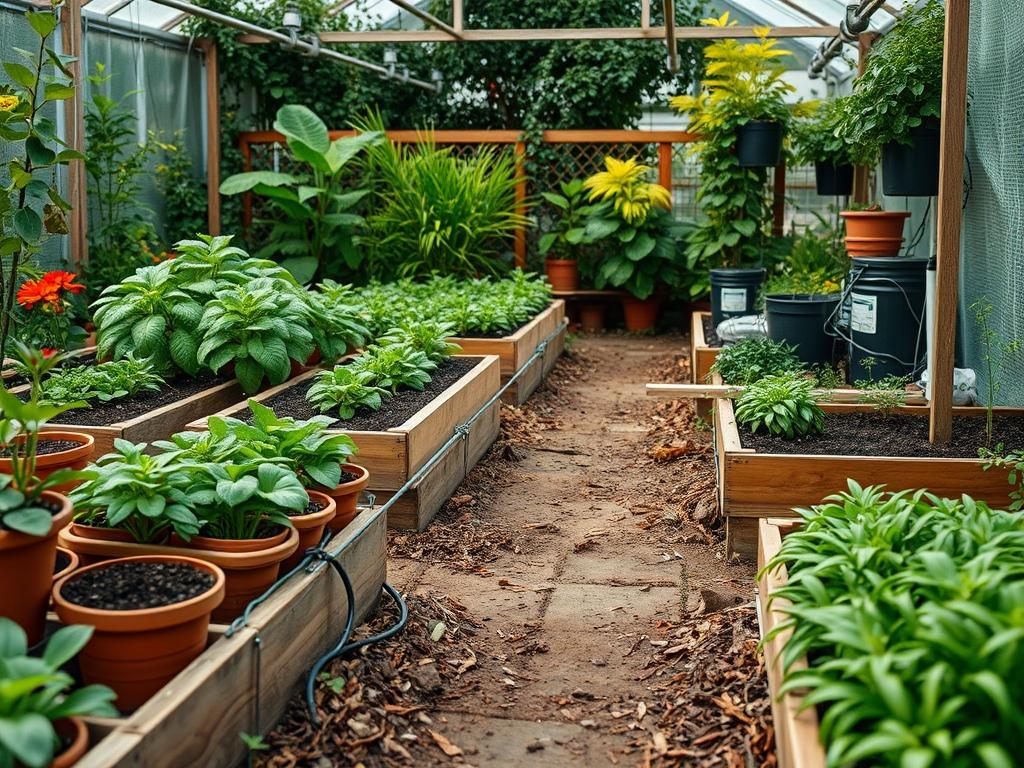
The integration of precision technology into the modern landscape has shifted from a luxury convenience to a fundamental requirement for the sustainable outdoor environment. Today, a successful landscape design must harmonize aesthetic appeal with high-performance functionality, particularly when managing diverse microclimates and fluctuating environmental stressors. The advent of Smart Garden Automation Kits provides a sophisticated solution to traditional challenges such as water waste, nutrient runoff, and labor-intensive maintenance. By embedding intelligent sensors and automated controllers into the soil and hardscape, architects can now create living ecosystems that respond in real time to atmospheric changes. This technological layer enhances curb appeal by ensuring consistent plant health while simultaneously protecting the long term investment of the homeowner.
Designing with automation in mind requires a shift in perspective. We no longer simply look at where a plant looks best; we must consider how that plant interfaces with a network of data points. A modern landscape is a hybrid of organic beauty and digital precision. Weather patterns, soil types, and sun exposure are no longer variables we guess at; they are metrics used to drive the performance of the garden. Whether you are dealing with a steep elevation change that complicates drainage or a sprawling flat lawn that demands uniform moisture, the goal remains the same. You must build a resilient environment that maximizes the utility of every square foot while minimizing the ecological footprint.
Landscape Design Principles
A professional landscape relies on the foundational principles of symmetry, visual balance, and focal points to guide the eye through the space. When incorporating Smart Garden Automation Kits, these principles serve as the framework for the technical infrastructure. Symmetry provides a sense of order, allowing for the logical placement of ground moisture sensors and weather stations that do not disrupt the visual flow. Focal points, such as a large Acer palmatum or a bespoke water feature, become the anchors for the automation system, serving as the primary zones for high-precision monitoring.
Elevation layers are critical for creating depth and managing surface runoff. By utilizing retaining walls and tiered planting beds, a designer can create distinct hydro-zones. These zones allow the automation system to deliver tailored irrigation schedules based on the specific needs of the plants at different heights. Irrigation planning must be subterranean and integrated into the initial layout to prevent unsightly surface wires or hoses. Every walkway and path should be considered a conduit for both human movement and technical infrastructure. Using permeable pavers or crushed slate for walkways assists with drainage while providing accessible routes for maintaining the hidden sensors and valves.
The concept of visual balance extends to the distribution of plant mass and hardscape volume. A dense cluster of ornamental grasses on one side of a property should be balanced by a structured element, such as a cedar pergola or a stone patio, on the other. Within this balance, the intelligent kits monitor the transpiration rates of the foliage versus the heat absorption of the hardscape. This data allows the system to adjust misting or cooling cycles to prevent localized heat islands, ensuring the outdoor living space remain comfortable during peak summer temperatures.
Plant and Material Selection
The success of an automated garden depends heavily on selecting the right botanical candidates and substrate materials. The following table highlights several varieties that respond exceptionally well to automated monitoring and precision irrigation.
| Plant Type | Sun Exposure | Soil Needs | Water Demand | Growth Speed | Maintenance |
| :— | :— | :— | :— | :— | :— |
| Lavandula angustifolia | Full Sun | Well-drained | Low | Moderate | Low |
| Buxus microphylla | Partial Shade | Loamy/Rich | Moderate | Slow | High (Pruning) |
| Sedum ‘Autumn Joy’ | Full Sun | Sandy/Gravelly | Low | Fast | Very Low |
| Hydrangea macrophylla | Partial Shade | Moist/Organic | High | Fast | Moderate |
| Carex pensylvanica | Shade | Variable | Moderate | Moderate | Low |
| Panicum virgatum | Full Sun | Clay/Sandy | Low | Fast | Low |
For the infrastructure, high-quality materials are essential to protect the technology. We recommend UV-resistant PVC conduits for all low-voltage wiring and heavy-duty brass solenoid valves for the irrigation manifolds. When selecting mulch, a 3 inch layer of double-shredded hardwood mulch is standard for moisture retention. For paths, decomposed granite or river rock provides stability and a modern aesthetic.
Implementation Strategy
The implementation of a high-tech garden starts with the structural preparation of the site. Grading is the most critical first step; you must ensure a 2 percent slope away from all residential structures to prevent foundation damage and water pooling. Once the grade is established, the placement of retaining walls and perpetual drainage systems, such as French drains, should be finalized. This creates the skeleton of the landscape, allowing you to map out where the automation hubs will be located.
Next, you must plan the edging and bed preparation. Use steel landscape edging to create crisp, clean lines between the lawn and the planting beds. This edging serves a dual purpose as a guide for automated mowers and a containment barrier for mulch. Before any plants go into the ground, install the primary irrigation lines and sensor leads. Ensure that conduit pipes are buried at least 12 inches deep to avoid accidental damage from aeration or future planting maneuvers.
Once the hardscape and technical backbone are in place, focus on soil conditioning. Use a power tiller to integrate organic compost and expanded shale into the top 8 inches of soil to improve aeration and drainage. After planting, apply the sensors at the root ball level of your key focal plants. Finally, apply a consistent layer of mulch. A 3 inch depth is ideal because it suppresses weeds while allowing the ground sensors to accurately read the moisture levels of the soil without interference from surface evaporation.
Common Landscaping Failures
The most frequent failure in modern landscaping is improper drainage management. Even the best Smart Garden Automation Kits cannot compensate for a garden that sits in a bowl. Without a proper exit strategy for excess water, soil becomes anaerobic, leading to root rot and the eventual death of expensive specimens. Another common mistake is root overcrowding. Designing for the size of the plant at the nursery rather than its mature size leads to a cluttered landscape where sensors become tangled in root systems, making replacement nearly impossible without significant disruption.
Soil compaction is another silent killer, particularly in high-traffic areas or zones where heavy machinery was used during construction. Compacted soil prevents water and oxygen from reaching the root zone, rendering even the most advanced drip irrigation systems ineffective. Furthermore, many homeowners fail to account for signal interference. Placing a smart hub behind a dense stone wall or near a large metal shed can block the Wi-Fi or LoRaWAN signals required for the automation to function. Finally, the “set it and forget it” mentality leads to failure. Sensors require calibration, and filters in the irrigation manifold must be cleaned to prevent clogs.
Seasonal Maintenance
Seasonal care is what separates a thriving landscape from a declining one. In the spring, your focus should be on system calibration. Test all soil moisture sensors and verify that the solenoid valves are opening and closing correctly. Apply a fresh 2 inch layer of mulch to replenish what decomposed over the winter and use a slow-release granular fertilizer to provide a baseline of nutrients for the growing season.
Summer maintenance centers on heat management. Your automation system should be programmed to water in the early morning hours, typically between 4 AM and 6 AM, to minimize evaporation. Monitor the data for spikes in soil temperature and adjust the frequency of hyper-local misting zones for sensitive species like Japanese Maples. Autumn is the time for infrastructure protection. Clear all debris from catch basins and trench drains. Prune back dead perennials and prepare the technical components for colder weather.
Winter is the season for dormant maintenance. If you live in a climate with freezing temperatures, it is vital to blow out the irrigation lines with an air compressor to prevent burst pipes. Disconnect and store any sensitive outdoor controllers or removable sensors in a climate-controlled environment. While the plants are dormant, review the data logs from the previous year. This analysis allows you to identify which zones were under-watered or over-saturated, enabling you to make informed adjustments to the programming before the next spring cycle begins.
Professional Landscaping FAQ
What are the primary benefits of Smart Garden Automation Kits?
These kits optimize resource usage by delivering water and nutrients only when sensors detect a specific need. This precision reduces water bills, prevents plant disease caused by overwatering, and ensures your landscape thrives even during periods of extreme weather or neglect.
How deep should I bury my irrigation lines and sensors?
Main irrigation lines should be buried between 12 and 18 inches deep to protect them from frost and surface activity. Sensors are typically placed at the root zone level, usually 6 to 10 inches deep, depending on the plant species.
Can smart systems be integrated into existing, mature landscapes?
Yes, retrofitting is common. Wireless sensors and battery-powered hose-end controllers allow for easy integration without large-scale excavation. However, for a seamless look, burying low-voltage wires and utilizing existing irrigation manifolds is the preferred professional approach for long-term reliability.
Which mulch type is best for automated irrigation?
Double-shredded hardwood mulch is the industry hardwood standard. It stays in place during heavy rain, retains moisture effectively, and breaks down slowly. Avoid light, nugget-style bark or pine straw, which can shift and block sensor signals or clog automated components.
How do I prevent signal loss between sensors and the hub?
Keep the central hub in a clear line of sight or use mesh network extenders. Avoid placing controllers behind thick masonry walls or underground without proper enclosures. Standard 2.4GHz Wi-Fi or LoRaWAN protocols generally provide sufficient range for most residential lots.