
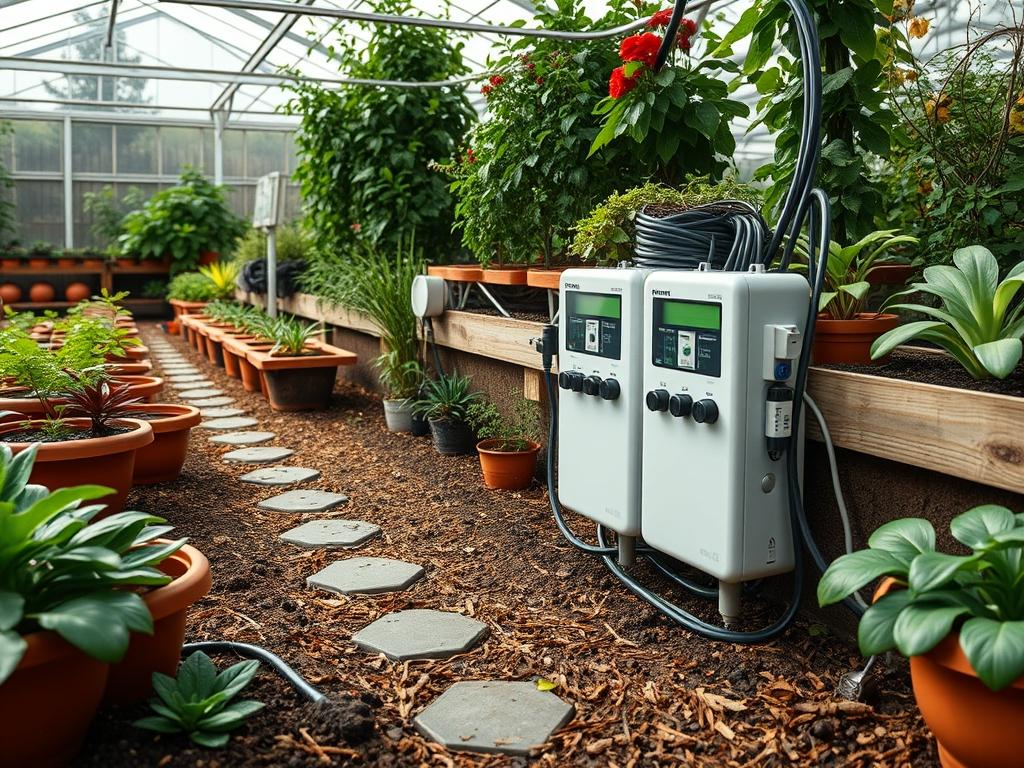
The modern landscape serves as an extension of the interior living space, requiring a seamless bridge between natural elements and functional technology. As homeowners demand more from their outdoor environments, the challenge for the landscape architect is to integrate power sources that are both discreet and durable. High-performance outdoor lighting, automated pond pumps, and irrigation sensors all rely on consistent electricity. Traditional outdoor outlets often fall short in functionality, leading to the necessity of Automated Garden Power Strips. These devices allow for sophisticated scheduling and remote management, but they must be selected with climate resilience and safety as the primary criteria. A poorly planned electrical layout can compromise the curb appeal of a high-end property or, more importantly, create a fire hazard in dense vegetation.
Climate considerations dictate every decision in professional site planning. In regions with heavy snowfall or high humidity, the durability of electrical housing is non-negotiable. Designers must account for the IP64 or IP66 ratings of any power distribution tool to ensure it can withstand wind-blown dust and splashing water. Beyond mere functionality, the goal of a well-executed plan is to enhance the outdoor experience. By utilizing Automated Garden Power Strips, we can create “scenes” within the garden that trigger at sunset or through moisture sensors. This technical integration supports a more sustainable approach to landscape management, reducing wasted energy while ensuring that the aesthetic value of the site remains consistent throughout the night and day.
Landscape Design Principles
Successful landscape design rests on the mastery of spatial organization and visual weight. Symmetry provides a sense of formal elegance, often used near entryways or main thoroughfares to guide the visitor’s eye. However, achieving this balance requires more than just plant placement. It requires the strategic position of focal points such as fountains or specialized uplighting. To power these elements, the Automated Garden Power Strip must be positioned in a location that is accessible for maintenance but hidden from the primary line of sight. We often use elevation layers to create depth, where taller shrubs create a backdrop for lower-lying perennials. Within these layers, wiring is tucked behind retaining walls or buried inside conduit to maintain a clean appearance.
Irrigation planning is another pillar of professional design. The placement of pop-up sprinklers and drip lines must be coordinated with the electrical plan to prevent water intrusion into power hubs. Walkways should be illuminated for safety, but the light must be soft and indirect. By using automated strips, we can group different sections of the walkway into zones. This allow for the dimming of lights around a fire pit while keeping the path to the house bright. Visual balance is achieved when the technology supports the garden rather than distracting from it. Every technical component, from the GFCI outlet to the smart controller, should be treated as a hidden layer of the garden infrastructure.
Plant and Material Selection
| Plant Type | Sun Exposure | Soil Needs | Water Demand | Growth Speed | Maintenance Level |
| :— | :— | :— | :— | :— | :— |
| Boxwood (Buxus) | Full Sun to Shade | Well-Drained | Moderate | Slow | Medium |
| Lavender (Lavandula) | Full Sun | Sandy/Rocky | Low | Moderate | Low |
| Hosta (Hosta spp.) | Partial to Deep Shade | Rich/Moist | Moderate | Moderate | Low |
| Japanese Maple | Filtered Sun | Acidic/Loamy | Moderate | Slow | High |
| Ornamental Grass | Full Sun | Varied | Low | Fast | Low |
| Hydrangea | Partial Shade | Moist/Well-Drained | High | Fast | Medium |
Implementation Strategy
The transition from a design concept to a physical garden requires a meticulous step-by-step approach. The first phase is always grading. We must ensure the ground slopes away from the home and any major electrical installations at a minimum of 2 percent grade. This prevents pooling water from reaching the Automated Garden Power Strips or other sensitive equipment. Once the site is leveled, we begin trenching for the main utility lines. It is advisable to use 1-inch PVC conduit for all underground wiring, buried at least 18 inches deep to meet standard safety codes. This depth protects the lines from accidental damage during future aeration or planting.
After the infrastructure is in place, we focus on edging. This creates a clean definition between turf and planting beds, often using steel edging or poured concrete. The power strips are then mounted on pressure-treated 4×4 posts or hidden within vented artificial boulders. We then apply a 3-inch layer of hardwood mulch to provide moisture retention for the plants and a finished look for the beds. Drainage is continuously monitored throughout this process. We often install French drains or catch basins in low-lying areas to channel runoff. Hardscaping elements, such as paver patios or stone walkways, are installed last to ensure they are not damaged during the heavy planting phase.
Common Landscaping Failures
The most frequent mistake in landscape architecture is improper drainage. When water collects near the foundation or in the middle of a lawn, it leads to soil compaction and root rot. In the context of electrical safety, poor drainage can submerge power stations that are not rated for immersion, leading to short circuits. Another common failure is root overcrowding. Homeowners often plant for immediate impact, forgetting that a 2-gallon shrub will eventually grow to 6 feet in wide. This overcrowding chokes out smaller plants and can eventually heave hardscape materials or wrap around buried electrical conduit.
Improper spacing and soil compaction are silent killers of high-end designs. When heavy machinery is used during construction without remediating the soil, the pore space in the earth is crushed. This prevents air and water from reaching the roots, leading to stunted growth. Furthermore, irrigation inefficiencies often stem from “clashing” zones. If a high-water demand Hydrangea is on the same zone as a drought-tolerant Lavender, one will inevitably suffer. The same logic applies to power management. Overloading a single Automated Garden Power Strip with high-wattage well pumps and large lighting arrays can trip breakers and wear out the internal relays prematurely.
Seasonal Maintenance
Landscape management is a year-round commitment that changes with the cycles of the environment. In the spring, the focus is on cleanup and preparation. This involves pruning dead wood from deciduous trees, applying pre-emergent herbicide, and testing the irrigation system for leaks. This is also the time to inspect all Automated Garden Power Strips for signs of pest intrusion or casing cracks caused by winter ice. Ants and spiders often find their way into outdoor boxes, so a quick cleaning of the contacts and seals is essential for fire prevention.
During the summer, the priority shifts to hydration and pest control. Mowers should be set to a higher 3.5-inch height to shade the soil and reduce water evaporation. The automated power systems are invaluable here, as they can be programmed to run misting systems during the hottest parts of the day. In autumn, we prepare the plants for dormancy. This includes core aeration of the turf and planting spring bulbs. For the electrical components, we ensure that falling leaves are cleared away from any power sources to prevent heat buildup. Finally, in winter, the landscape architect must focus on protection. Sensitive plants may need burlap wraps, and any power strips not in use for holiday lighting should be disconnected or shielded from heavy ice accumulations to preserve their internal electronics.
Professional Landscaping FAQ
How do I choose the right IP rating for my power strip?
For most garden applications, an IP64 rating is the minimum requirement. It protects against dust and water splashes. However, if the strip is located near a heavy-duty sprinkler or in a flood-prone area, an IP66 rating is safer.
Can I plug a pool pump into an automated garden power strip?
Only if the strip is rated for the specific amperage of the pump. Most heavy-duty pumps require a dedicated circuit. Always check the wattage limit on the power strip and ensure it has built-in surge protection.
Should I bury the power strip to hide it?
Never bury a power strip unless it is specifically designed for direct burial. Most are intended for surface mounting. Instead, hide them behind Boxwoods or inside a specialized weatherproof enclosure that allows for proper ventilation and cord exits.
What is the benefit of an automated strip over a manual one?
Automation allows for precision scheduling and remote monitoring. You can link your garden lights to local sunset times or turn off water features from your phone, which significantly reduces energy consumption and extends the life of your equipment.
How deep should I bury the conduit for my garden power?
In most jurisdictions, PVC conduit carrying electrical lines must be buried at least 18 inches deep. If you are using direct-burial cable without conduit, the depth requirement often increases to 24 inches to prevent accidental contact during gardening.