
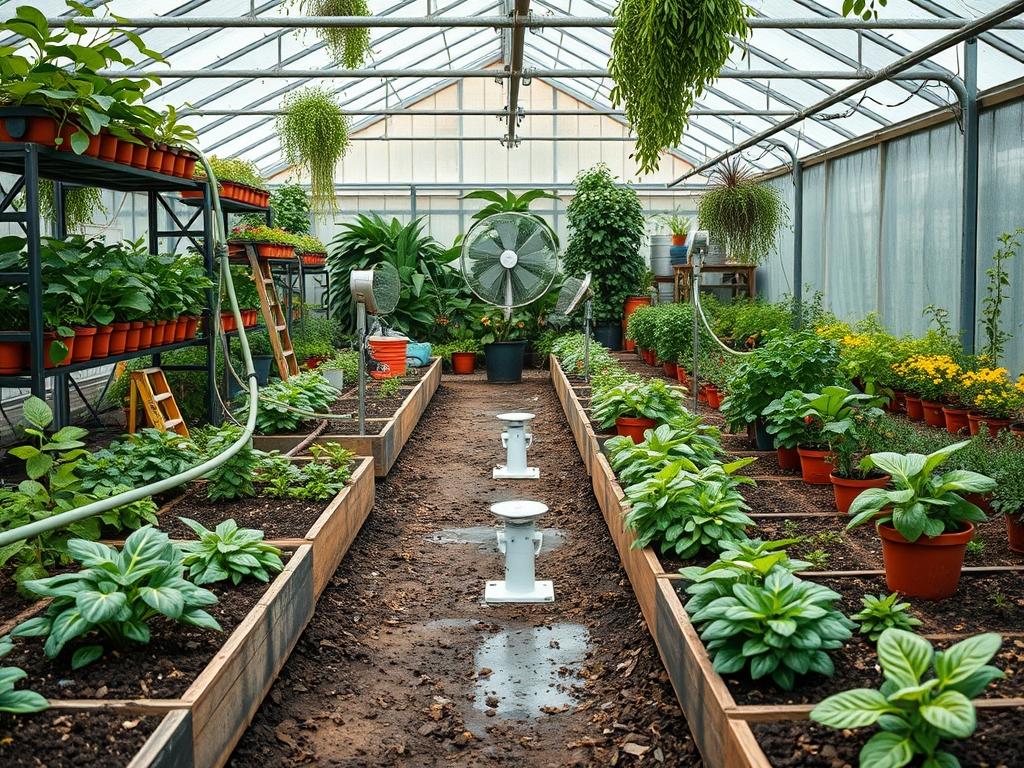
Maintaining a sophisticated landscape requires a deep understanding of the delicate balance between hardscaping elements and the living organisms that inhabit them. When we integrate a greenhouse into a professional garden design, it acts as a focal point and a functional hub for propagation. However, the most significant challenge in managed botanical environments is not the soil quality or the irrigation schedule alone, but the management of internal atmospheric conditions. Without proper air movement, a greenhouse becomes a heat trap that fosters fungal pathogens and stunts plant development. High-end landscape design aims to harmonize these structures with the surrounding environment, ensuring they provide maximum utility while enhancing the aesthetic value of the property. Integrating Solar Powered Greenhouse Fans represents the pinnacle of modern, sustainable garden planning. These devices allow for autonomous climate control without the intrusive visual clutter of electrical conduits or the ongoing operational costs of traditional power grids. By prioritizing airflow, a landscape architect ensures that the greenhouse remains a vibrant, healthy extension of the outdoor living space rather than a stagnant, overheating liability.
Visual appeal in high-end landscaping is often dictated by the transition between the wild elements of nature and the structured geometry of man-made features. A greenhouse should never appear as an afterthought. Instead, it must be positioned to complement the existing topography while maximizing exposure to the solar path. Curb appeal is significantly influenced by the cleanliness of the design, which is why solar-driven solutions are preferred in luxury settings. They allow for a wireless, clean finish that respects the architectural lines of the structure. When we consider the functionality of a garden, we must view the airflow as a structural component similar to a Retaining Wall or a Walkway. It moves heat away, distributes carbon dioxide, and prevents the buildup of excessive humidity that can lead to structural rot or glass fogging.
Landscape Design Principles
In the realm of landscape architecture, the placement of a greenhouse must adhere to the principles of symmetry and visual balance. We often use the greenhouse as a primary focal point at the end of a Flagstone Path or as a central feature within a formal parterre. However, the internal mechanics of the structure must support this visual prominence. Effective airflow design utilizes the chimney effect, where cool air enters through low-level vents and hot air is exhausted through the roof. Solar Powered Greenhouse Fans accelerate this natural process, ensuring that the volume of air within the structure is replaced several times per hour. This is particularly vital in regions where high elevation or coastal humidity can cause rapid temperature fluctuations.
Elevation layers within the garden also play a role in how air interacts with the structure. A greenhouse situated in a low-spot or a valley may suffer from poor natural ventilation, making mechanical assistance mandatory. We look for ways to integrate these fans so they do not disrupt the visual symmetry of the glass panels. By mounting fans on the leeward side of the structure, we can enhance the natural drawing of air without creating turbulent gusts that might damage delicate specimens like Orchids or African Violets. Furthermore, the integration of solar panels can be handled with an eye for design, either by choosing units with integrated panels or by mounting remote panels atop a nearby Pergola or Garden Shed to maintain a lower profile on the greenhouse itself.
Visual balance is achieved when the scale of the ventilation system matches the size of the structure. For a standard 10×12 foot Greenhouse, a fan with an 8-inch diameter is often sufficient, provided it is placed correctly in relation to the intake vents. The goal is to create a laminar flow of air that traverses the entire growing area, leaving no dead zones where pests like Spider Mites or Aphids might congregate.
Plant and Material Selection
Selecting the right plants and materials is the foundation of any resilient landscape. Inside the greenhouse, the choice of flora dictates the necessary CFM (Cubic Feet per Minute) rating for your ventilation system.
| Plant Type | Sun Exposure | Soil Needs | Water Demand | Growth Speed | Maintenance Level |
| :— | :— | :— | :— | :— | :— |
| Bougainvillea | Full Sun | Well-drained | Moderate | Fast | Low |
| Bird of Paradise | Full Sun | Loamy Soil | High | Moderate | Moderate |
| Japanese Maple | Dappled | Acidic | Moderate | Slow | High |
| Boston Fern | Indirect | Peat Moss | High | Fast | Moderate |
| English Ivy | Shade | Any | Moderate | Aggressive | Low |
| Meyer Lemon | Full Sun | Well-drained | High | Moderate | High |
The materials used for the greenhouse foundation and flooring also impact the internal microclimate. A Crushed Stone or Pea Gravel floor provides excellent drainage and helps to moderate humidity through evaporation. If using Pavers or Concrete, the thermal mass will absorb heat during the day, making the cooling power of Solar Powered Greenhouse Fans even more critical during the late afternoon hours.
Implementation Strategy
The process of installing a greenhouse and its corresponding airflow system begins with proper site grading. Before the first frame is erected, the ground must be leveled using a Transit Level to ensure structural integrity over time. We recommend a base layer of Compactable Gravel topped with Leveling Sand for any hardscaped floor. Drainage is paramount. Installing a French Drain around the perimeter of the structure prevents water from pooling against the foundation and increasing internal humidity to dangerous levels.
Once the structure is in place, the installation of the Solar Powered Greenhouse Fans should follow a specific sequence. Begin by identifying the highest point of the structure, as this is where heat accumulates. Cut the mounting hole according to the fan’s dimensions, typically using a Reciprocating Saw for wood-framed structures or a Metal Nibbler for aluminum kits. Ensure the fan is sealed with Silicone Caulking to prevent water ingress during heavy rains.
The solar panel should be oriented toward the true south to capture the maximum amount of energy during the hottest part of the day. This creates a self-regulating system. As the sun gets hotter, the fan spins faster, providing more cooling power when it is most needed. For larger installations, consider a dual-fan setup where one unit acts as an intake at a low elevation and the other acts as an exhaust at the peak. This setup mimics the natural movement of a breeze and ensures a consistent exchange of oxygen and carbon dioxide.
Common Landscaping Failures
The most frequent mistake in greenhouse management is the failure to account for air stagnation. Many hobbyists believe that merely opening a door or a manual vent is sufficient. However, without active mechanical assistance, air often traps itself in the corners of the structure, leading to localized “hot spots” that can burn foliage in hours. Another common failure is poor drainage planning. If the landscape does not slope away from the greenhouse at a rate of at least 2 percent, water will permeate the floor, leading to root rot and uncontrollable humidity spikes.
Overcrowding the interior is another trap. Even the most powerful Solar Powered Greenhouse Fans cannot circulate air through a dense wall of vegetation. Spacing plants properly is essential for the fans to do their job. In terms of infrastructure, using the wrong mulch can also be a detriment. Avoid using heavy Bark Mulch inside a greenhouse as it can harbor pests and mold in the high-humidity environment. Instead, stick to inorganic materials like River Rock or Lava Rock which do not decompose.
Finally, many fail to consider the impact of soil compaction. In the paths surrounding the greenhouse, heavy foot traffic can compress the earth, destroying the pore space needed for water to reach the roots of nearby ornamental trees. Use Flagstones or Stepping Stones to distribute weight and protect the soil structure.
Seasonal Maintenance
Landscape management is a year-round commitment. In the spring, the primary focus is on cleaning the glass or polycarbonate panels to ensure maximum light transmission. Check the fan blades for any dust or debris that may have accumulated over the winter. Lubricate any moving parts if specified by the manufacturer and test the solar panel’s output with a Multimeter to ensure it is functioning at peak efficiency.
Summer requires constant monitoring of the thermostat. This is the season when Solar Powered Greenhouse Fans work their hardest. Ensure that the intake vents are clear of any encroaching garden vegetation like Clematis or Wisteria that might have grown over the openings. In the autumn, as light levels drop, you may need to adjust the angle of the solar panels to account for the lower sun in the sky. This is also the time to clear any fallen leaves from the greenhouse roof that could shade the solar cells.
During the winter, the challenge shifts to heat retention. While the fans may not need to run as often, some movement is still necessary to prevent mold during the damp, cold months. If you live in an area with heavy snowfall, keep the solar panels clear. Even a thin layer of frost can significantly reduce the energy output, causing the fans to stall and allowing humidity to rise to levels that can kill overwintering plants.
Professional Landscaping FAQ
How many solar fans do I need for my greenhouse?
For most residential structures, one fan per 400 cubic feet of interior space is recommended. This ensures that the air is fully cycled every few minutes, preventing the buildup of heat and moisture that leads to plant disease.
Where is the best place to mount the solar panel?
Mount the panel on the roof facing south to ensure it receives direct sunlight for the longest duration. Ensure no nearby trees or tall shrubs like Leland Cypress cast shadows on the panel during the peak afternoon hours.
Do solar fans work on cloudy days or at night?
Most basic models only run when the sun is out, which is when cooling is most needed. However, versions with Lithium-Ion Battery backups are available if you require consistent airflow throughout the night to manage evening humidity.
Can I install these fans in a glass greenhouse?
Yes, but it requires precision. Use a Diamond-Tipped Glass Cutter or replace a single glass pane with a custom-cut Polycarbonate Sheet to house the fan unit. This prevents the risk of shattering the original glass during installation.
Will the fans be too loud for a quiet garden?
Modern Solar Powered Greenhouse Fans use high-efficiency brushless motors. These are designed to be whisper-quiet, rarely exceeding 45 decibels, which is quieter than a standard conversation and will not disrupt the tranquility of your outdoor environment.