
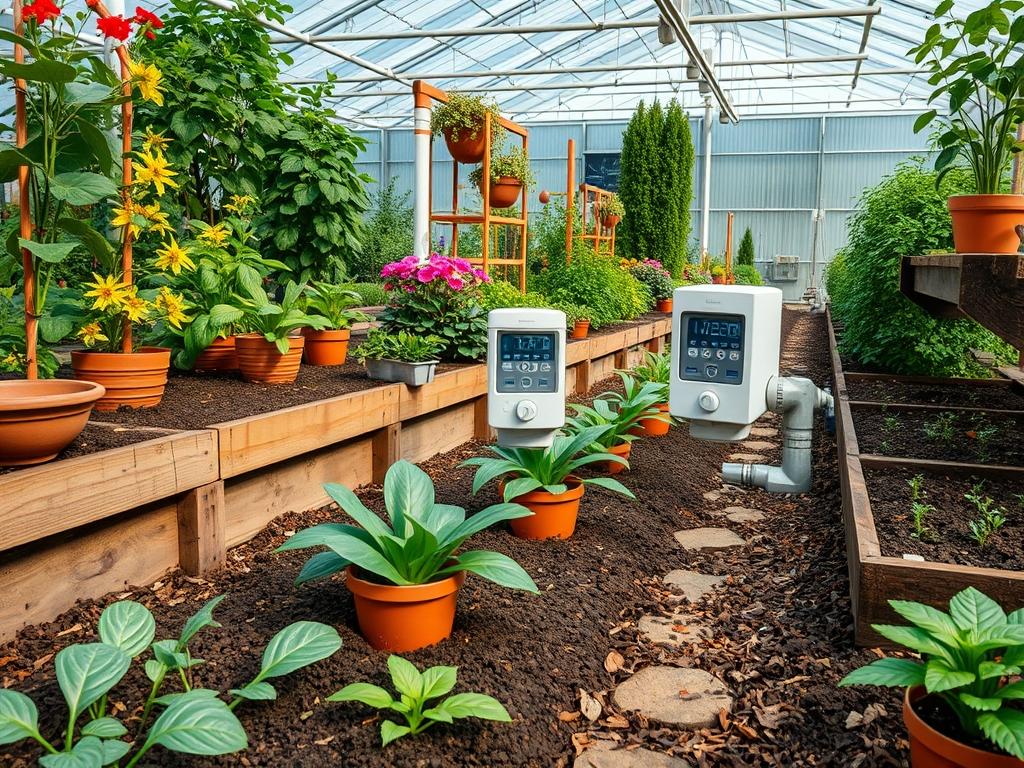
Small-scale urban gardening requires a surgical approach to hydration. In a constrained space, every square inch of soil must be accounted for, and every plant must perform a specific aesthetic or functional role. The most common pitfall for homeowners with limited acreage is the “all or nothing” approach to watering. Without a sophisticated irrigation system, the garden either suffers through a drought or becomes a muddy swamp due to manual overwatering. This is where Smart Hose Faucet Timers transform a modest backyard into a thriving, high-yield environment. These devices represent the democratization of professional-grade irrigation. By attaching directly to a standard outdoor spigot, they provide the granular control once reserved for expensive, underground systems. They allow a landscape architect to design with sensitivity to micro-climates, ensuring that the shaded corner near the retaining wall receives less water than the sun-drenched perennial border.
For a small yard, the impact of curb appeal is concentrated. A single patch of brown grass or a wilting Japanese Maple is not just a minor flaw; it is a significant visual disruption. Outdoor functionality relies on the health of the greenery to provide privacy and cooling. When we integrate Smart Hose Faucet Timers into a landscape plan, we are essentially installing a brain for the garden. These devices connect to local weather stations through Wi-Fi, automatically skipping scheduled events when rain is predicted. This level of precision prevents the soil compaction and nutrient leaching that occurs when small plots are oversaturated. It also ensures that the drainage systems we carefully engineer are not overwhelmed by unnecessary volume.
Landscape Design Principles
Effective design in a small yard begins with the concept of “hydro-zoning.” This involves grouping plants with similar water requirements together to create efficiency. When planning the layout, I prioritize symmetry and focal points to draw the eye away from the boundary lines. A Smart Hose Faucet Timer with multiple outlets allows us to treat the garden as a series of distinct rooms. One zone can sustain the high-demand Hydrangeas acting as a focal point, while another zone manages the low-water Creeping Thyme used between flagstone pavers.
Visual balance is achieved through elevation layers. By using retaining walls and tiered planters, we create depth in a flat space. However, elevated beds dry out faster than ground-level soil. The smart timer compensates for this by allowing for shorter, more frequent bursts of water to keep the root zones moist without causing runoff. Walkways should be planned alongside the irrigation lines. This ensures that 1/2-inch drip tubing or soaker hoses can be tucked neatly under a 3-inch mulch layer or along the edge of a path, remaining invisible to the eye but highly functional.
Plant and Material Selection
Selecting the right flora for a small yard involves balancing growth speed with maintenance. We want plants that fill the space quickly but do not become invasive or require constant pruning. The following table outlines a selection of plants that thrive when paired with the precise delivery of a managed irrigation system.
| Plant Type | Sun Exposure | Soil Needs | Water Demand | Growth Speed | Maintenance Level |
| :— | :— | :— | :— | :— | :— |
| Lavender (Lavandula) | Full Sun | Well-drained, sandy | Low | Medium | Low |
| Dwarf Boxwood | Full to Partial | Loamy, rich | Moderate | Slow | Medium |
| Coral Bells (Heuchera) | Partial Shade | Humus-rich | Moderate | Medium | Low |
| Japanese Maple | Partial Shade | Slightly acidic | High (consistent) | Slow | High |
| Blue Star Creeper | Full to Partial | Moist, well-drained | Moderate | Fast | Low |
For materials, I always recommend a professional-grade landscape fabric topped with hardwood mulch or wood chips. This combination serves two purposes: it suppresses weeds and retains the moisture delivered by your Smart Hose Faucet Timers. In areas with poor vertical movement of water, integrate pea gravel around the base of the house to assist with drainage and prevent foundation issues.
Implementation Strategy
The transition from a blueprint to a living garden requires a logical sequence. Start with grading the land. Even a small yard needs a 2 percent slope away from the home to ensure proper drainage. Once the grade is established, define your garden beds using steel or heavy-duty plastic edging. This creates a crisp line for the eye and prevents grass from encroaching on your ornamental sections.
Next, install the irrigation infrastructure. Attach a 4-way manifold to your hose bib and connect a Smart Hose Faucet Timer to each outlet. Run your main poly-tubing lines along the perimeter of the beds. Use emitter stakes or 0.5 GPH (gallons per hour) drippers at the base of each major plant. Once the lines are tested and the schedules are set in the smartphone app, cover the entire system with 3 inches of mulch. This “invisible” irrigation protects the tubing from UV damage and keeps the aesthetic clean. For hardscaping, ensure that any retaining walls are backfilled with crushed stone to allow water to move freely behind the wall, preventing the buildup of hydrostatic pressure that can lead to structural failure.
Common Landscaping Failures
The most frequent error I see in residential yards is improper spacing. Homeowners often buy plants based on their size at the nursery, failing to realize that a North Pole Arborvitae will eventually reach 15 feet in height. This leads to root overcrowding and competition for resources. In a small yard, this competition is lethal. Another common issue is soil compaction. Frequent foot traffic on wet soil collapses the air pockets that roots need to breathe. Using stepping stones or permeable pavers can mitigate this.
Irrigation inefficiency is the silent killer of urban landscapes. Many gardeners use oscillating sprinklers that lose 30 percent of their water to evaporation or overspray onto the siding of the house. This constant wetting of the home can lead to mold and rot. Smart Hose Faucet Timers solve this by focusing delivery at the soil level. Finally, failing to account for the “rain shadow” created by the house or large trees can lead to dry spots. Even during a rainstorm, plants under wide eaves may remain bone dry. A smart system allows you to manually override the rain delay for specific zones that are shielded from natural precipitation.
Seasonal Maintenance
Landscape management is a year-round commitment. In the spring, your focus should be on “waking up” the system. Flush your irrigation lines to remove any debris that accumulated over winter and replace the batteries in your Smart Hose Faucet Timers. This is also the time to refresh your mulch to a consistent 3-inch depth.
As summer heat intensifies, use the smart timer’s app to check soil moisture levels. You may need to add a “cycle and soak” feature, which applies water in two short bursts separated by an hour. This allows the water to penetrate deep into the soil rather than running off the surface. In autumn, reduce watering frequency as plants enter dormancy. Use this time to plant native species or spring-blooming bulbs.
Winter is about protection. In colder climates, you must disconnect the Smart Hose Faucet Timers from the spigot and drain them. If water freezes inside the internal valve, it will crack the housing. Store the devices indoors and cover your hose bibs with insulated foam protectors. Check your drainage basins to ensure they are clear of fallen leaves, preventing ice dams from forming during the thaw-freeze cycles of late winter.
Professional Landscaping FAQ
How do smart timers save money on water bills?
They utilize real-time weather data to prevent watering during or after rain. By targeting the root zone with drip lines, they eliminate wasteful overspray and evaporation. This precision typically reduces outdoor water consumption by 30 to 50 percent.
Can I run multiple zones from one hose bib?
Yes. By using a multi-port manifold, you can attach several Smart Hose Faucet Timers. Each timer controls a different line, allowing you to water your lawn, flower beds, and hanging baskets on completely independent schedules and durations.
What is the best mulch for moisture retention?
A double-shredded hardwood mulch is ideal. It mats together to create a protective barrier that prevents evaporation. Avoid large nuggets or rocks if moisture retention is your primary goal, as they allow more airflow to reach the soil surface.
Are smart timers difficult to program for beginners?
Most modern units use intuitive smartphone apps. They feature setup wizards that ask for your zip code and plant types. The software then calculates a baseline schedule, which you can manually adjust based on your specific yard observations.
How do I prevent my small yard from flooding?
Ensure your yard is graded away from structures and use French drains or catch basins in low spots. Integrating permeable surfaces and using smart timers to prevent over-saturation will keep the soil’s natural absorption capacity high during heavy storms.