
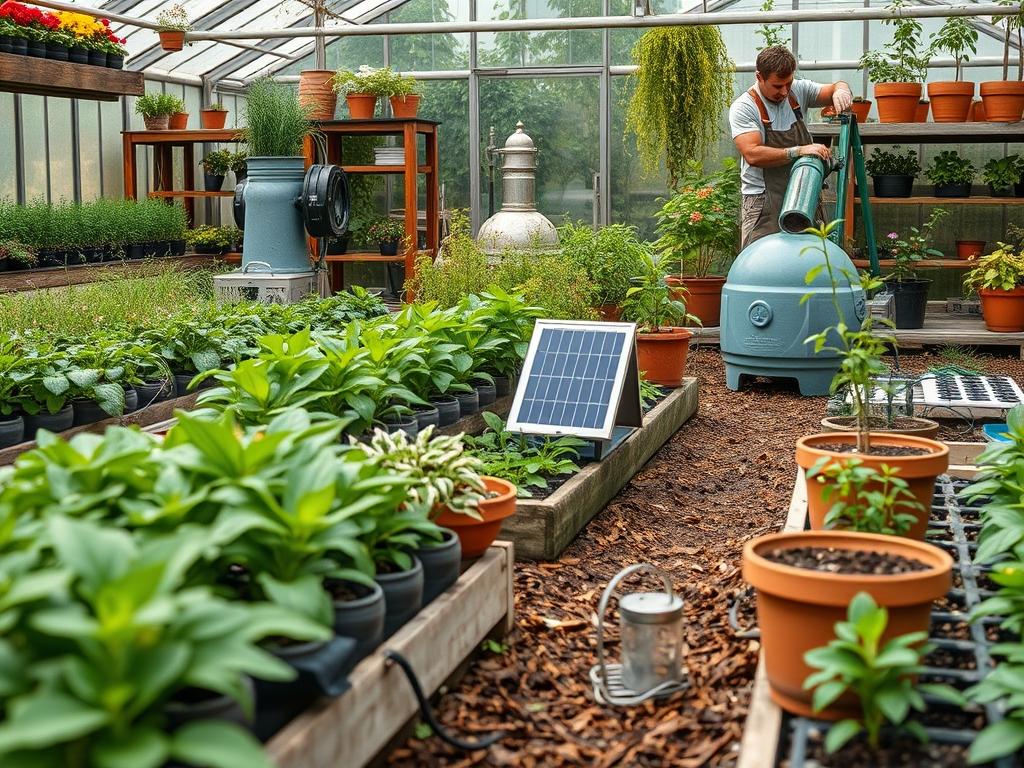
Creating a cohesive outdoor environment requires a sophisticated understanding of how biological systems interact with structural engineering. For many homeowners and estate managers, the primary challenge involves balancing aesthetic curb appeal with the functional demands of a fluctuating climate. A successful landscape is not merely a collection of plants; it is a managed ecosystem where every element, from the drainage systems to the placement of hardscape features, serves a specific purpose. When we integrate glass structures like greenhouses or sunrooms into these designs, the complexity increases significantly. These structures act as thermal collectors, often reaching temperatures that can stress or kill internal flora if not properly ventilated. This is where the integration of Solar Powered Vent Openers becomes essential. These devices allow for autonomous temperature regulation by reacting to ambient heat, ensuring that your architectural focal points remain functional and healthy without the need for complex electrical wiring that could interfere with your underground irrigation lines.
Landscape Design Principles
Professional landscaping relies on several cornerstone principles that guide the eye and ensure the longevity of the installation. Symmetry is perhaps the most immediate way to establish a sense of order. By mirroring plant groupings or hardscape patterns across a central axis, such as a Flagstone path or the entrance to a conservatory, you create a formal elegance that suggests intentionality and care. Focal points are equally crucial; these are the visual anchors of the yard. A large Specimen Tree or a garden sculpture can draw the eye through the space, but increasingly, modern designers use high-tech garden structures as these anchors. In such cases, ensuring the structure is equipped with reliable climate control tech, including Solar Powered Vent Openers, allows the building to be both a focal point and a productive growing space.
Elevation layers create depth and interest in an otherwise flat terrain. By using Retaining Walls and tiered garden beds, you can introduce a sense of verticality that makes a small space feel much larger. This layering requires careful irrigation planning to account for gravity. Water naturally flows to the lowest point, so your planting strategy must place drought-resistant species on higher tiers while moisture-loving plants occupy the base. Walkways serve as the circulatory system of the landscape. They should be constructed from durable materials like Crushed Granite or Paver Stones and should always be wide enough for two people to pass comfortably. Visual balance is the final touch; it ensures that no single part of the yard feels “heavy” compared to the rest. If you have a densly planted forest corner, balance it with an open lawn or a light-filled glass enclosure.
Plant and Material Selection
Selecting the right materials and flora is the difference between a garden that thrives and one that requires constant replacement. Below is a professional guide for common structural and ornamental choices.
| Plant Type | Sun Exposure | Soil Needs | Water Demand | Growth Speed | Maintenance Level |
| :— | :— | :— | :— | :— | :— |
| Buxus sempervirens | Full Sun/Part Shade | Well-drained | Moderate | Slow | High (Pruning) |
| Pennisetum setaceum | Full Sun | Sandy/Loamy | Low | Fast | Low |
| Lavandula angustifolia | Full Sun | Lean/Alkaline | Very Low | Moderate | Medium |
| Hydrangea macrophylla | Part Shade | Rich/Moist | High | Fast | Medium |
| Acer palmatum | Part Shade | Acidic/Well-drained | Moderate | Slow | Low |
| Taxus baccata | Full Shade | Adaptable | Low | Slow | Low |
For high-end hardscaping, use Heavy-duty Geotextile Fabric beneath your base materials to prevent weed growth and migration of the Sub-base Stone. In areas where high humidity or heat is a factor, such as inside a greenhouse, the choice of equipment is just as important as the choice of plants. Utilizing Solar Powered Vent Openers reduces the need for constant human intervention, as the wax-filled cylinders in these units expand and contract based on the temperature alone.
Implementation Strategy
The successful implementation of a landscape design begins with a meticulous Site Survey. Use a Laser Level or Transit to determine the natural gradient of the land. Accurate grading is the most critical step in protecting your home foundation; a standard 2 percent slope away from all structures is the industry benchmark. Once the land is graded, you must layout your hardscaping. Digging trenches for Steel Edging or Concrete Curbing ensures that your mulch and gravel stay in their designated zones during heavy rain events.
After the hardscape frames are in place, address the soil. Use a Tiller to incorporate organic compost and Vermiculite into the native soil to improve aeration and drainage. When planting, always dig a hole twice as wide as the root ball but no deeper than the original pot. This encourages lateral root growth, which provides better stability. For automated environments like modern greenhouses, this is the stage where you install your Solar Powered Vent Openers. These should be mounted securely to the frame of the window or roof vent. Ensure the alignment allows the piston to extend fully without obstruction. Finally, apply a 3-inch layer of Hardwood Mulch across all garden beds. This layer preserves moisture, suppresses weeds, and regulates the soil temperature for your new installations.
Common Landscaping Failures
The most frequent mistake in landscape architecture is poor drainage management. Water that pools against a wall or sits in a low spot can cause root rot in a matter of days. If its natural flow is blocked by a new Retaining Wall, you must install a French Drain or Perforated PVC Pipe wrapped in a Silt Sock to redirect the runoff. Another common error is root overcrowding. It is tempting to plant closely for immediate impact, but a young Quercus virginiana or Magnolia grandiflora will quickly outgrow a tight space, leading to stunted growth or damage to nearby underground utilities.
Improper spacing and failing to account for the mature size of a plant can ruin a design within five years. Furthermore, soil compaction is a silent killer in new builds. Heavy machinery used during construction can compress the earth into a concrete-like state, preventing oxygen and water from reaching roots. Always aerate the soil before planting. Finally, irrigation inefficiencies, such as watering surfaces rather than the root zone, lead to wasted resources and superficial root systems. In controlled environments, failing to ventilate properly is a catastrophic failure. If you do not have automated systems like Solar Powered Vent Openers, the interior temperature of a glass structure can spike well above 120 degrees Fahrenheit on a sunny day, effectively cooking your prized plants in a single afternoon.
Seasonal Maintenance
Maintenance is a year-round commitment that changes with the solar cycle. In the Spring, the focus is on rejuvenation. This is the time to apply a Pruning Saw to dead or damaged branches and refresh your Mulch layers. It is also the perfect time to calibrate your Solar Powered Vent Openers to ensure they are opening at the correct threshold for the warming weather. Summer is a period of stress management. Deep, infrequent watering is better than light daily misting. Check your Irrigation Controller for errors and monitor for pests that thrive in heat.
Autumn is designated for cleanup and preparation. Rake fallen leaves to prevent them from smothering the lawn and creating fungal issues. This is also the best time for planting new trees, as the cooler air and warm soil encourage root establishment without the stress of summer heat. In Winter, you must protect your assets. Shut off external water valves and drain Irrigation Lines to prevent freezing and bursting. If you use Solar Powered Vent Openers, inspect the cylinders for leaks. Some homeowners choose to remove the wax-filled power tubes during extreme winter freezes to prolong their lifespan, though many modern units are rated for year-round exposure.
Professional Landscaping FAQ
How do solar vent openers benefit my landscape’s greenhouse?
They provide automated, electricity-free climate control. By opening vents as temperatures rise, they protect sensitive plants from heat stress without requiring you to manually monitor conditions throughout the day, ensuring your landscape feature remains a healthy, functional environment.
What is the best way to prevent weeds in stone paths?
Lay a high-quality Non-woven Geotextile Fabric over the soil before adding your Base Rock. For the final layer, use a Polymeric Sand between pavers, which hardens when wet to create a barrier that prevents seeds from taking root.
How do I determine the best slope for drainage?
Aim for a minimum fall of one inch for every four feet of distance. This ensures that surface water moves steadily toward your Catch Basins or swales without causing erosion or allowing stagnant pools to form near your foundation.
Which mulch is best for long-term soil health?
Arborist wood chips or Double-shredded Hardwood Mulch are superior choices. Unlike rock or dyed wood, these organic materials decompose over time, adding vital nutrients and beneficial microorganisms back into the soil while maintaining consistent moisture levels for your plants.
Can I install solar powered vent openers myself?
Yes, most are designed for straightforward installation with a Screwdriver and Level. They attach directly to the vent frame. The critical factor is ensuring the vent is not stuck and that the opener is aligned to lift the weight smoothly.