
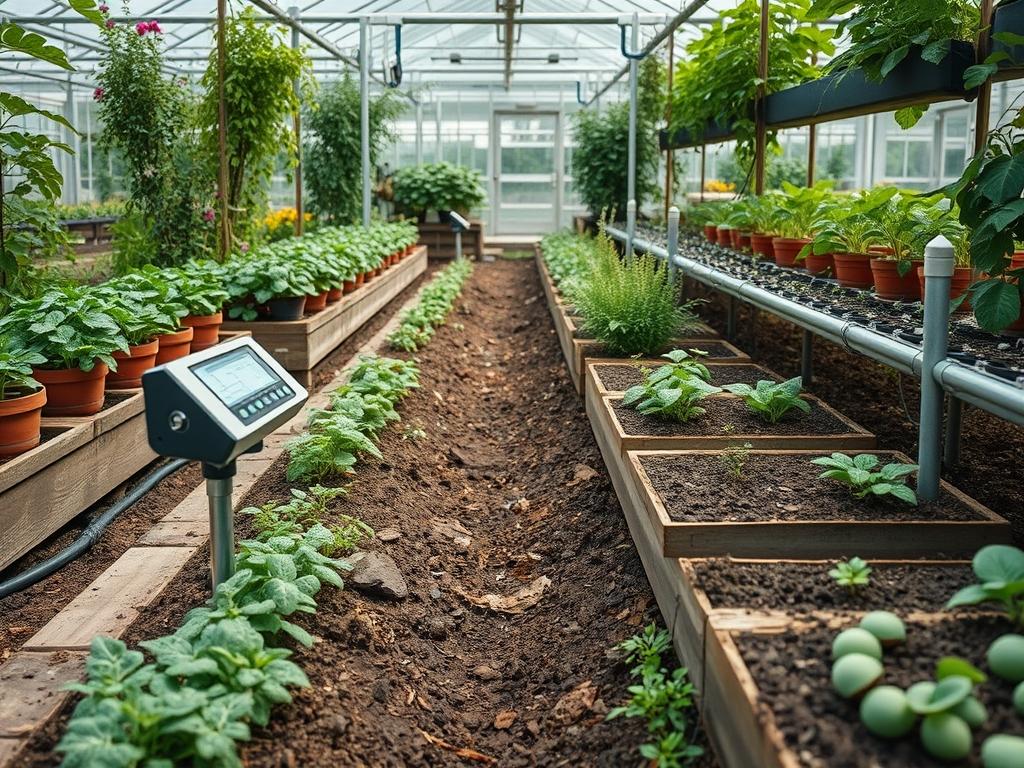
Integrating a greenhouse into a cohesive landscape design requires a sophisticated understanding of both aesthetic balance and environmental control. For the modern estate or the commercial nursery, the structure is rarely an isolated entity; it is the heart of a broader, living system. Professional landscape architects view the perimeter of a greenhouse as a critical transition zone where the controlled interior environment meets the volatile outdoor climate. Effective planning ensures that the external environment facilitates internal success through windbreaks, solar optimization, and intelligent moisture management. This synergy is significantly enhanced by Remote Greenhouse Monitoring, which provides the empirical data necessary to adjust external landscaping elements, such as shade tree positioning or irrigation runoff patterns, to ensure the entire site operates at peak efficiency.
The visual impact of a large glass or polycarbonate structure can be stark if not softened by thoughtful plant placement and hardscaping choices. Curb appeal in this context is not merely about beauty; it is about perceived professionalism and structural integration. A well-designed landscape manages the topography to direct water away from the greenhouse foundation, preventing the humidity spikes and structural subsidence that plague poorly planned builds. By focusing on outdoor functionality, we create a workspace that is both resilient to local climate shifts and aesthetically pleasing to clients or visitors. This guide explores the foundational elements of this integration, ensuring that your greenhouse serves as a high-performance focal point within your larger outdoor environment.
Landscape Design Principles
Symmetry and visual balance serve as the primary anchors for any professional grade landscape. When positioning a greenhouse, architects often utilize the structure as a primary focal point, drawing the eye through the use of axial paths and mirrored planting beds. If the greenhouse is the destination, the approach must feel intentional. This is achieved through the use of Flagstone Walkways or Crushed Granite paths that provide clear, stable transit for heavy equipment and foot traffic. These paths should be at least 4 Feet wide to accommodate garden carts and ensure accessibility. Visual balance is maintained by layering plants according to height; taller specimens provide a backdrop, while lower shrubs and groundcovers transition the vertical walls of the greenhouse into the horizontal plane of the garden.
Elevation layers are perhaps the most critical technical aspect of the design. A greenhouse should ideally sit on a slightly elevated pad of Compacted Road Base or Screened Gravel to encourage positive drainage. By manipulating the surrounding grade, a landscape architect can create “swales” or decorative dry creek beds that intercept heavy rainfall before it reaches the structure. Furthermore, irrigation planning must be decoupled from the greenhouse footprint. Exterior spray heads should never hit the glass or frame, as mineral deposits can cloud the surface and impede light transmission. Instead, professional designs favor Drip Irrigation Lines hidden beneath a layer of Hardwood Mulch, which delivers water directly to the root zones of peripheral plants without affecting the greenhouse interior.
Plant and Material Selection
Selecting the right plant palette requires an understanding of how these species will interact with the greenhouse microclimate. For instance, deciduous trees can provide beneficial summer shade while allowing winter sun to penetrate the glass.
| Plant Type | Sun Exposure | Soil Needs | Water Demand | Growth Speed | Maintenance Level |
| :— | :— | :— | :— | :— | :— |
| Taxus baccata (Evergreen) | Full Sun to Shade | Well-Drained | Moderate | Slow | Low |
| Acer palmatum (Deciduous) | Partial Shade | Loamy, Acidic | High | Moderate | Medium |
| Lavandula angustifolia | Full Sun | Sandy, Gritty | Low | Moderate | Low |
| Panicum virgatum (Grass) | Full Sun | Adaptable | Low | Fast | Very Low |
| Buxus sempervirens | Full Sun to Part | Rich, Moist | Moderate | Slow | High (Pruning) |
| Sedum spurium | Full Sun | Poor, Rocky | Very Low | Fast | Very Low |
The materials used in the landscape should reflect the durability of the greenhouse itself. Weathering Steel (Corten) edging offers a modern, clean line that prevents grass encroachment, while Natural Fieldstone retaining walls can manage elevation changes while providing thermal mass that stabilizes ground temperatures. When used in conjunction with Remote Greenhouse Monitoring, these selections can be monitored for their impact on local humidity and ambient heat around the intake fans.
Implementation Strategy
The successful execution of a landscape plan begins with precise grading. Before a single plant is placed, the site must be surveyed using a Transit Level or Laser Level to ensure a minimum 2 Percent slope away from the greenhouse perimeter. Once the grade is established, the layout is marked using Surveyor Stakes and Layout String. This allows the architect to visualize the physical footprint of the paths and planting beds.
For the hardscaping phase, excavations for walkways should reach a depth of at least 6 Inches. A layer of Non-Woven Geotextile Fabric is laid down to prevent soil mixing, followed by 4 Inches of compacted aggregate. This creates a permeable yet stable surface. For the planting beds, professional gardeners recommend a “trenching” method for edging. Using a Trench Spade, a 4-Inch deep V-cut is made between the lawn and the bed. This prevents root migration and provides a clean, professional finish. Finally, a 3-Inch layer of Double-Shredded Cedar Mulch is applied. This depth is specific; too thin and it fails to suppress weeds, too thick and it can suffocate the soil and encourage fungal growth.
Common Landscaping Failures
The most frequent error in professional landscaping is the mismanagement of drainage. If the exterior grade directs water toward the greenhouse foundation, the resulting hydrostatic pressure can cause leaks or even structural cracking. This is often exacerbated by the improper placement of downspouts. Every greenhouse gutter system should be piped into a Solid 4-Inch PVC Pipe and daylighted at least 10 Feet away from the structure.
Another common failure is root overcrowding. Planting large-canopy trees like Quercus robur too close to the greenhouse can lead to structural damage as maturity is reached. Roots can infiltrate drainage pipes or lift foundation slabs, while overhanging branches pose a risk during windstorms. Furthermore, soil compaction from heavy machinery during the construction phase often goes unaddressed. If the soil is not aerated with a Mechanical Aerator or amended with Organic Compost prior to planting, the landscape will suffer from poor drainage and stunted growth. Lastly, many owners fail to integrate their Remote Greenhouse Monitoring with their outdoor moisture sensors, leading to irrigation inefficiencies where the exterior is overwatered, artificially raising the humidity levels inside the greenhouse.
Seasonal Maintenance
Landscape management is a year-round commitment that changes with the solar cycle. In the Spring, the focus is on “awakening” the garden. This involves removing winter debris, applying a balanced Slow-Release Fertilizer, and checking the Drip Irrigation Emitters for clogs. It is also the time to prune any frost-damaged limbs from peripheral shrubs using Bypass Pruners.
Summer maintenance centers on moisture retention and heat management. As temperatures rise, Remote Greenhouse Monitoring data becomes invaluable for determining if the exterior mulch needs refreshing to keep soil temperatures low. During this period, weeding must be aggressive to prevent competition for water. In Autumn, the landscape is prepared for dormancy. This includes the “cut back” of perennials and the application of a final layer of mulch for insulation. If you have deciduous trees, leaf removal is mandatory; wet leaves sitting against the base of a greenhouse can lead to rot and pest infestations. Winter is the season of structural oversight. Ensure that heavy snow loads are cleared from the greenhouse roof and the surrounding paths are kept clear using Calcium Chloride de-icers, which are less corrosive to metal greenhouse frames than standard rock salt.
Professional Landscaping FAQ
How does landscaping affect my greenhouse temperature?
Strategically placed plants act as thermal buffers. Deciduous trees provide summer shade to reduce cooling costs, while evergreen windbreaks block cold winter gusts. Remote Greenhouse Monitoring helps track these temperature shifts to validate your planting strategy and improve overall energy efficiency.
What is the best mulch for greenhouse perimeters?
Double-shredded hardwood mulch or cedar mulch is preferred. These materials stay in place during heavy rain, suppress weeds effectively, and maintain soil moisture. Avoid light mulches like pine straw, which can blow against the greenhouse glass and create debris.
How do I prevent weeds from entering my greenhouse?
Maintain a 3-foot sterile zone around the greenhouse base using Crushed Stone over Landscape Fabric. Regular use of a String Trimmer along this perimeter and keeping the surrounding lawn mown prevents weed seeds from being sucked into intake fans.
Can I use a retaining wall as a greenhouse base?
Yes, a Segmented Retaining Wall can provide a level foundation on sloped terrain. It must be engineered with proper Gravel Backfill and Perforated Drain Tile to ensure water does not collect behind the wall and damage the greenhouse floor.
Which plants should be avoided near greenhouses?
Avoid trees with aggressive root systems like Salix (Willow) or species that drop excessive sap, such as Pinus (Pine). These can clog gutters, stain glass, and damage foundations. Stick to disciplined, low-debris shrubs and ornamental grasses for the immediate perimeter.