
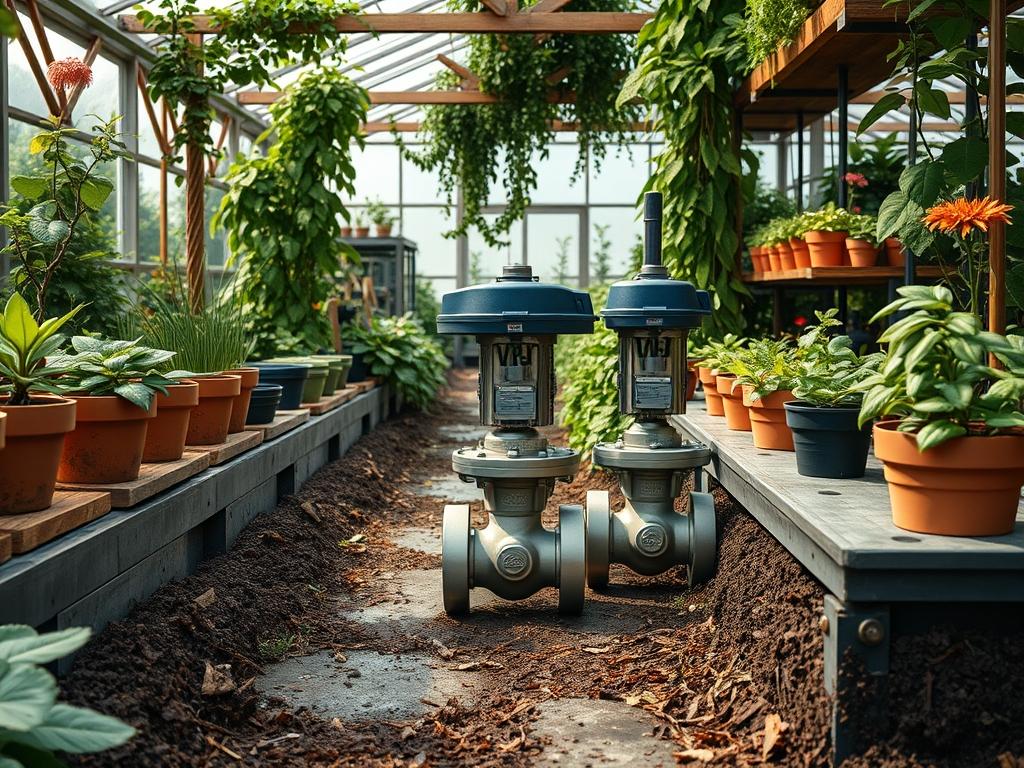
Designing a high performance outdoor environment requires a sophisticated balance between aesthetic ambition and technical precision. Modern property owners no longer view their gardens as static patches of green; instead, they see them as dynamic ecosystems that must remain resilient against fluctuating climate patterns and rising utility costs. The challenge lies in creating deep curb appeal while maintaining a system that operates with surgical efficiency behind the scenes. This is where the integration of Smart Valve Actuators becomes a necessity rather than a luxury. By automating the flow of water with granular control, these devices ensure that every Elevation Layer and Hydrozone receives precisely what it needs to thrive. A well executed landscape plan treats water as a finite resource, using smart technology to mitigate the risks of over saturation or drought stress, ultimately protecting the significant financial investment inherent in premium plant material and hardscaping.
Landscape Design Principles
Successful landscape architecture relies on the mastery of visual weight and structural rhythm. Symmetry often serves as the foundation for formal gardens, where mirrored plantings of Boxwood Hedging or uniform Brussels Block pavers create a sense of order and prestige. Conversely, informal designs utilize focal points, such as a specimen Japanese Maple or a bespoke stone water feature, to draw the eye through a choreographed sequence of spaces. Achieving this balance requires careful consideration of elevation layers. We categorize these layers into groundcovers, mid story shrubs, and the overhead canopy. Each tier possesses unique water requirements based on its root depth and leaf surface area.
Irrigation planning must be interwoven with the initial design phase rather than added as an afterthought. When we design walkways and patios, we must account for the sub surface infrastructure required to support Smart Valve Actuators. These actuators allow the designer to group plants by water demand, a process known as hydrozoning. For instance, a cluster of ornamental grasses on a sun drenched slope will require a different irrigation frequency than a shaded bed of ferns. By utilizing smart actuators, we can isolate these zones with extreme accuracy, preventing the common mistake of drowning low water plants to satisfy thirsty species nearby. Visual balance is maintained because every plant remains in its peak physiological state, regardless of its position on the property.
Plant and Material Selection
The following table outlines high performance selections that thrive when paired with an automated irrigation system.
| Plant Type | Sun Exposure | Soil Needs | Water Demand | Growth Speed | Maintenance Level |
| :— | :— | :— | :— | :— | :— |
| Lavandula angustifolia | Full Sun | Well Drained | Low | Moderate | Low |
| Hydrangea macrophylla | Part Shade | Rich/Moist | High | Fast | Medium |
| Buxus sempervirens | Full/Part Sun | Loamy | Moderate | Slow | High (Pruning) |
| Festuca glauca | Full Sun | Poor to Average | Low | Moderate | Very Low |
| Cornus florida | Part Shade | Acidic/Organic | Moderate | Slow | Medium |
| Pachysandra terminalis| Full Shade | Moist/Humus | Moderate | Fast | Low |
For hardscaping materials, we recommend Permeable Pavers or Crushed Granite to assist with site wide water management. Using a 2 inch layer of Cedar Mulch around the base of the plants mentioned above helps retain moisture, which maximizes the benefits provided by your Smart Valve Actuators.
Implementation Strategy
The process begins with an accurate site survey and the establishment of a grading plan. Proper grading ensures that surface water moves away from the home foundation and toward designated drainage areas or rain gardens. Once the land is shaped, we outline the garden beds using Steel Edging or Belgium Block. This creates a crisp transition between softscapes and high traffic areas. During this phase, we install the primary irrigation manifold. This is the central hub where the Smart Valve Actuators are mounted. These devices are typically installed on 1 inch PVC Globe Valves or Angle Valves, depending on the manifold configuration.
When installing actuators, it is vital to ensure that the wiring is protected by Waterproof Grease Wire Nuts and housed within a Jumbo Valve Box for easy access. After the infrastructure is set, we focus on the organic layers. A 4 inch depth of High Quality Topsoil should be tilled into the existing subsoil to alleviate compaction. Follow this with the planting process, ensuring that the root flare of every tree is slightly above the finished grade. Finally, we apply a 3 inch layer of Organic Mulch, taking care not to pile it against the trunks of trees, which inhibits gas exchange and invites fungal pathogens.
Common Landscaping Failures
The most frequent failure in professional landscaping is a lack of sustainable drainage. When water pools on a property, it creates anaerobic soil conditions that lead to root rot and the eventual death of expensive specimens. Many installers fail to check for soil compaction, leaving plants to struggle in “clay bowls” that trap water. Additionally, the misuse of irrigation technology often leads to inefficiency. Standard mechanical timers ignore local weather data, often running during rainstorms or in high winds.
Improper spacing is another common pitfall. Designers often plant for immediate impact, failing to account for the mature width of the species. This results in overcrowded beds where plants compete for light and nutrients, leading to stunted growth and increased pest vulnerability. Furthermore, the failure to calibrate Smart Valve Actuators correctly can result in hydraulic shock or “water hammer.” This occurs when valves close too abruptly, causing vibrations that can damage PVC Joints and Copper Piping. Ensuring that the actuator is compatible with the controller’s closing speed settings is a critical step that is often overlooked by less experienced contractors.
Seasonal Maintenance
Landscape management is a year round commitment that changes with the light and temperature. In the Spring, the focus is on reactivation. This involves flushing the irrigation lines to remove any debris and inspecting each of the Smart Valve Actuators for electrical continuity. We also perform “deadheading” on perennials and apply a fresh layer of Slow Release Fertilizer to support the initial growth surge.
As Summer arrives, the priority shifts to moisture stress management. This is the period where smart technology proves its worth. The actuators should be programmed to deliver water in the early morning hours, between 3:00 AM and 6:00 AM, to minimize evaporation loss. During Autumn, maintenance involves leaf removal to prevent the smothering of turf and the winterization of the irrigation system. We use an Air Compressor to blow out all water from the lines, preventing the pipes from bursting during a freeze. Finally, in Winter, the landscape is largely dormant, but we focus on structural pruning of deciduous trees and protecting sensitive evergreens from “winter burn” using Burlap Screens or Anti-Desiccant Sprays.
Professional Landscaping FAQ
How do smart actuators improve plant health?
They provide precise volume control and timing, ensuring consistent soil moisture levels. This prevents the physiological stress caused by the erratic wet and dry cycles common with manual irrigation systems or basic mechanical timers.
Can I retrofit my existing valves with smart actuators?
Yes, many Smart Valve Actuators are designed to replace the manual bonnet of existing valves. This allow homeowners to upgrade to high tech automation without the need for extensive trenching or total system replacement.
What is the best mulch for water retention?
Shredded Hardwood Mulch is highly effective because it mats together to form a protective barrier. This reduces surface evaporation and keeps root zones cool, which complements the efficiency of your automated watering system.
How often should I check my irrigation manifold?
Perform a visual inspection once every month during the growing season. Look for leaks around the Smart Valve Actuators and ensure that no debris has entered the valve box, which could interfere with the electrical components.
Do smart systems work during a power outage?
Most modern controllers feature a Battery Backup or non volatile memory. While the actuators require power to move the valves, your programming stays saved, and the system will resume its schedule as soon as power returns.