
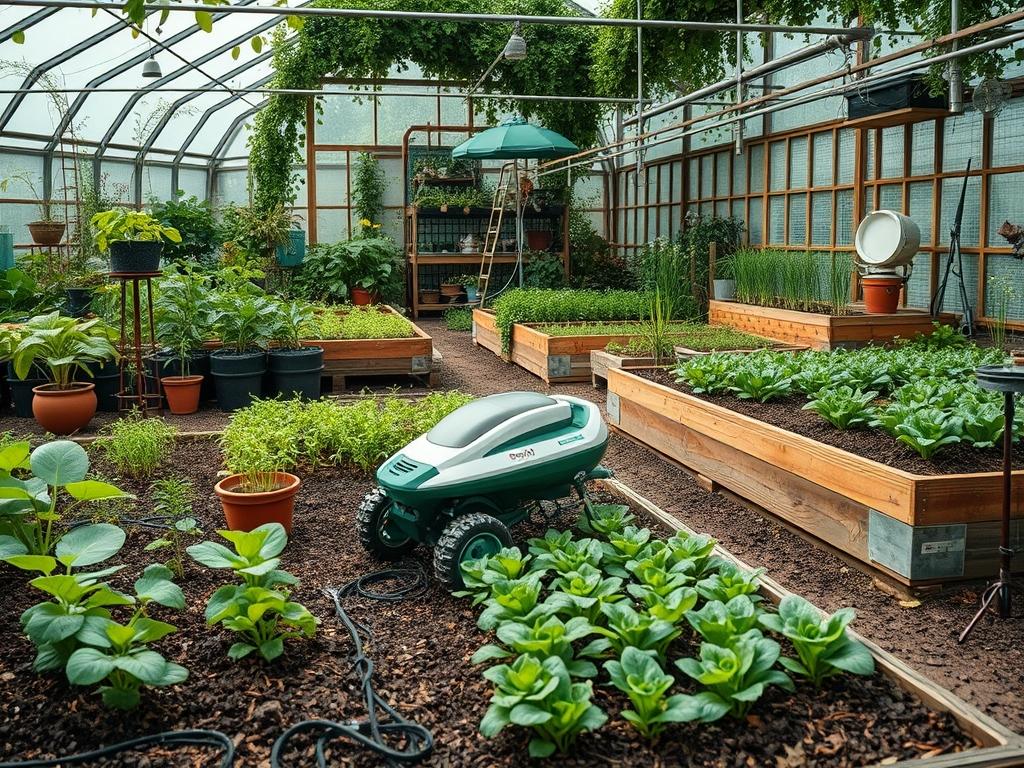
Maintaining a pristine vegetable patch or a structured landscape requires a disciplined approach to weed management, which is often the most labor intensive aspect of outdoor stewardship. For decades, the primary tools for this task were the manual hoe, oscillating stirrup hoe, and physical hand weeding. However, as landscape architecture evolves to include smart home integration and labor saving technologies, many homeowners are turning to Robotic Weeding Gadgets. These devices promise to automate the repetitive task of soil cultivation and weed suppression, but their effectiveness depends heavily on the initial landscape design and the environmental variables of the site. In a professional landscape context, curb appeal is not merely about the arrangement of flora; it is about the sustained cleanliness and health of the soil. Weeds compete for critical nutrients, moisture, and sunlight, often undermining the growth of expensive native species or high yield food crops. This competition can disrupt the visual harmony of a site, making an otherwise structured garden appear neglected and unkempt.
Landscape Design Principles
To successfully integrate Robotic Weeding Gadgets, one must adhere to specific landscape design principles that facilitate autonomous operation. Symmetry and visual balance play a key role here. When planning a vegetable patch or a mixed border, creating clean, geometric lines allows robotic sensors to distinguish between the intended crop and the fallow ground. Focal points, such as a stone plinth or a standardized planter box, should be established with enough clearance to allow these devices to navigate without becoming trapped.
Elevation layers and topography are equally important. Most current robotic models struggle with steep gradients or loose, uneven terrain. A professional landscape plan should prioritize grading to ensure a level surface within the cultivation zones. If the site has significant elevation changes, the use of retaining walls can create flat, terraced “rooms” where a robot can operate efficiently. Furthermore, irrigation planning must account for these gadgets. Surface level drip irrigation lines can be a tripping hazard for small robotic units; therefore, burying lines at least 2 inches below the soil surface or using overhead micro sprinklers is often preferred. Finally, the use of defined walkways made of permeable pavers or crushed granite provides a clear boundary for the robot, preventing it from wandering into non target areas like lawn or high traffic pedestrian zones.
Plant and Material Selection
The following table outlines common vegetable patch selections and their requirements, which informs how automated weeding systems should be calibrated.
| Plant Type | Sun Exposure | Soil Needs | Water Demand | Growth Speed | Maintenance Level |
| :— | :— | :— | :— | :— | :— |
| Lycopersicon esculentum (Tomato) | Full Sun | Loamy, pH 6.2-6.8 | High | Fast | High |
| Capsicum annuum (Pepper) | Full Sun | Well-drained | Moderate | Medium | Moderate |
| Cucurbita pepo (Zucchini) | Full Sun | Rich Organic | High | Very Fast | Low |
| Daucus carota (Carrot) | Full Sun | Sandy, Loose | Moderate | Slow | Moderate |
| Lactuca sativa (Lettuce) | Partial Shade | Moist, Nitrogen-rich | High | Fast | Low |
Implementation Strategy
Implementing a landscape that supports Robotic Weeding Gadgets begins with a rigorous site analysis and layout plan. The first step involves grading the soil to remove any large stones or debris that could damage the robot’s internal blades or sensors. Once the soil is level, professional edging is vital. Use Bender board edging or steel landscape edging to create a physical barrier that is at least 3 inches high. This provides a tactile “bump” for the robot to recognize its boundaries, or a surface to mount boundary wires if required by the specific model.
Spacing is the next critical factor. In a traditional hand weeded garden, plants are often spaced tightly to shade out weeds. However, to allow a robot to navigate, you must ensure a minimum of 6 inches to 12 inches of bare soil between the stems of individual plants. This “no fly zone” allows the device to move freely without accidentally destroying the crop. After planting, apply a light 1-inch layer of fine screened mulch. Avoid heavy, chunky wood chips which can clog the small motors of most weeding gadgets. Finally, ensure that the drainage system is optimized. Standing water can short circuit electronic components, so the area should have a 2 percent slope away from the center of the planting bed toward a French drain or a catch basin.
Common Landscaping Failures
The failure of automated weeding systems often stems from poor environmental preparation rather than the gadget itself. One of the most common mistakes is improper drainage, leading to soil saturation. When soil becomes mud, the robot loses traction and can eventually bury itself, creating deep ruts that damage the root structures of nearby herbs or vegetables. Another frequent issue is root overcrowding. If plants are not spaced according to the architect’s specifications, the robot will perceive the entire area as a “no go” zone, leaving weeds to flourish directly against the stems of the desired plants.
Soil compaction is another silent killer of both plants and robots. When soil is too dense, a robotic cultivator may not be able to penetrate the surface, rendering its weeding mechanism useless. This is often caused by heavy foot traffic in the planting beds. To prevent this, architects design designated access paths. Lastly, irrigation inefficiencies, such as uneven water distribution from impact sprinters, can create bone dry patches where weeds harden and become difficult for a small machine to remove, or overly wet patches where the robot gets stuck.
Seasonal Maintenance
Landscape management is a four season commitment, and the use of Robotic Weeding Gadgets changes the seasonal workflow for the property owner.
Spring: This is the most intensive period. Before deploying the robot, the soil should be amended with organic compost and tilled to a depth of 4 inches. Ensure all edging is secure and check that boundary wires have not been severed by winter frost heave. Initial weed growth should be cleared manually with a scuffle hoe to give the robot a clean slate.
Summer: During the peak growing season, the robot should run daily. This prevents weeds from ever reaching the “two leaf” stage, where they become much harder to kill. Check the robot’s blades weekly for sharpness and ensure its solar panels or charging contacts are free of dust and debris.
Autumn: As crops are harvested, the robot can help maintain fallow beds to prevent winter weeds from setting seed. Once the temperature consistently drops below 40 degrees Fahrenheit, most lithium ion batteries should be removed and stored indoors.
Winter: This is the time for structural maintenance. Repair any retaining walls or hardscaping that may have shifted. Review your garden layout on paper; if the robot struggled in a particular corner, consider redesigning that area with more generous radii or different plant species.
Professional Landscaping FAQ
Do robotic weeders work on all soil types?
They perform best in loose, sandy, or loamy soils. Extremely heavy clay can impede their mechanical parts, while excessively rocky soil can damage the internal rotors. Consistent soil amendment is necessary to maintain the ideal texture for autonomous operation.
How does a robot distinguish between a weed and a seedling?
Most current models use size or height sensors. They generally assume anything shorter than a certain threshold is a weed. Because of this, it is vital to let your vegetables grow several inches tall before deploying the device in the patch.
Can these gadgets handle steep slopes or terraced gardens?
Most entry level units are designed for flat surfaces or very mild inclines under 10 degrees. For terraced gardens, you will likely need one unit per level, as they cannot safely navigate the vertical transitions of retaining walls.
What kind of edging is best for autonomous garden tools?
Firm, vertical edges like concrete curbing, timber borders, or metal edging are ideal. These provide clear physical barriers that sensors can detect, preventing the robot from wandering into your turfgrass or accidentally exiting the vegetable patch.
Is manual weeding still necessary if I use a robot?
Yes, periodic manual intervention is required. Robots often cannot reach weeds that are growing directly against the base of a tomato plant or a wooden post. A quick monthly check with a hand trowel remains a landscape best practice.