
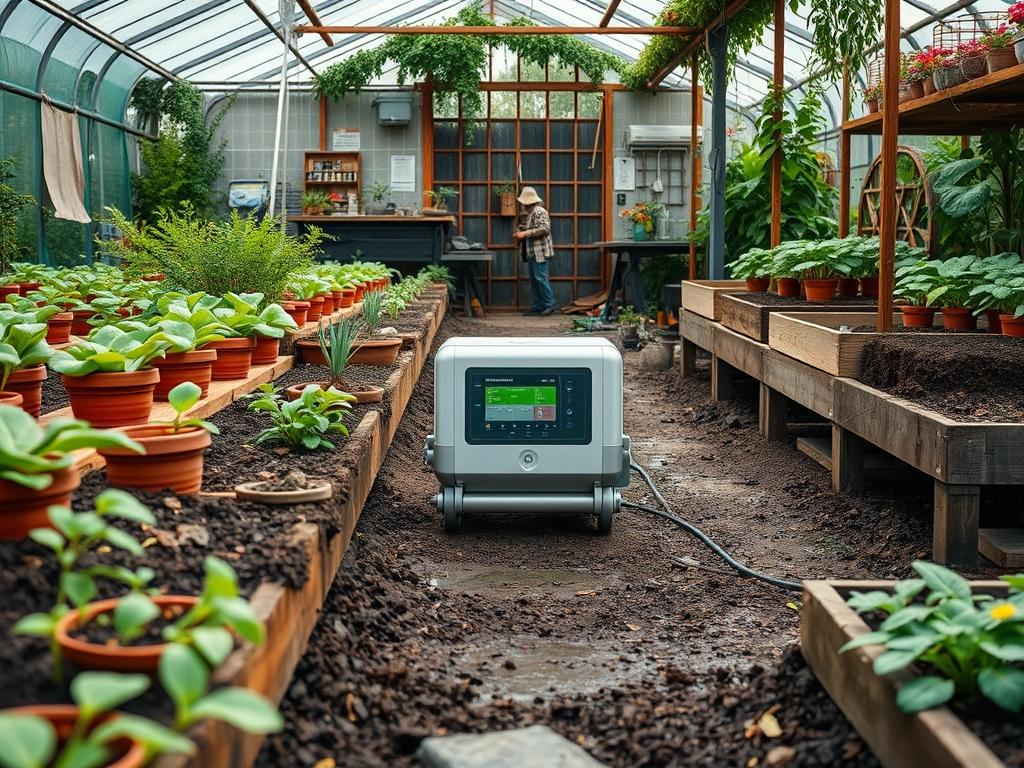
Modern landscape architecture requires a delicate balance between artistic vision and environmental stewardship. Creating a high-end outdoor environment is no longer just about selecting the right Perennials or installing a stone patio; it is about the integration of technology and biology. Homeowners and commercial property managers now demand curb appeal that thrives despite fluctuating climate conditions. This challenge necessitates a shift from traditional gardening to precision resource management. A masterpiece landscape serves as a functional extension of the home, providing areas for relaxation, entertainment, and ecological support. To achieve this, a designer must account for soil composition, site orientation, and the complex mechanics of water delivery. The Smart Irrigation Flow Pro system stands at the center of this evolution, offering the precision required to maintain diverse plant life without wasting precious resources. By utilizing data-driven moisture monitoring and automated flow adjustments, architects can design more ambitious spaces that remain vibrant through the hottest summers and driest autumns.
Landscape Design Principles
Professional landscape design is governed by structural integrity and visual rhythm. One of the most critical principles is the establishment of focal points. A focal point might be a specimen tree like a Japanese Maple, a sculptural water feature, or a grand masonry fireplace. These elements draw the eye and provide a sense of purpose to the outdoor room. Surrounding these focal points, we apply the concept of symmetry and balance. Formal gardens often lean toward bilateral symmetry, where one side mirrors the other, creating a sense of order and prestige. Informal designs utilize asymmetrical balance, where different elements with similar visual weights are placed strategically to create a naturalistic feel.
Elevation and layering are equally vital. By creating tiers using Retaining Walls or natural undulating berms, a designer adds three dimensional depth to a flat lot. We typically categorize these layers into the foreground, midground, and background. Low-growing Creeping Thyme or Sedum occupies the foreground, while mid-sized shrubs like Hydrangea or Boxwood provide structure. The background consists of tall privacy screens, such as Emerald Green Thuja, which frame the entire property. Integral to these layers is the planning of the irrigation infrastructure. Using the Smart Irrigation Flow Pro, we segment the landscape into specific hydrozones. Each zone is programmed based on the specific water needs of the plant layer, ensuring that the Oak Tree does not receive the same saturation levels as the delicate Lavender nearby.
Proper walkway design facilitates the flow of traffic while protecting the root zones of nearby plants. We often use Paver Stones or Decomposed Granite to create permeable surfaces that allow water to reach the subsoil. This prevents runoff and erosion, which are common issues in poorly planned environments. Visual balance is further enhanced by the contrast between hard surfaces and soft vegetation. The rigid lines of a Granite Curb provide a sharp counterpoint to the soft, flowing textures of Ornamental Grasses.
Plant and Material Selection
Selecting the right materials is a technical exercise in compatibility. The following table outlines standard selections for a high-end temperate landscape.
| Plant Type | Sun Exposure | Soil Needs | Water Demand | Growth Speed | Maintenance Level |
| :— | :— | :— | :— | :— | :— |
| Japanese Boxwood | Full Sun to Part Shade | Well-drained Loam | Moderate | Slow | Low |
| Blue Star Juniper | Full Sun | Sandy/Rocky | Low | Moderate | Very Low |
| Peony | Full Sun | Rich Organic | High | Moderate | Medium |
| Coneflower | Full Sun | Average/Dry | Low | Fast | Low |
| Hostas | Full Shade | Moist/Rich | Moderate | Fast | Medium |
| Serviceberry | Part Shade | Acidic/Moist | Moderate | Moderate | Medium |
| Fescue Turf | Full Sun to Part Shade | Balanced | High | Fast | High |
In addition to plant life, the selection of mulches and aggregates is critical. Structural Soil is often used under paved areas to allow tree roots to grow without lifting the sidewalk. For flower beds, Double-Shredded Bark Mulch is the gold standard, as it suppresses weeds while retaining moisture for the Smart Irrigation Flow Pro to manage effectively.
Implementation Strategy
The successful implementation of a landscape plan begins with site preparation and grading. Grading is the process of leveling or sloping the ground to ensure that water moves away from the home foundation and toward designated drainage areas. We use a Laser Level to determine the exact degree of slope required. Once the grade is established, the installation of the Smart Irrigation Flow Pro sensors and mainlines occurs. This sub-grade work is the most important step, as fixing a broken pipe under a finished patio is a costly endeavor.
After the irrigation and drainage systems are in place, we focus on hardscaping. This includes the construction of Stone Retaining Walls and the laying of Flagstone. We recommend a base of 6 inches of compacted Crushed Limestone to ensure the longevity of any stone work. Edging is then installed to create a clean break between the lawn and the planting beds. For a professional finish, we use Steel Edging or Aluminum Strips, which provide a hidden but durable barrier.
Planting follows a specific sequence. We start with the largest specimens, known as B-and-B (balled and burlapped) trees. These are positioned using heavy equipment to avoid soil compaction near the planting hole. Once the trees are set, we move to the shrubs and finally the groundcovers. Every plant is installed in a hole twice as wide as its root ball to encourage outward growth. Finally, a layer of 3 inches of Organic Mulch is applied. This mulch acts as an insulating blanket, keeping the roots cool and reducing the evaporation rates monitored by the Smart Irrigation Flow Pro.
Common Landscaping Failures
Many landscape projects fail due to a lack of foresight regarding drainage. When water pools near the base of a plant, it displaces oxygen in the soil, leading to root rot and eventual death. The use of a French Drain or Dry Creek Bed can mitigate this, but it must be factored into the initial design. Another common mistake is root overcrowding. It is tempting to plant closely for immediate impact, but a White Oak that looks perfect today may eventually starve nearby shrubs of light and nutrients as it matures.
Soil compaction is a silent killer in many new constructions. Heavy machinery packs the earth so tightly that roots cannot penetrate and water cannot soak in. To fix this, we utilize a Core Aerator or incorporate Gypsum and organic matter to break up the clay. Finally, irrigation inefficiency is a major cause of plant loss. Traditional timers often run during rainstorms, wasting water and over-saturating the soil. The Smart Irrigation Flow Pro addresses this by using local weather data and flow sensors to skip cycles when the soil is already at capacity, preventing the issues associated with over-watering.
Seasonal Maintenance
A high-end landscape is a living entity that requires unique care throughout the year. In the spring, the focus is on rejuvenation. This involves removing winter debris, applying a slow-release Fertilizer, and performing the initial startup of the Smart Irrigation Flow Pro. We check each nozzle for clogs and adjust the spray patterns to account for new plant growth. Early spring is also the time for structural pruning of deciduous trees before they fully leaf out.
Summer maintenance is centered on stress management. As temperatures rise, the water demand increases. During this period, the Smart Irrigation Flow Pro is invaluable, as it can detect a leak or a broken head instantly, preventing a localized drought in your garden. We recommend mowing turf at a height of 4 inches during the summer to shadow the soil and reduce water loss.
Autumn is the season for preparation. We prune spent perennials and plant spring-flowering bulbs like Tulips and Daffodils. This is also the time to aerate the lawn and apply a pre-emergent herbicide. Before the first hard frost, the irrigation system must be winterized. We use an Air Compressor to blow all water out of the lines to prevent pipes from bursting in the cold. Winter maintenance is largely aesthetic, involving the pruning of evergreens and the monitoring of heavy snow loads on delicate branches to prevent breakage.
Professional Landscaping FAQ
How does the Smart Irrigation Flow Pro save money?
The system monitors real time water usage and local weather patterns. By eliminating unnecessary watering cycles and detecting leaks immediately, it significantly reduces monthly water bills and prevents the costly replacement of over-watered or dehydrated plants.
What is the best mulch depth for weed control?
We recommend maintaining a consistent layer of 3 inches of mulch. This depth is sufficient to block sunlight from weed seeds while still allowing oxygen and water to reach the root zones of your ornamental plants.
Can I install a smart system on an existing landscape?
Yes. Retrofitting is common. A professional can integrate the Smart Irrigation Flow Pro into most existing pipe networks by replacing the old controller and installing high-efficiency heads and flow sensors to modernize the entire property infrastructure.
Why are my plants dying despite regular watering?
The issue is likely soil compaction or poor drainage. If the soil is too tight, water sits on the surface or drowns the roots. Using a Smart Irrigation Flow Pro helps pinpoint if the volume is correct for your soil type.
When is the best time to plant new trees?
Early spring and late autumn are the ideal windows. These cooler periods allow the root systems to establish themselves without the intense heat stress of summer. Proper hydration during these windows is critical for long term survival.