
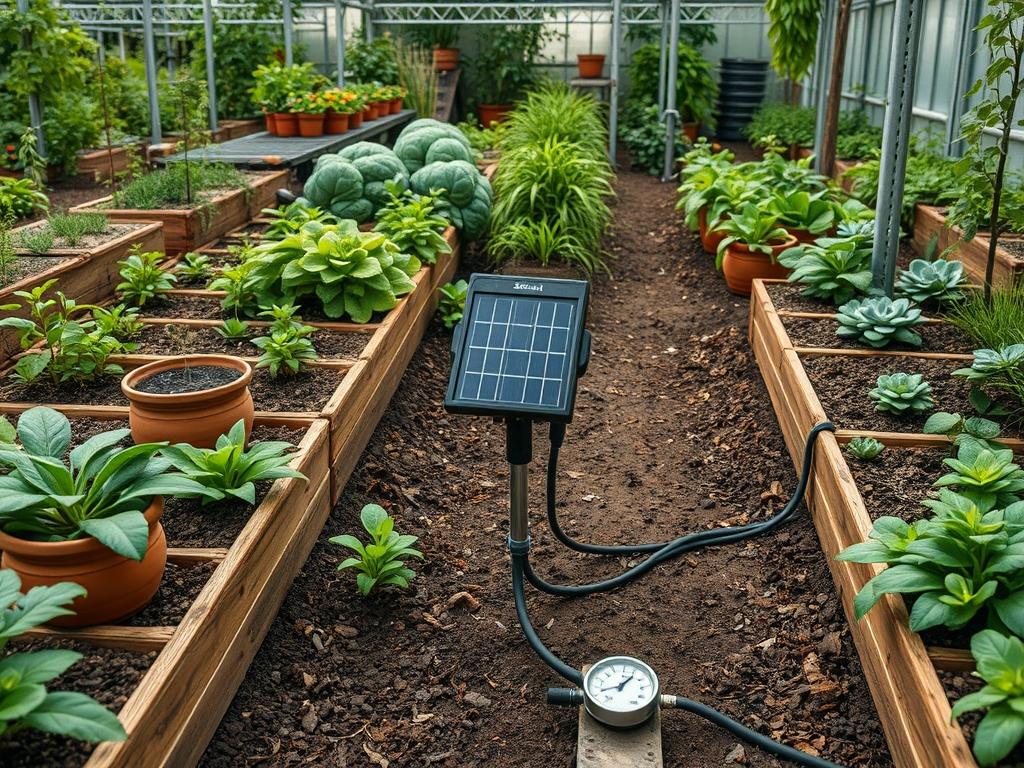
The evolution of modern landscape architecture has shifted from purely aesthetic arrangements to high-performance ecosystems that prioritize efficiency and sustainability. Homeowners and developers now face the dual challenge of creating significant curb appeal while managing resources in increasingly volatile climate conditions. A successful outdoor environment must serve as a seamless extension of the interior living space, providing functional zones for relaxation and entertainment without becoming a burden on the owner. This is where the integration of Solar Powered Sensor Tech enters the professional repertoire. By utilizing autonomous monitoring systems, designers can ensure that every Perennial and Shrub receives precisely what it needs to thrive. These sensors eliminate the guesswork associated with manual care, allowing for a landscape that remains resilient against drought or over-saturation while maintaining a polished, professional appearance.
Efficiency in the modern garden begins with understanding the site microclimate. Factors such as wind exposure, topographical slope, and light duration dictate the survival of high-value specimens. To achieve a truly integrated design, one must balance hardscaping elements like Natural Stone or Pavers with softscaping layers. The goal is to maximize the utility of the land through intentional grading and drainage solutions that prevent erosion. When these elements work in harmony, the landscape becomes more than just a collection of plants; it transforms into a sophisticated outdoor environment that enhances property value and provides a sanctuary for its inhabitants.
Landscape Design Principles
Professional landscape design relies on a structured hierarchy of visual and functional elements. Symmetry provides a sense of order and formality, often utilized at the front of a property to guide the eye toward the primary entrance. By mirroring Boxwood hedges or identical Planters, a designer creates a cohesive frame that feels intentional and stable. However, symmetry must be balanced with focal points that break the monotony. A well-placed Japanese Maple or a sculptural Basalt Fountain serves as a destination for the eye, anchoring the surrounding vegetation and providing a clear purpose for the layout.
Elevation layers are equally critical in preventing a flat, uninspired yard. Designers utilize Retaining walls and tiered garden beds to create depth, which is especially important on sloped lots where soil stability is a concern. These layers allow for different plant heights to be showcased simultaneously, with taller Evergreens in the back and low-growing groundcovers in the foreground. This verticality is enhanced by strategic irrigation planning. Modern Irrigation systems now incorporate Solar Powered Sensor Tech to monitor moisture levels at various depths within these tiered layers. These sensors transmit real-time data to a central hub, ensuring that the elevated beds do not dry out faster than the lower grades.
Walkways and circulation paths should be designed with both flow and safety in mind. Using Flagstone or Decomposed Granite provides a stable surface that complements the surrounding natural textures. Visual balance is maintained by ensuring that the mass of hardscaped areas does not overwhelm the organic softscaping. A common rule of thumb is the 60:40 ratio, where 60 percent of the area remains green space and 40 percent is dedicated to structures and paths. This ratio ensures that the property remains permeable, allowing rainwater to reach the root zones and minimizing runoff issues.
Plant and Material Selection
Selecting the right biological components is the cornerstone of a sustainable landscape. Designers must choose species that are compatible with the local USDA hardiness zone and soil pH. The following table highlights several versatile options for a modern, tech-integrated garden.
| Plant Type | Sun Exposure | Soil Needs | Water Demand | Growth Speed | Maintenance Level |
| :— | :— | :— | :— | :— | :— |
| Purple Coneflower | Full Sun | Well-drained | Low | Moderate | Low |
| Dwarf Fountain Grass | Partial To Full | Loamy | Medium | Fast | Moderate |
| Star Jasmine | Partial Shade | Rich, Moist | Medium | Moderate | High |
| Blue Star Juniper | Full Sun | Sandy, Dry | Low | Slow | Low |
| Panic Grass | Full Sun | Any | High | Fast | Low |
Materials extend beyond plants to the organic and inorganic substances that protect the soil. Using high-quality Cedar Mulch or Pine Bark helps retain moisture and suppress weed growth. For areas requiring high durability, River Rock or Pea Gravel provides an excellent drainage solution while adding a modern, clean texture to the garden beds. Integrating Solar Powered Sensor Tech into these beds allows the gardener to track the temperature beneath the mulch layer, providing early warnings before the ground freezes or overheats.
Implementation Strategy
Planning a backyard layout requires a methodical approach that begins with the ground itself. The first step is professional Grading. One must ensure that the land slopes away from the foundation at a minimum of 2 percent to prevent water damage to the home. Once the grade is established, the installation of French drains or Dry creek beds can help manage heavy rainfall. These features should be hidden or integrated into the aesthetic design using Polished stones or Boulders.
After the structural base is set, gardeners should focus on edging. Using Steel edging or Aluminum bender board creates a crisp line between the lawn and the planting beds, preventing grass from encroaching on delicate flower zones. The next phase involves the installation of the Irrigation infrastructure. This is the optimal time to bury the wire leads for any Solar Powered Sensor Tech or low-voltage lighting. Proper placement of these sensors is vital; they should be located in both the sunniest and shadiest parts of the garden to get an accurate average of the site health.
Finally, the planting begins. It is essential to dig holes that are at least twice as wide as the root ball of each Shrub or Tree to encourage outward root growth. After backfilling with a mix of native soil and Compost, apply a 3-inch layer of mulch to protect the new plantings. During the first growing season, the sensors will be instrumental in ensuring the young plants receive constant moisture until they are fully established in the local environment.
Common Landscaping Failures
The most frequent mistake in landscape architecture is poor drainage management. When water pools near the root zone of a Plant, it displaces the air in the soil, leading to root rot and eventual death. Many homeowners also fail to account for the mature size of their selections. Planting a White Pine too close to a structure or under a power line leads to costly removals and potential property damage. Proper spacing is not just about aesthetics; it is a long-term requirement for plant health.
Soil compaction is another silent killer of residential gardens. During construction, heavy machinery often packs the soil so tightly that roots cannot penetrate and water cannot soak in. This necessitates Aeration and the mechanical tilling of organic matter into the ground before planting. Furthermore, many irrigation systems are set to a simple timer rather than being responsive to weather. This results in the system running during rainstorms, which is both wasteful and harmful. Utilizing Solar Powered Sensor Tech solves this by providing an automatic shut-off signal when the soil moisture threshold is met, saving thousands of gallons of water annually.
Seasonal Maintenance
Landscape management is a year-round commitment that changes with the cycles of the sun. In the spring, the focus is on cleanup and preparation. This involves pruning dead wood from Hydrangeas and Roses, applying pre-emergent weed control, and testing the Irrigation valves. It is also the best time to calibrate your Solar Powered Sensor Tech, ensuring the batteries are charging correctly after the darker winter months.
Summer maintenance requires vigilance. Monitoring for pests like Aphids or Spider mites is crucial as temperatures rise. During heatwaves, the sensors will likely trigger more frequent watering cycles, which should be done in the early morning to minimize evaporation. Autumn is for transition. Raking leaves is not just for appearance; it prevents the lawn from being smothered and developing fungal diseases. This is also the time to apply a thick layer of mulch to insulate the roots of Native plants before the first frost.
Winter is the season of protection and planning. In colder climates, wrapping young Evergreens in Burlap can prevent windburn. Turn off the main water supply to the exterior and drain the pipes to prevent bursting. While the plants are dormant, the data collected by your sensors throughout the year can be reviewed to plan adjustments for the next season, such as moving a plant that consistently struggled in a dry spot or adding more drainage to a perennially soggy corner.
Professional Landscaping FAQ
How often should I calibrate my solar sensors?
You should inspect and calibrate your Solar Powered Sensor Tech twice a year, specifically during the spring startup and autumn shutdown. Ensure the solar panels are free of debris and the probes remain securely seated in the soil.
What is the best mulch for a low-maintenance garden?
Triple-shredded hardwood mulch is highly recommended. It mats together well to prevent erosion on slopes, decomposes slowly to add nutrients to the soil, and provides a professional, uniform appearance that lasts throughout the entire growing season.
Can I use solar sensors in shaded areas?
Yes, most Solar Powered Sensor Tech is designed with remote photovoltaic panels. This allows you to place the sensor probe in a deep shade garden while mounting the small charging panel in a nearby sunny spot via a thin lead wire.
How do I prevent root rot in heavy clay soil?
Improve the drainage by incorporating Gypsum and organic Compost into the soil before planting. Additionally, install your plants slightly above the soil grade, creating a small mound to ensure the crown of the plant stays dry.
Are native plants compatible with automated irrigation?
Absolutely. While Native plants are generally more drought-tolerant, they still benefit from consistent moisture during their establishment phase. Solar sensors ensure they are not overwatered once they reach maturity, allowing the system to remain dormant unless a severe drought occurs.