
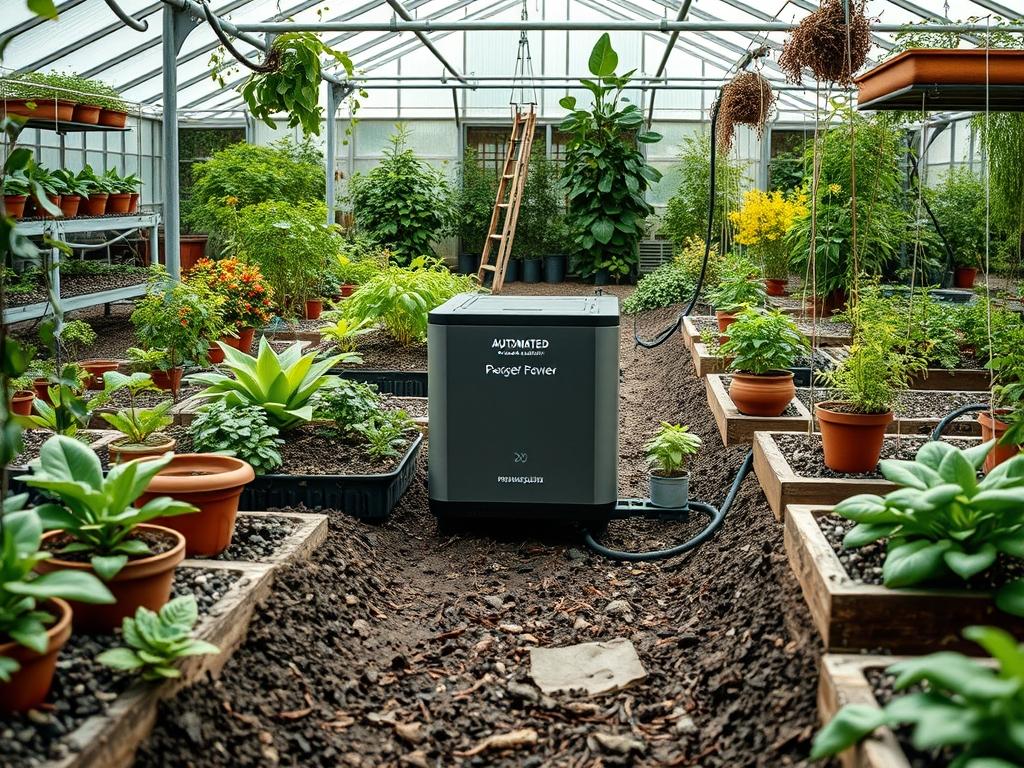
Mastering the outdoor environment requires a synthesis of biology, architecture, and advanced technology. Professional landscaping is no longer just about planting a few shrubs or maintaining a green lawn; it is an engineering discipline that balances drainage requirements with aesthetic appeal and functional longevity. Homeowners today face the unique challenge of managing shifting climate patterns while attempting to increase curb appeal and property value. Achieving a high end result necessitates a comprehensive understanding of how individual components, such as soil chemistry, moisture levels, and lighting, interact within a single ecosystem. By integrating the Automated Garden Power Pro system into the initial design phase, a designer can ensure that the infrastructure supports the living elements through precision nutrient delivery and moisture management. This holistic approach prevents the common frustration of watching a costly landscape installation perish due to neglect or inconsistent environmental conditions.
The modern garden serves as an extension of the interior living space. Whether the goal is to create a serene retreat for relaxation or a high energy area for entertaining guests, the foundational layout must be sound. Functionality is the primary driver of successful design. If a walkway is too narrow for two people to pass comfortably, or if a patio is placed in a low lying area prone to flooding, the beauty of the plants will not compensate for the poor user experience. Therefore, we must treat the backyard as an engineered site. Utilizing the Automated Garden Power Pro allows for a level of control over the environment that was previously reserved for industrial greenhouses. By automating the most tedious aspects of outdoor maintenance, we allow the landscape to reach its full biological potential while reducing the manual labor traditionally associated with high end gardening.
Landscape Design Principles
Effective landscape design relies on five core pillars: symmetry, focal points, elevation layering, irrigation logistics, and visual balance. Symmetry provides a sense of order and formality, often achieved through mirrored plantings along a central axis or the use of matching Stone Pedestals. Focal points, such as a large Japanese Maple or a custom Water Feature, draw the eye and dictate the flow of movement through the space. Without a clear focal point, a garden can feel chaotic and disconnected. These elements should be highlighted with targeted low voltage lighting, managed through the Automated Garden Power Pro interface to ensure they are illuminated only when needed.
Elevation layers involve the strategic use of height to create depth. This is accomplished by placing taller Evergreen Trees at the perimeter, mid sized Shrubs in the center, and low growing Groundcovers or Perennials at the edge of the beds. This vertical hierarchy mimics natural forest margins and creates a more immersive environment. Irrigation planning is the unseen backbone of this structure. A professional designer maps out hydrozones, grouping plants with similar water needs together to prevent overwatering of drought tolerant species. Visual balance ensures that no single side of the property feels too “heavy” or crowded. By using Retaining Walls to create level terraces on sloped lots, we can maximize usable square footage while managing erosion and surface runoff.
Plant and Material Selection
Selecting the right materials is the difference between a landscape that thrives and one that requires constant replacement. Below is a professional selection of hardy species that integrate well with automated systems.
| Plant Type | Sun Exposure | Soil Needs | Water Demand | Growth Speed | Maintenance Level |
| :— | :— | :— | :— | :— | :— |
| Boxwood | Full Sun to Shade | Well Drained | Moderate | Slow | High (Pruning) |
| Lavender | Full Sun | Sandy/Gravelly | Low | Medium | Low |
| Oak Leaf Hydrangea | Partial Shade | Rich Organic | High | Medium | Moderate |
| Switchgrass | Full Sun | Adaptable | Low | Fast | Very Low |
| Japanese Maple | Partial Sun | Loamy/Acidic | Moderate | Slow | Moderate |
| Creeping Thyme | Full Sun | Gritty/Poor | Very Low | Fast | Low |
In addition to plant life, the choice of hardscaping materials like Decomposed Granite, Flagstone, and Kiln-Dried Pavers must complement the architectural style of the home. For mulch, we recommend a 3-inch to 4-inch layer of Double-Shredded Hardwood Mulch to suppress weeds and retain soil moisture. If using the Automated Garden Power Pro, sensors can be buried beneath this mulch layer to provide real time feedback on moisture levels directly to the controller.
Implementation Strategy
The transition from a blueprint to a finished landscape requires a disciplined execution strategy. The first and most critical step is grading. Before a single plant is purchased, the site must be sloped away from the home’s foundation at a minimum grade of 2 percent. This prevents moisture from seeping into basements or crawlspaces. Once the rough grade is established, we install the primary infrastructure, including Schedule 40 PVC piping for irrigation and Direct Burial Wire for the Automated Garden Power Pro system. This ensures that all power and water lines are protected from future shovel strikes or frost heave.
Next, we establish the hardscape boundaries using Steel Edging or Tumbled Stone. These borders act as the “bones” of the garden, separating lawn areas from planting beds. Trenching for French Drains occurs at this stage if the site experiences persistent standing water. We then amend the soil with Organic Compost and Biochar to a depth of 8 inches to promote vigorous root growth. Only after the infrastructure and soil preparation are complete do we begin the planting phase. We start with the largest specimens, known as the anchor plants, and work toward the smaller filler species. Finally, the Automated Garden Power Pro is calibrated. We set the irrigation timers, adjust the lighting schedules, and synchronize any integrated water pumps to ensure the system is operating at peak efficiency.
Common Landscaping Failures
The most frequent error in residential landscaping is poor drainage management. When water pools around the root ball of a plant, it displaces the oxygen in the soil, leading to root rot. Even drought tolerant species will die quickly in oversaturated soil. Another common mistake is root overcrowding. It is easy to plant small Shrubs close together for immediate impact, but within three years, they will compete for light and nutrients, leading to stunted growth and disease. Always research the mature spread of a species and space them accordingly, even if the garden looks a bit sparse in its first season.
Soil compaction is a silent killer of urban landscapes. Heavy foot traffic or construction equipment compresses the soil pores, making it impossible for water and air to reach the roots. This can be mitigated through regular aeration or the installation of Permeable Pavers. Furthermore, “volcano mulching,” which is the practice of piling mulch high against the trunk of a tree, must be avoided. This traps moisture against the bark, inviting fungal infections and boring insects. Finally, many homeowners fail to update their irrigation schedules as the seasons change. Using the Automated Garden Power Pro prevents this by automatically adjusting water output based on local weather data and soil moisture sensors.
Seasonal Maintenance
Landscape management is a year round commitment that changes with the transit of the sun. In the spring, the focus is on rejuvenation. We remove winter debris, apply a Slow-Release Fertilizer, and perform structural pruning on deciduous trees before they bud out. This is also the time to test the Automated Garden Power Pro system, checking for any leaks in the lines caused by winter freezes and Ensuring that all light fixtures are still aligned.
Summer maintenance is dominated by water management and pest control. As temperatures rise, the Automated Garden Power Pro should be programmed for deep, infrequent watering cycles, ideally in the early morning hours to minimize evaporation. Autumn is for preparation. We plant new bulbs, aeration the lawn, and apply a final layer of mulch to insulate roots against the coming cold. Winter is the season of protection. We wrap sensitive specimens in Burlap, drain the irrigation lines to prevent bursting, and utilize the Automated Garden Power Pro to maintain security lighting during the shorter days.
Professional Landscaping FAQ
How does the Automated Garden Power Pro improve plant health?
It provides consistent, data-driven irrigation and nutrient delivery. By using moisture sensors, it ensures plants receive the exact amount of water needed, preventing the stress of overwatering or dehydration that often leads to systemic disease.
What is the best way to handle a sloped backyard?
Terracing is the most effective solution. By installing Retaining Walls and Stone Steps, you can create level planting pockets. This manages water runoff effectively while turning a difficult slope into a functional, multi-tiered garden space.
How deep should my planting beds be for shrubs?
Most ornamental shrubs require a soil depth of at least 12 to 18 inches. This provides enough space for a robust root system to develop, which is essential for drought resistance and long term stability during high winds.
Can I integrate my existing lighting into the new system?
Yes, most Low Voltage LED Fixtures can be integrated into the Automated Garden Power Pro. This allows you to centralize control, set custom schedules, and monitor power consumption across your entire outdoor lighting network from a single interface.
What is the most common cause of lawn yellowing?
Yellowing is typically caused by nitrogen deficiency or improper watering. However, it can also result from soil compaction. Professional testing can determine if you need core aeration or a specific application of High Nitrogen Fertilizer to restore color.