
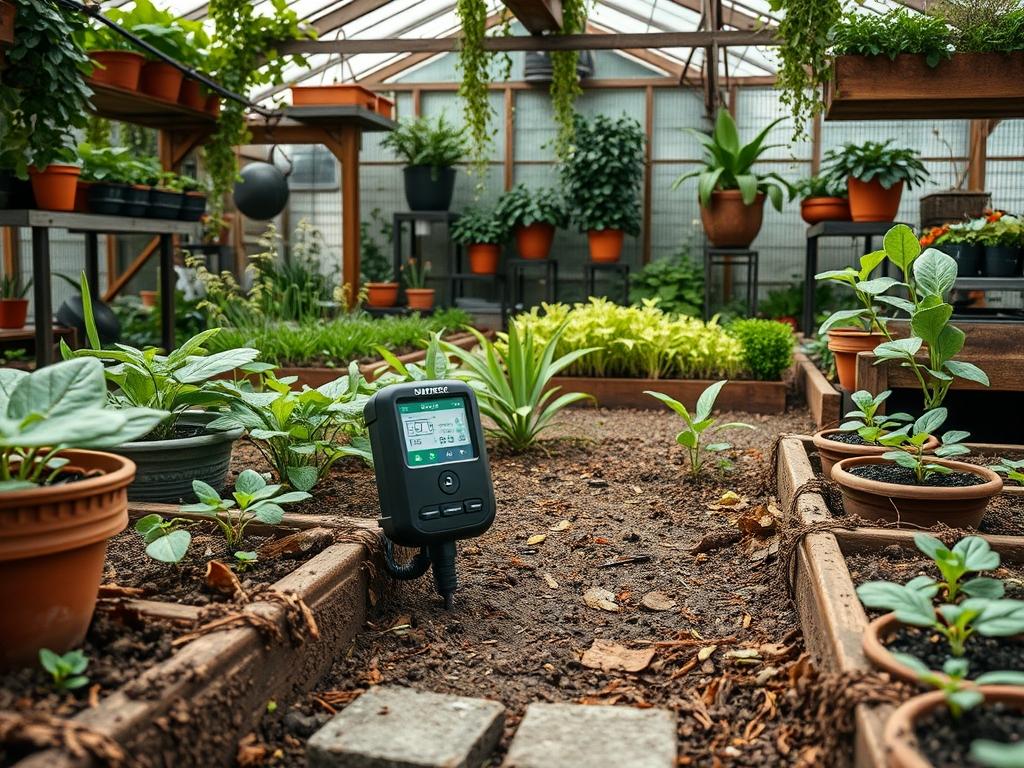
Successful landscape architecture transcends simple aesthetics. It is a complex synthesis of civil engineering, botany, and environmental psychology. A well-designed outdoor space should increase a property’s market value while functioning as a seamless extension of the interior living area. To achieve this, a consultant must first analyze the unique site conditions, including wind patterns, slope, and solar orientation. Without a data-driven approach, even the most expensive horticultural installations are prone to failure. This is where the integration of the Smart Garden Sensor Pro becomes vital. By providing real-time telemetry on soil moisture, ambient temperature, and light levels, this technology allows for a scientific approach to curb appeal. A professional landscape is a living investment. It requires a balance between permanent hardscape structures and the dynamic growth of biological elements. When we plan these environments, we look for ways to mitigate the stressors of local climates, whether that means managing intense heat in arid regions or ensuring proper drainage in areas prone to seasonal flooding.
Landscape Design Principles
The foundation of any professional grade landscape is visual and functional balance. Symmetry often provides a sense of formality and order, while asymmetrical designs can evoke a more naturalistic, relaxed environment. To achieve this, we rely on focal points. A focal point might be a mature Specimen Tree, an architectural Water Feature, or a high quality Retaining Wall. These elements draw the eye and dictate the flow of movement through the garden.
Elevation plays a critical role in the perception of space. By creating layered planting beds, we can add depth to a flat lot. We typically utilize a three tier system. The foreground contains low growing groundcovers; the mid-ground features structural shrubs and perennials; and the background is reserved for privacy screening and canopy trees. Irrigation planning must be concurrent with this layout. The Smart Garden Sensor Pro is integrated at different depths within these layers to ensure that shallow rooted annuals and deep rooted trees both receive the precise volume of water they require.
Walkways should also follow the logic of the site. A path is not merely a way to get from the driveway to the porch; it is a tool for site circulation. We use Flagstone, Pavers, or Decomposed Granite to define these routes. The transition between these hard surfaces and the soft edges of the garden beds creates a visual tension that defines high end design. Every element, from the texture of the Mulch to the height of the Lawn, must be considered in the context of the whole.
Plant and Material Selection
Selecting the right biological components requires an understanding of hardiness zones and microclimates. The following table outlines several reliable species and their specific requirements for a successful installation.
| Plant Type | Sun Exposure | Soil Needs | Water Demand | Growth Speed | Maintenance Level |
| :— | :— | :— | :— | :— | :— |
| Boxwood Shrub | Full Sun to Shade | Well-drained Loam | Moderate | Slow | Moderate |
| Lavender | Full Sun | Sandy/Alkaline | Low | Moderate | Low |
| Japanese Maple | Partial Shade | Slightly Acidic | High | Slow | High |
| Switchgrass | Full Sun | Adaptive | Low | Fast | Low |
| Hydrangea | Partial Sun | Rich Organic | High | Fast | Moderate |
| Creeping Thyme | Full Sun | Rocky/Poor | Low | Moderate | Low |
| Blue Spruce | Full Sun | Moist/Rich | Moderate | Slow | Low |
Implementation Strategy
The transition from a blueprint to a finished garden requires a disciplined sequence of operations. The process begins with site clearing and rough Grading. This is the most critical phase for drainage. We ensure that the ground slopes away from the home’s foundation at a minimum of 2 percent grade to prevent water intrusion. If the topography is steep, we install Retaining Walls built from Cinder Blocks, Natural Stone, or Timber to create level terraces.
Once the skeleton of the site is established, we install the irrigation mains. In modern projects, we utilize Subsurface Drip Irrigation to minimize evaporation loss. We place the Smart Garden Sensor Pro units in key zones during this phase. This allows us to establish a baseline for the soil’s natural moisture retention before any plants go into the ground.
Edging comes next. We use Steel Edging or Brick Pavers to create a sharp, clean border between the lawn and the planting beds. This prevents grass from encroaching on the ornamental plants. When digging the planting holes, we ensure they are twice as wide as the root ball but no deeper. This encourages lateral root growth. After the plants are in place, we apply a 3 inch layer of Organic Cedar Mulch or Hardwood Bark. This layer suppresses weeds, regulates soil temperature, and breaks down over time to provide nutrients.
Common Landscaping Failures
Many homeowners and novice contractors overlook the secondary effects of their design choices. Soil compaction is a frequent culprit of plant death. When heavy equipment is moved across a site without protection, it collapses the air pockets in the soil, effectively suffocating the roots. To remediate this, we often recommend Core Aeration or the incorporation of Perlite and Compost.
Root overcrowding is another preventable issue. It is tempting to plant closely for immediate impact, but this leads to competition for resources within three to five years. We must account for the mature width of every species. Furthermore, improper drainage often leads to root rot. If a site sits in a basin, we must install a French Drain or a Dry Well to redirect excess volume.
The most common failure in the modern era is irrigation inefficiency. Many systems are set to a simple timer, regardless of actual weather conditions. This leads to overwatering during rain events and underwatering during heatwaves. By utilizing the Smart Garden Sensor Pro, we eliminate the guesswork. The sensor detects when the soil has reached its field capacity and signals the controller to cease irrigation, preventing the anaerobic conditions that invite fungal pathogens.
Seasonal Maintenance
A landscape is not a static product; it is a developing ecosystem. In the Spring, the focus is on cleanup and preparation. This involves pruning dead wood from Deciduous Trees, dividing overgrown Perennials, and applying a fresh layer of Sulphate of Potash to encourage blooming. We also check the Smart Garden Sensor Pro calibration to ensure the system is ready for the upcoming growth surge.
Summer maintenance is primarily about water management and pest control. During periods of extreme heat, we monitor the sensor data daily to adjust for high Evapotranspiration rates. We also practice integrated pest management by scouting for aphids or beetles before they can colonize the garden.
In Autumn, we transition to protection and nourishment. We plant Spring Flowering Bulbs like Tulips and Daffodils. This is also the time to apply a Slow Release Fertilizer that is high in phosphorus to encourage root development before the ground freezes. Winter landscape management involves protecting sensitive species from frost. We use Burlap Wraps for young Evergreens and ensure that the irrigation system is fully blown out with an Air Compressor to prevent pipe bursts.
Professional Landscaping FAQ
How does the Smart Garden Sensor Pro improve plant health?
It provides precise data on root zone moisture and soil salinity. This prevents the physiological stress caused by overwatering or drought. It allows the gardener to maintain the ideal hydration levels required for specific species growth cycles.
What is the ideal mulch depth for a new garden?
A depth of 3 to 4 inches is recommended. This thickness is sufficient to suppress weed germination and retain soil moisture effectively. However, you must keep the mulch away from the direct trunks of trees to prevent bark rot.
How do I fix poor drainage in a flat backyard?
The most effective solution is installing a French Drain or a Rain Garden. These systems capture runoff and redirect it to a lower point or allow it to percolate slowly into the subsoil through a bed of River Rock.
When is the best time to plant new trees?
Late autumn or early spring is ideal. During these dormant or semi-dormant periods, the plant can focus its energy on establishing a robust root system before the heat of summer or the deep freezes of winter put stress on the foliage.
Can I integrate smart sensors into an existing irrigation system?
Yes. Most modern systems allow for the integration of the Smart Garden Sensor Pro via a wireless bridge or a direct controller input. This upgrade transforms a standard timed system into an adaptive, weather responsive irrigation network.