
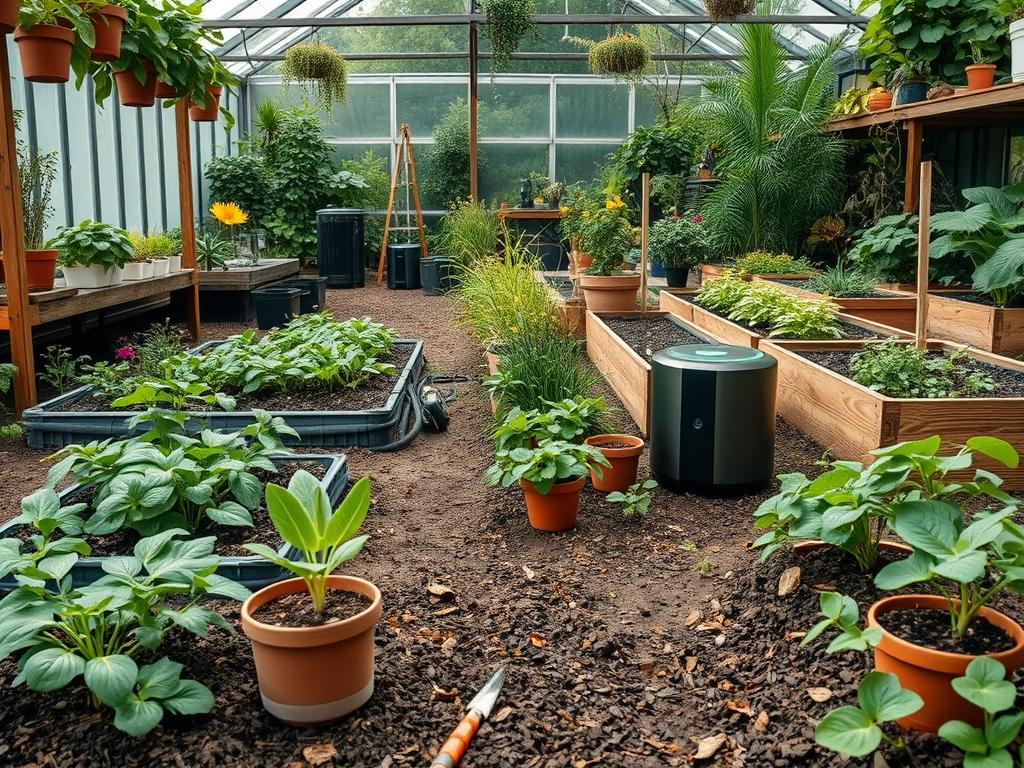
The modern landscape is no longer a static arrangement of flora and hardscaping; it is a living ecosystem that requires precise calibration to thrive. As architects, we approach a site by evaluating its topography, soil composition, and microclimates before a single shovel hits the dirt. The challenge for most property owners lies in the transition from a conceptual design to a self-sustaining environment. This is where the integration of Smart Garden Device Kits becomes a critical component of the long-term strategy. These systems remove the guesswork from irrigation and nutrient delivery, allowing for a landscape that maintains high curb appeal while significantly reducing resource waste. When planning an outdoor environment, one must consider how technology will interface with the physical site to provide both aesthetic beauty and functional resilience against fluctuating weather patterns.
Landscape Design Principles
A successful landscape relies on a series of foundational principles that guide the eye and stabilize the environment. Symmetry and balance are the most immediate visual cues used to establish order. Whether utilizing formal bilateral symmetry with matching emerald green arborvitae or asymmetrical groupings of ornamental grasses, the goal is to create a sense of equilibrium. Focal points, such as a large multi-stem river birch or a custom natural stone water feature, provide a destination for the eye, preventing the landscape from feeling cluttered or aimless.
Elevation layers are equally vital for depth. A flat yard often lacks visual interest, so we employ tiered planting beds and shallow berms to create verticality. These layers start with groundcovers in the foreground, transitioning to mid-sized shrubs, and concluding with a canopy layer of deciduous or evergreen trees. To ensure these layers remain healthy, irrigation planning must be integrated into the design phase. Smart Garden Device Kits are often mapped out alongside the planting plan to ensure that every zone receives the specific volume of water required for its unique elevation and sun exposure. Furthermore, walkways should follow the natural flow of traffic, utilizing materials like bluestone pavers or decomposed granite to provide stable transit while allowing for proper water percolation.
Plant and Material Selection
The selection of plant material is the most vulnerable part of any landscape plan. Choosing a species that is not hardy for your specific USDA zone will lead to inevitable failure. Below is a professional guide for selecting species that pair effectively with automated monitoring systems.
| Plant Type | Sun Exposure | Soil Needs | Water Demand | Growth Speed | Maintenance Level |
| :— | :— | :— | :— | :— | :— |
| Buxus microphylla | Full to Part Sun | Well-draining | Moderate | Slow | Medium |
| Lavandula angustifolia | Full Sun | Sandy/Alkaline | Low | Moderate | Low |
| Hydrangea macrophylla | Part Shade | Rich/Moist | High | Fast | High |
| Festuca glauca | Full Sun | Poor to Average | Low | Moderate | Low |
| Acer palmatum | Dappled Shade | Loamy/Acidic | Moderate | Slow | Medium |
| Taxus baccata | Full Shade | Adaptable | Moderate | Slow | Low |
When selecting materials for hardscaping, we prioritize longevity. Retaining wall blocks should be high-density concrete with a weathered texture to mimic natural stone. For mulching, double-shredded hardwood mulch is the standard; it knits together to prevent erosion while breaking down over time to improve soil tilth. Avoid using dyed mulches which can leech chemicals into the root zones of sensitive species like Japanese Maples.
Implementation Strategy
Groundwork is the most important phase of the installation. We begin with grading, ensuring the land slopes away from the home foundation at a minimum of two percent. This prevents moisture accumulation that can lead to basement seepage or root rot in foundation plantings. Once the rough grade is established, we install drainage tile and Nyloplast catch basins in low-lying areas. This subterranean infrastructure is the skeleton upon which the rest of the garden rests.
The next step involves the installation of hardscaping. This includes crushed limestone sub-bases for patios and the placement of landscape boulders for structural accents. After the heavy lifting is complete, we focus on the soil. We typically incorporate three inches of organic compost into the top six inches of native soil to combat compaction. This is the optimal time to install the sensors found in Smart Garden Device Kits. These sensors should be buried at the root ball depth of your most sensitive plants to provide accurate moisture data. Finally, we finish with edging, using heavy-duty aluminum or steel strips to create a clean, permanent boundary between turf and planting beds. A three-inch layer of mulch is applied last, making sure to keep the material away from tree trunks to prevent bark decay.
Common Landscaping Failures
The most frequent error in residential landscaping is improper drainage. When water sits stagnant, it displaces oxygen in the soil, effectively drowning the root system. Even the most advanced Smart Garden Device Kits cannot save a plant if the site lacks a managed exit point for excess rainwater. Another common pitfall is root overcrowding. It is tempting to plant for immediate impact, but failing to account for the mature width of a Picea pungens or a Viburnum will lead to a tangled, diseased mess within five years. Proper spacing is non-negotiable for airflow and sunlight penetration.
Soil compaction is a silent killer of urban landscapes. Heavy machinery used during construction can compress soil to the point where it becomes as dense as concrete. Without mechanical aeration or the addition of coarse organic matter, roots cannot expand. Finally, irrigation inefficiencies often stem from a set it and forget it mentality. Relying on a basic timer without seasonal adjustments leads to overwatering in the spring and underwatering during the heat of August. This is why we advocate for weather-responsive controllers that adjust schedules based on local atmospheric conditions.
Seasonal Maintenance
Landscape management is a year-round commitment. In the spring, the focus is on rejuvenation. This involves removing winter debris, applying a slow-release granular fertilizer, and pruning any winter-damaged limbs with bypass loppers. This is also the time to recalibrate your Smart Garden Device Kits and check for any line leaks that may have occurred during the freeze-thaw cycle.
Summer maintenance is primarily about moisture management. During periods of extreme heat, we monitor the moisture sensors closely. It is better to water deeply and less frequently to encourage deep root growth rather than providing light daily mists. In the autumn, the priority shifts to soil health. We apply dormant oil to susceptible trees to prevent pest infestations and begin the process of planting spring bulbs like Tulipa or Narcissus.
Winter is the time for structural pruning. With the leaves gone, the architecture of the trees is visible. We remove any crossing or rubbing branches to prevent future rot. We also winterize the irrigation system by blowing out the lines with an air compressor to prevent pipe bursts. If you are using battery-operated sensors from your Smart Garden Device Kits, it is wise to remove them and store them indoors if temperatures drop below freezing for extended periods.
Professional Landscaping FAQ
How do I determine the best location for smart sensors?
Place sensors in the root zone of your most water-sensitive species. Ensure they are away from the direct spray of the sprinkler head to measure soil saturation rather than surface moisture. One sensor per distinct hydro-zone is recommended for accuracy.
What is the ideal mulch depth for new garden beds?
A depth of three inches is the professional standard. This is thick enough to suppress weed germination and retain moisture while still allowing oxygen to reach the soil. Never mound mulch against tree trunks, as this promotes fungal infections.
Can I install a smart irrigation system on a sloped yard?
Yes, but it requires specialized planning. Use check valves to prevent low-head drainage and select a controller that supports subterranean drip lines. These systems reduce runoff and ensure water deeply penetrates the soil on an incline.
How often should I test my soil’s pH levels?
Homeowners should conduct a soil test every two to three years. Knowing the pH allows you to adjust acidity with elemental sulfur or alkalinity with lime. This ensures that the nutrients provided by fertilizers are actually bioavailable to your plants.
What is the most durable material for a backyard walkway?
Natural stone pavers or high-fired clay bricks are the most durable options. When installed over a four-inch compacted gravel base and a one-inch sand setting bed, these materials can withstand decades of foot traffic and environmental stress.