
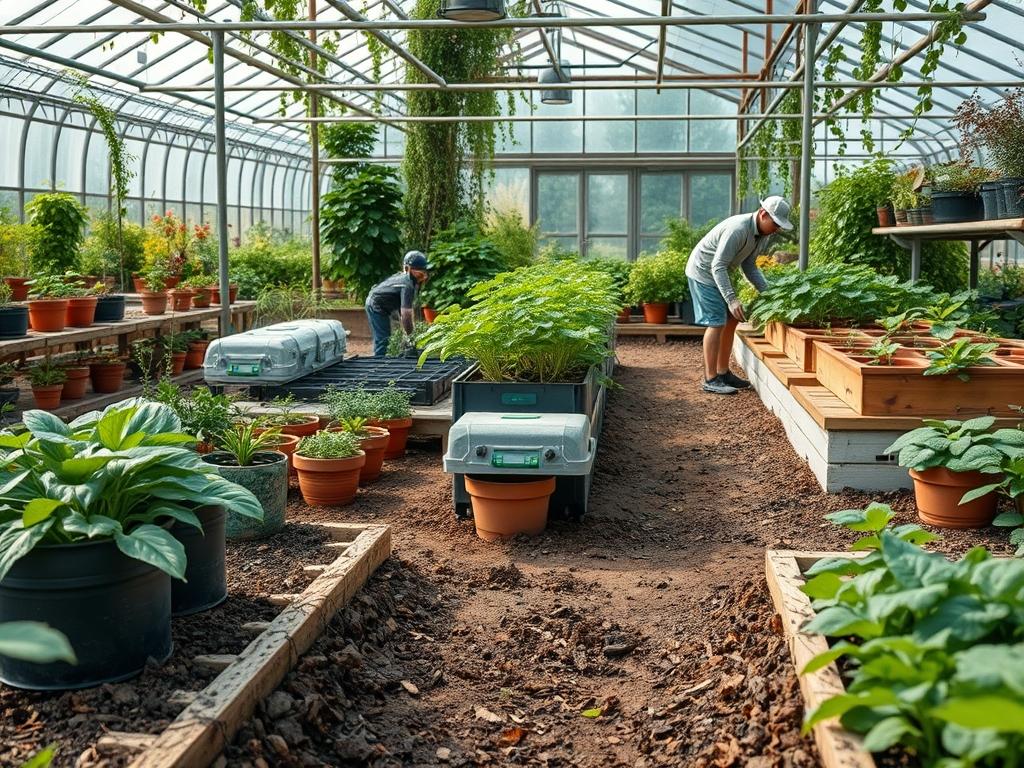
Navigating the complexities of high end residential landscaping requires a fundamental shift from static design toward dynamic utility. Today, landowners and developers prioritize curb appeal that doubles as a functional, resilient ecosystem. Climate volatility now exerts unprecedented pressure on traditional methods, necessitating a robust integration of Automated Garden Power Tech to manage variables such as fluctuating moisture levels and shifting lighting schedules. A well designed outdoor environment is no longer just a carefully curated collection of flora; it is a programmed space where human necessity meets biological resilience. Achieving this harmony involves a deep understanding of site specific conditions, ranging from elevation and wind patterns to soil chemistry and nutrient density.
The functionality of a modern landscape depends heavily on the infrastructure hidden beneath the surface. For a garden to remain vibrant during periods of extreme heat or unexpected frost, the designer must account for the intersection of power and biology. By utilizing centralized control hubs, homeowners can manage high efficiency irrigation, architectural lighting, and robotic maintenance tools from a single interface. This level of control ensures that water is never wasted and that plants receive exactly what they need to thrive. Ultimately, the goal is to create a seamless transition between the interior luxury of a home and the raw potential of its surrounding acreage.
Landscape Design Principles
Modern landscape architecture relies on a rigorous adherence to the principles of symmetry and visual weight. Achieving balance does not always mean creating a mirror image across a central axis; rather, it involves the strategic placement of focal points to draw the eye through the space. A Specimen Tree or a massive Basalt Column Water Feature can serve as an anchor, providing a sense of permanence around which softer elements circulate. Elevation layers are equally critical. By using Retaining Walls and terracing, a flat and uninspired yard can be transformed into a multi dimensional experience. These layers also serve a structural purpose, helping to manage hydrostatic pressure and prevent soil erosion on sloped properties.
The integration of Automated Garden Power Tech should be considered at the earliest stages of the design phase. Designers must map out the placement of Transformers, Signal Boosters, and Power Access Points to ensure that cables are buried deep enough to avoid damage from future aeration or planting. Visual balance is maintained by concealing these technical elements within Stonework or behind Evergreen Screens. Furthermore, walkway planning must facilitate natural movement while highlighting the garden’s best features. Using 12-Gauge Low Voltage Wire along paths allows for precise, automated lighting that enhances safety without creating light pollution. The result is a landscape that feels deliberate, structured, and profoundly intelligent.
Plant and Material Selection
| Plant Type | Sun Exposure | Soil Needs | Water Demand | Growth Speed | Maintenance Level |
| :— | :— | :— | :— | :— | :— |
| Buxus sempervirens | Full Sun to Shade | Well-Drained Loam | Moderate | Slow | Low |
| Lavandula angustifolia | Full Sun | Gritty, Alkaline | Low | Medium | Low |
| Acer palmatum | Partial Shade | Slightly Acidic | High | Slow | Medium |
| Miscanthus sinensis | Full Sun | Adaptable | Low | Fast | Low |
| Hydrangea macrophylla | Partial Shade | Moist, Rich | High | Medium | Medium |
| Taxus baccata | Full Sun to Shade | Well-Drained | Moderate | Slow | Low |
| Carex pensylvanica | Partial Shade | Dry to Moist | Moderate | Medium | Low |
Implementation Strategy
The successful execution of a complex garden layout begins with precise grading. Before a single plant is placed, the land must be shaped to ensure that water migrates away from the home foundation and toward designated drainage zones like French Drains or Dry Creek Beds. Using a Laser Level during this process is essential for accuracy. Once the grade is established, the skeleton of the garden, the hardscaping, is installed. This includes the placement of Natural Flagstone, Steel Plate Edging, and Modular Retaining Walls. These elements define the boundaries of the planting beds and provide the structural framework for the rest of the installation.
After the hardscape is in place, the technical infrastructure for Automated Garden Power Tech is laid down. This involves trenching for Schedule 40 PVC irrigation pipes and laying conduit for electrical lines. Choosing a Smart Irrigation Controller with weather sensing capabilities allows the system to skip watering cycles during rain events, which preserves both water and plant health. Once the pipes and wires are buried, the soil is amended with Organic Compost and layered with Double Shredded Bark Mulch to a depth of 3 Inches. This thickness is optimal for suppressing weeds and retaining moisture. Finally, the planting follows the design plan, with large Balled and Burlapped trees installed first, followed by shrubs, perennials, and groundcovers.
Common Landscaping Failures
One of the most frequent errors in professional landscaping is the mismanagement of drainage. When water is allowed to pool near the root zones of trees, it creates anaerobic conditions that lead to root rot and eventual plant death. This issue is often exacerbated by soil compaction, which occurs when heavy machinery is driven over planting areas during construction. To mitigate this, professionals use Pneumatic Subsoil Decompressors to restore pore space before planting. Another common failure is improper spacing. It is tempting to plant closely for immediate impact, but failing to account for the mature width of Evergreen Shrubs or Canopy Trees leads to overcrowding and poor air circulation.
Irrigation inefficiencies also rank high among common failures. Many systems are designed with a “one size fits all” approach, ignoring the fact that a Hydrangea in the shade has vastly different needs than a Lavender plant in full sun. Without the use of Automated Garden Power Tech, such as Soil Moisture Sensors and Zoned Drip Emitters, gardens often suffer from either overwatering or localized drought. Additionally, many contractors fail to install adequate Root Barriers near paved surfaces. Over time, the expansive root systems of large trees can lift Paver Patios or crack Concrete Walkways, leading to expensive repairs that could have been avoided with better initial planning.
Seasonal Maintenance
Landscape management is a year round commitment that changes with the cycles of the environment. In the spring, the primary focus is on recalibration. This is the time to test the Automated Garden Power Tech, checking Pop-up Sprinklers for clogs and ensuring that Smart Lighting Sensors are clean and functioning. Pruning should be performed on summer blooming species, and a fresh application of Slow Release Fertilizer should be integrated into the mulch. This preparation phase sets the stage for the vigorous growth of the coming months.
As summer arrives, the priority shifts to water management and heat stress mitigation. The automated systems must be monitored to ensure they are adjusting to rising temperatures. This is also the season for precision weeding and deadheading spent blooms to encourage a second flush of flowers. In autumn, the focus turns to protection and cleanup. Fallen leaves should be removed from lawns to prevent smothering, and tropical or sensitive species should be prepared for dormancy. Finally, winter involves winterizing the irrigation system by blowing out lines with Air Compressors to prevent freezing and cracking. This cycle ensures the landscape remains an asset rather than a liability.
Professional Landscaping FAQ
How does smart irrigation save money?
Automated Garden Power Tech uses local weather data to adjust watering schedules in real time. By only delivering water when the soil moisture drops below a specific threshold, these systems significantly reduce monthly utility bills and prevent plant loss from overwatering.
What is the best way to prevent weeds?
Applying a Pre-emergent Herbicide in early spring, followed by a 3-Inch Layer of high quality organic mulch, creates a physical and chemical barrier. Consistent edging also prevents turf grass from creeping into ornamental beds, maintaining a clean aesthetic.
Can I automate the lighting in my existing garden?
Yes. You can retrofit existing low voltage systems with Smart Transformers and Bluetooth Controllers. This allows you to create custom lighting zones, dimming schedules, and motion activated security paths that can be managed directly from a smartphone or tablet.
Why is drainage more important than irrigation?
While plants can survive short periods of drought, most cannot survive standing water. Improper drainage causes structural damage to the home and drowns the root systems of your plants. It is the most critical technical aspect of any landscape project.
Are robotic mowers worth the investment?
Robotic mowers provide a consistent, low impact cut that improves grass health by leaving tiny clippings as natural fertilizer. They eliminate the need for gas powered equipment and maintain a perfect lawn height without the manual labor of traditional mowing.