
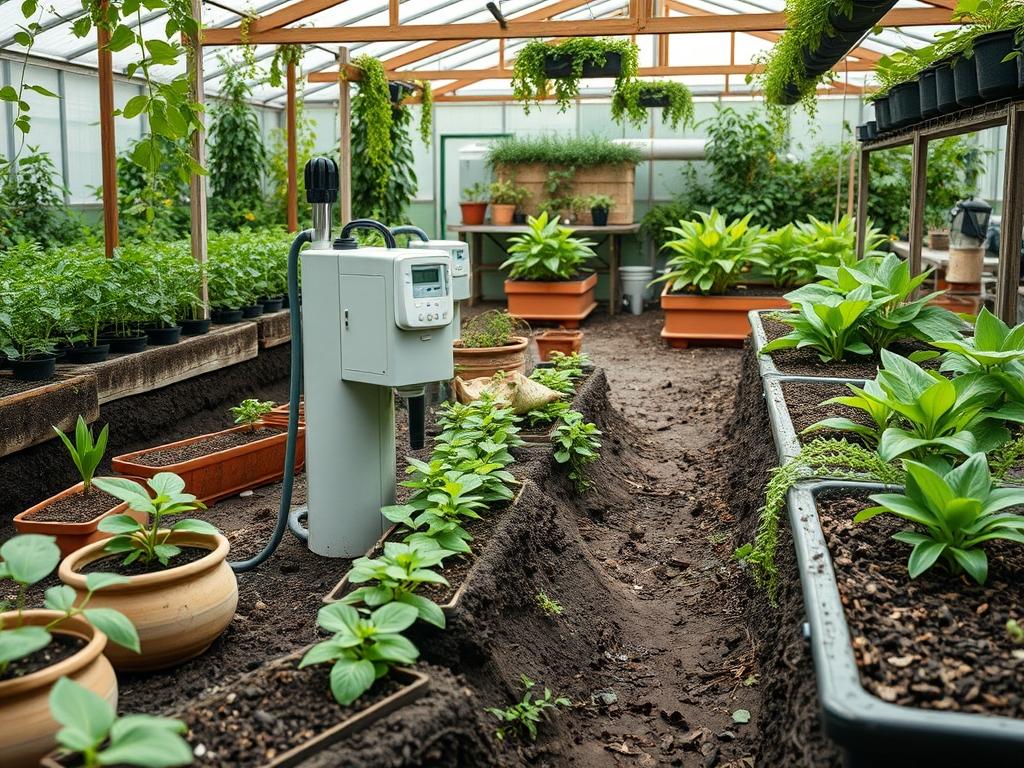
The integration of precision technology into the domestic landscape has transformed the way outdoor environments are conceived and maintained. Modern landscape architecture increasingly relies on the intersection of aesthetic design and biological optimization, moving beyond simple irrigation to comprehensive life-support systems for complex plantings. This shift is most visible in the adoption of Automated Nutrient Dosers, which transition a garden from a passive collection of plants into a high-vibrancy, living ecosystem. For the homeowner or developer, the primary challenge involves balancing the structural rigidity of hardscaping with the dynamic, hungry needs of curated flora. Climate variability often dictates the success of a project, but automated systems allow for a buffer against environmental stress, ensuring that curb appeal remains high regardless of soil quality or seasonal shifts. The goal of a modern environment is not just to survive the seasons, but to thrive with a level of vigor that only precise nutrient management can provide.
Landscape Design Principles
A successful landscape design begins with a rigorous commitment to symmetry and the establishment of clear focal points. Symmetry provides the subconscious cues of order and intention that define a professional installation. We often look for a central axis, perhaps a stone walkway or a structured water feature, around which the rest of the garden unfolds. However, maintaining that symmetry requires uniform growth rates across all plant clusters. This is where Automated Nutrient Dosers become a design tool rather than just a utility. By delivering a consistent 15-15-15 NPK ratio or specialized micronutrient blends directly through the irrigation lines, architects can ensure that a hedge of European Hornbeam on the left grows at the exact same rate as its counterpart on the right, preserving the intended geometry.
Elevation layers constitute the second pillar of high-end design. A flat yard lacks the psychological depth required for a true outdoor sanctuary. We utilize Retaining Walls and terraced beds to create vertical interest, stacking different textures from the ground up. To support this density, irrigation planning must account for the increased drainage caused by elevation. Gravity-fed systems or pressurized pumps must be calibrated to deliver water and nutrients to the highest points without flooding the low-lying areas. Walkways, crafted from Flagstone or Decomposed Granite, should serve as the skeletal structure that guides the viewer through these layers, punctuating the visual balance between hard and soft surfaces.
Plant and Material Selection
The selection of materials and biological specimens determines the long-term viability of the landscape. We prioritize native species for their resilience, but we also integrate high-yield specimen plants that act as the crown jewels of the property. The following table outlines a selection of plants that respond exceptionally well to the consistent feeding schedules provided by automated systems.
| Plant Type | Sun Exposure | Soil Needs | Water Demand | Growth Speed | Maintenance |
| :— | :— | :— | :— | :— | :— |
| Japanese Maple | Partial Shade | Well-Drained | Moderate | Slow to Medium | Moderate |
| Lavender | Full Sun | Sandy/Rocky | Low | Fast | Low |
| Boxwood | Full or Partial | Loamy/Rich | Moderate | Slow | High |
| Hydrangea | Partial Shade | Moist/Acidic | High | Fast | Moderate |
| Fescue Sod | Full Sun | Deep Topsoil | High | Fast | High |
| Crepe Myrtle | Full Sun | Adaptive | Moderate | Fast | Low |
For hardscaping, we recommend using Basalt Pavers and Steel Edging to define boundaries. These materials provide a sharp contrast against the organic forms of the foliage. The use of Non-Woven Geotextile Fabric under gravel paths prevents weed intrusion while allowing for necessary gas exchange in the soil below.
Implementation Strategy
Implementing a high-yield garden requires a logical sequence of operations, beginning with a thorough site analysis and grading. Proper grading is the most critical step in protecting the home foundation and ensuring plant health. The ground must slope away from structures at a minimum of 2 percent grade to facilitate drainage. Once the skeleton of the landscape is graded, we move to trenching for the primary irrigation and nutrient delivery lines. We typically utilize 1-inch Schedule 40 PVC for main lines and 0.5-inch Drip Tubing for individual plant emitters.
The installation of the Automated Nutrient Dosers occurs at the manifold station, usually protected within a weather-resistant Valve Box. This system is plumbed directly into the main water line, using a backflow preventer to ensure no fertilizers re-enter the potable water supply. After the subterranean utilities are set, we focus on edging and soil amendment. Steel Edging is driven into the perimeter of the beds to create a permanent clip-line for the lawn. We then apply a 3-inch layer of Organic Cedar Mulch over the entire planting area. This mulch serves multiple functions; it regulates soil temperature, suppresses weed germination, and prevents the evaporation of the nutrient-rich water being delivered to the root zones.
Common Landscaping Failures
The most frequent failure in high-end landscaping is improper drainage management. When a site is over-irrigated or if the soil is not amended to handle high-volume nutrient delivery, the result is root rot and anaerobic soil conditions. Many contractors fail to account for the “bathtub effect,” where a planting hole is dug into heavy clay and filled with rich soil, effectively creating a pool that drowns the plant. To avoid this, we recommend performing a percolation test before any major installation.
Root overcrowding is another preventable catastrophe. A young Oak Tree might look appropriate in a small bed today, but within a decade, its root system can heave Concrete Walkways and invade drainage pipes. Proper spacing involves researching the mature canopy and root spread of every species. Furthermore, soil compaction from heavy equipment during construction can render the ground impermeable. Using a Power Aerator or a Broadfork to fracture the subsoil is essential before the first layer of topsoil is applied. Finally, many systems fail due to “nutrient lock-out,” which occurs when the pH levels of the water are not monitored. Even the best Automated Nutrient Dosers cannot overcome a pH imbalance that prevents roots from absorbing the available minerals.
Seasonal Maintenance
Landscape management is a four-season commitment that evolves as the environment shifts. Spring focuses on the “awakening” of the system. This involves flushing out the irrigation lines to remove any winter sediment and recalibrating the Automated Nutrient Dosers for high-nitrogen spring growth. We check every emitter for clogs and apply a fresh 2-inch layer of Mulch to replenish what decomposed over the winter.
In Summer, the priority shifts to hydration and heat stress management. Irrigation schedules are adjusted to early morning hours, typically around 4:00 AM, to minimize evaporation. We also check for salt buildup in the soil, which can occur when high-yield nutrients are used in high-heat conditions without adequate flushing. Autumn requires a transition toward root development and winter hardiness. We switch the nutrient blends to those higher in phosphorus and potassium to strengthen the cellular structure of the plants. This is also the time for “dormant pruning” of deciduous trees. Winter is the period of system protection. We blow out the irrigation lines with Air Compressors to prevent pipe bursts and disconnect the dosing units to store them in a climate-controlled environment, ensuring they are ready for the following year.
Professional Landscaping FAQ
How do automated nutrient dosers improve plant growth?
They provide a consistent concentration of essential minerals directly to the root zone. This prevents the “feast or famine” cycle of manual fertilization, leading to faster maturity, more vibrant foliage, and increased resistance to local pests and diseases.
Can I use any fertilizer in my automated system?
No, you must use highly soluble, liquid-grade fertilizers specifically designed for fertigation. Non-soluble granular products will clog the venturi injectors or peristaltic pumps, leading to system failure and potential damage to the distribution lines or emitters.
What is the ideal mulch depth for a healthy garden?
A depth of 3 inches is the industry standard. This is thick enough to suppress weeds and retain moisture, but thin enough to allow for proper oxygen exchange between the soil and the atmosphere, preventing fungal issues.
How do I prevent my walkways from cracking?
Ensure a compact base consisting of 4 inches of crushed stone or Class 5 gravel. Proper drainage is also essential, as water trapped under a walkway will expand during freeze-thaw cycles, creating the pressure that leads to surface cracks.
Why is my automated system delivering uneven nutrients?
This is often caused by a drop in hydraulic pressure or a clogged filter. Regularly cleaning the mesh filters and ensuring the pump is rated for the total length of your irrigation runs will maintain even distribution across the site.