
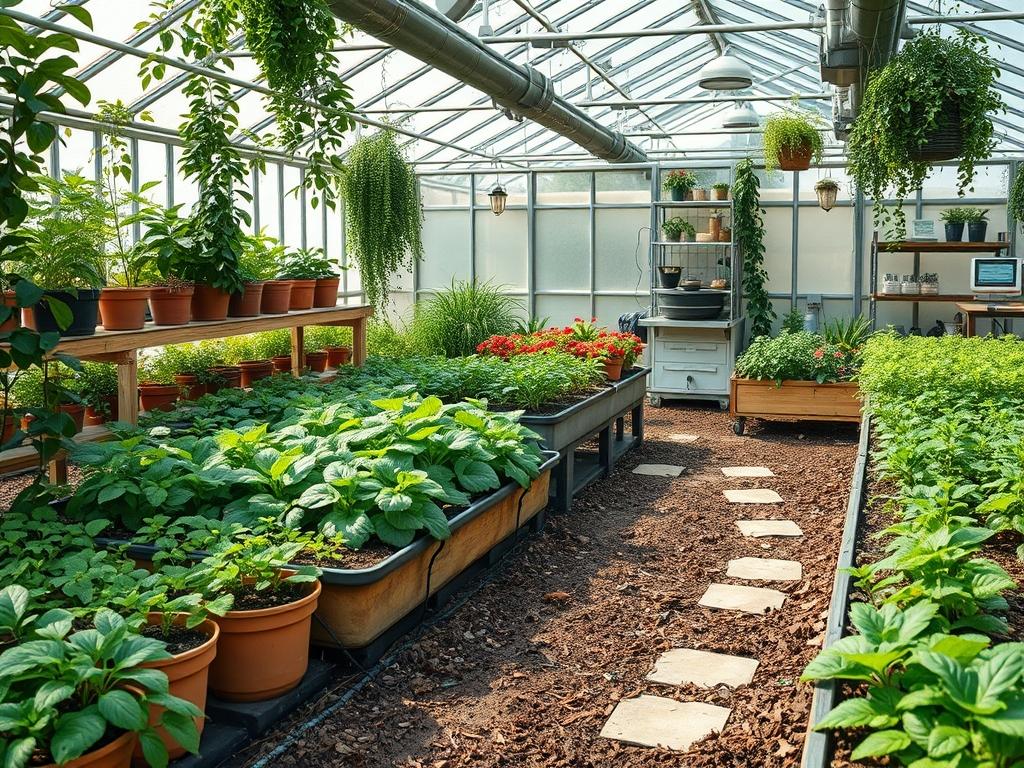
The integration of a modern greenhouse into a residential or commercial landscape requires more than just a level foundation and a glass enclosure. It represents a significant investment in the property’s aesthetic appeal and its horticultural output. A primary challenge for any landscape architect is the management of the internal climate of these structures; specifically, how to prevent the extreme heat spikes that can occur even in temperate environments. This is where smart greenhouse venting becomes an essential component of the outdoor living strategy. By automating airflow management, a property owner can maintain a stable microclimate that protects delicate tropical species and expensive ornamental starts. A greenhouse that is neglected or poorly ventilated quickly becomes an eyesore of wilted foliage and condensation-streaked glass, which negatively impacts the overall curb appeal of the estate. Professional landscape design must therefore account for the technical infrastructure of climate control just as meticulously as it accounts for drainage or hardscape geometry.
As we look at the broader landscape, the greenhouse serves as a bridge between the controlled environment of the home and the variable conditions of the garden. Installing high-tech venting systems ensures that this bridge remains functional year-round. Modern smart systems use a combination of sensors and motorized actuators to respond to real-time data, adjusting roof and side vents based on temperature, humidity, and even wind speed. This level of control allows for the cultivation of species that would otherwise perish in the local climate, expanding the palette of plants available for the surrounding garden beds. When the greenhouse is thriving, it enhances the visual harmony of the backyard, serving as a lush, green focal point throughout the winter months. Integrating these systems requires a blend of electrical planning, structural knowledge, and an understanding of thermodynamics within glass or polycarbonate envelopes.
Landscape Design Principles
In the realm of high-end landscape architecture, the greenhouse is often treated as a major architectural focal point. To achieve visual balance, the structure should be sited where it can be seen from the primary outdoor living areas, such as the patio or deck, but it must also respect the existing symmetry of the property. If the landscape follows a formal design, the greenhouse should be placed along a central axis or at the terminus of a primary walkway. This positioning makes the structure feel like an intentional part of the design rather than an afterthought. Elevation layers are also critical. A greenhouse should ideally sit on a slightly raised masonry plinth or a concrete pad, which prevents water from pooling around the base and provides a clean transition to surrounding mulch or gravel paths.
Beyond aesthetics, the orientation of the greenhouse is the first step in successful smart greenhouse venting. Positioning the structure’s longest side to face south ensures maximum solar gain during the winter, but it also increases the cooling load during the summer. This is where the venting strategy must be robust. Path planning around the greenhouse should include wide, accessible walkways made of permeable materials like crushed stone or flagstone with wide joints. These paths allow for easy maintenance of the exterior venting hardware and sensors. Furthermore, irrigation planning should be integrated with the greenhouse layout; smart venting often works in tandem with misting systems to drop internal temperatures through evaporative cooling. A well-designed landscape ensures that all these technical elements are hidden from direct view, using low-lying shrubs or decorative retaining walls to mask wiring conduits and drainage pipes.
Plant and Material Selection
The success of a greenhouse-driven landscape depends heavily on selecting the right materials for the structure and the right plants for both the interior and the transition zones. The following table provides a guide for species that thrive when supported by a managed greenhouse environment and subsequently moved into the broader landscape.
| Plant Type | Sun Exposure | Soil Needs | Water Demand | Growth Speed | Maintenance Level |
| :— | :— | :— | :— | :— | :— |
| Bismarckia nobilis | Full Sun | Well-drained sandy | Low to Moderate | Slow | Medium |
| Strelitzia reginae | Full to Partial | Rich loamy soil | Moderate | Medium | Low |
| Ficus lyrata | Indirect Bright | Well-drained peat | Moderate | Medium | High |
| Bougainvillea | Full Sun | Gritty, dry soil | Low | Fast | Medium |
| Dicksonia antarctica | Dappled Shade | Humus-rich, moist | High | Slow | High |
| Citrus limon | Full Sun | Slightly acidic | Moderate | Medium | Medium |
Selection of hardscape materials is equally vital. For the interior floor, use thermal mass materials like dark slate or brick paver. These materials absorb heat during the day and release it at night, working alongside the smart greenhouse venting system to stabilize temperature swings. For the exterior, choose powder-coated aluminum for vent frames and stainless steel for actuators to ensure longevity in high-moisture environments.
Implementation Strategy
The installation of smart greenhouse venting begins with a comprehensive site assessment. Before any hardware is mounted, you must understand the prevailing wind patterns of your backyard. Vents should be positioned to leverage “stack effect” ventilation, meaning cooler air is pulled in through lower side vents while hot air is exhausted through roof vents.
Step one involves the selection of the hardware. For most residential greenhouses, linear actuators are the preferred choice for movement. These devices are rated by their stroke length and the amount of force they can apply. You will need to calculate the weight of your vent sashes to ensure the motor can handle the load. Once the actuators are selected, they are mounted to the frame using heavy-duty brackets. It is essential to ensure that the mounting points are reinforced, as the repetitive motion can stress standard aluminum extrusions.
Step two focuses on the sensor network. A high-quality smart system requires at least one internal temperature and humidity sensor, as well as an external weather station. The external station is critical; it tells the system to close the vents if it begins to rain or if wind speeds exceed a threshold that could damage the glass panes. Sensors should be placed at the mid-point of the greenhouse height, away from direct sunlight, to get an accurate reading of the air temperature rather than the radiant heat of the sun.
Step three is the integration of the controller. Most modern units are Wi-Fi enabled, allowing the homeowner to monitor the greenhouse from a smartphone. The controller is programmed with “set points.” For example, the roof vents may be set to open 25 percent when the temperature hits 75 degrees Fahrenheit and 100 percent when it hits 85 degrees. Advanced strategies include “pulsing” the vents to prevent a sudden shock of cold air from hitting sensitive plants like Orchids or Ferns. Finally, ensure all wiring is run through liquid-tight conduit to meet outdoor electrical codes and protect the system from the greenhouse’s high-humidity environment.
Common Landscaping Failures
One of the most frequent failures in greenhouse integration is poor drainage around the foundation. If water from the roof or the internal floor does not have a clear path away from the structure, it will lead to soil compaction and root rot for the plants located immediately outside. Every greenhouse should be equipped with a gutter system that directs runoff into a French drain or a nearby rain garden.
Another common error involves improper spacing between the greenhouse and existing trees. While shade can help with cooling, overhanging limbs pose a significant risk of breakage during storms. Furthermore, leaf debris can clog the tracks of smart venting systems, causing the motors to burn out or the vents to stick in the open position. Landscape architects must also consider the “heat island” effect created by large expanses of concrete or asphalt near the greenhouse. These surfaces radiate heat long after the sun goes down, which can confuse the smart sensors and lead