
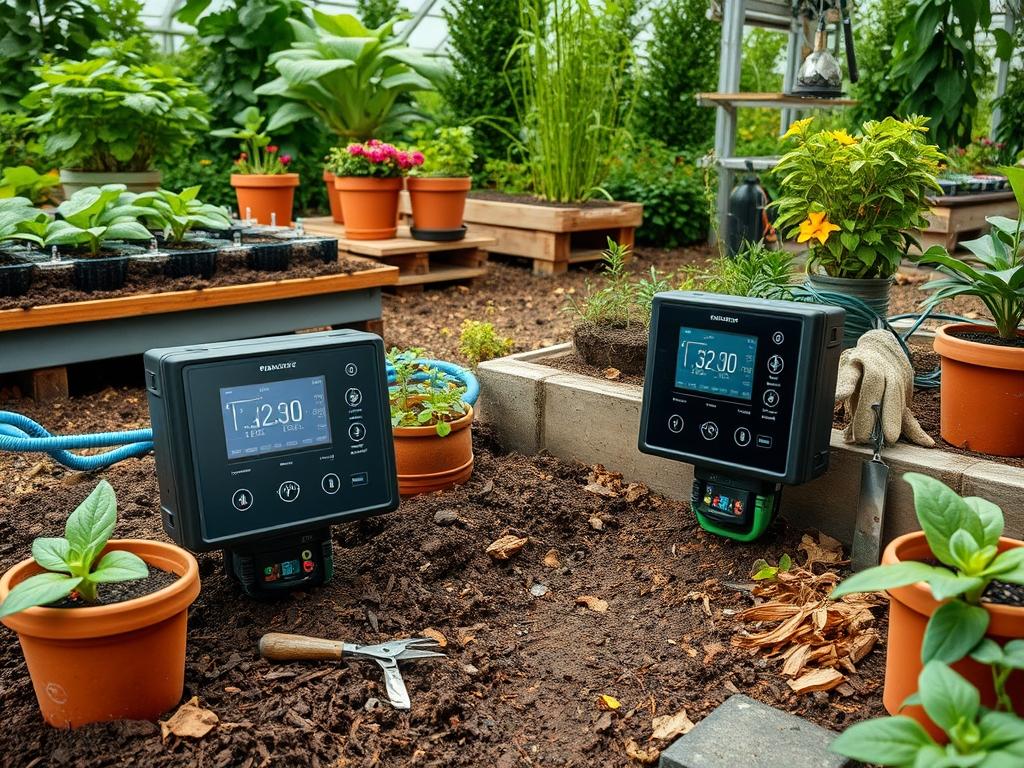
The landscape of 2026 demands a sophisticated marriage between aesthetic luxury and resource precision. Homeowners and commercial developers alike are no longer satisfied with static gardens that require manual intervention at every seasonal shift. As we navigate changing climate patterns and stricter water usage regulations, the integration of Smart Irrigation Controllers has become the defining factor in maintaining exceptional curb appeal. A well designed outdoor environment is an investment in both property value and personal well-being. To protect this investment, one must look beyond simple aesthetics and consider the mechanical systems that sustain life under the soil. A garden that looks magnificent in May but wilts by August represents a failure in foundational planning. Modern landscaping requires a holistic approach where the circulatory system of the yard, the irrigation, is just as vital as the plants themselves.
Landscape Design Principles
Effective landscape design begins with a rigorous assessment of the site’s natural topography and existing architecture. Symmetry acts as the primary anchor for many formal designs, providing a sense of order and permanence. Using a central axis, a designer might place identical Boxwood hedges on either side of a Flagstone path to guide the eye toward a focal point, such as a water feature or a bespoke sculpture. However, visual balance does not always require perfect mirroring. Asymmetrical balance uses different elements with similar visual weights to create a more dynamic and organic feel.
Elevation layers are critical for creating depth in a residential or commercial garden. By utilizing Retaining Walls, designers can create distinct tiers that maximize usable space on sloped lots. These layers allow for the introduction of various textures and colors that change as the viewer moves through the space. Below the surface, the planning for Smart Irrigation Controllers must account for these elevation changes. Water pressure varies at different heights; therefore, the controller must be programmed to manage zones with distinct hydraulic requirements.
Walkways serve as the skeletal structure of the yard. They should be wide enough, typically at least 4 feet, to allow two people to walk side by side. The material selection, whether it be Decomposed Granite or Pavers, should reflect the architectural style of the home while ensuring proper drainage. Every hardscape element must be designed with a slight pitch to prevent water from pooling near the foundation or on the walking surface.
Plant and Material Selection
Choosing the right flora is a balancing act between environmental constraints and desired visual outcomes. In 2026, the trend has shifted heavily toward native species that offer higher resistance to local pests and weather extremes. The following table provides a selection of versatile plants suitable for modern, smart-managed landscapes.
| Plant Type | Sun Exposure | Soil Needs | Water Demand | Growth Speed | Maintenance Level |
| :— | :— | :— | :— | :— | :— |
| Dwarf Conifer | Full Sun | Well-drained | Low | Slow | Very Low |
| Japanese Maple | Partial Shade | Loamy/Acidic | Moderate | Moderate | Medium |
| Purple Coneflower | Full Sun | Average | Low | Fast | Low |
| Feather Reed Grass | Full Sun | Any / Heavy | Moderate | Fast | Low |
| Creeping Thyme | Full Sun | Sandy | Low | Moderate | Low |
| Hydrangea Quercifolia | Partial Shade | Rich / Moist | High | Moderate | Medium |
Implementation Strategy
Implementing a professional grade garden requires a logical sequence of operations to ensure long term stability. The first step is always Grading. Without a properly leveled or sloped site, even the most expensive plants will succumb to root rot or drought. Once the land is shaped, the installation of the irrigation mainline and Smart Irrigation Controllers takes place. These controllers should be positioned in an accessible location, such as a garage or a protected exterior weather cabinet, and connected to local Wi-Fi to receive real time weather updates.
Following the irrigation setup, Hardscaping elements like patios and walls are constructed. It is vital to install these before the plants to avoid soil compaction around delicate root systems. After the “hard” elements are in place, the “softscaping” begins. Soil should be amended with organic compost to a depth of at least 8 inches before any planting occurs. Each plant should be placed in a hole twice as wide as its root ball but no deeper.
The final touches involve the application of Mulch. A layer of 3 inches of organic mulch helps retain moisture, suppresses weeds, and regulates soil temperature. For areas with high wind or heavy rain, a heavier Double-Shredded Hardwood Mulch is often preferred over lighter options like pine straw. Finally, the Smart Irrigation Controllers are calibrated for each specific zone based on the plant types and solar exposure of each garden bed.
Common Landscaping Failures
The most frequent mistake in modern landscaping is improper drainage planning. When water is not directed away from the building or into designated bioswales, it can lead to foundation damage and the death of expensive specimens. Another common error is root overcrowding. It is tempting to plant closely together for an immediate “full” look, but failure to respect the ultimate mature size of a tree or shrub leads to competition for nutrients and poor air circulation.
Soil compaction is often overlooked. During construction, heavy machinery can compress the earth so tightly that roots cannot penetrate and water cannot soak in. This creates an “underground swimming pool” effect where plants drown. Furthermore, irrigation inefficiencies often stem from a “set it and forget it” mentality. Older, traditional timers do not account for rain events or humidity, leading to massive water waste. Upgrading to Smart Irrigation Controllers mitigates this by using sensors and algorithmic data to skip watering cycles when the soil is already saturated.
Seasonal Maintenance
Landscape management is a year round commitment that changes with the sun’s path. During the Spring, the focus is on “unwinterizing” the systems. This involves flushing the irrigation lines, checking for leaks in Drip Emitters, and applying a slow release fertilizer to kickstart the growing season. Dead wood should be pruned from deciduous trees before the leaves fully emerge.
In the Summer, the priority shifts to moisture management. As temperatures rise, Smart Irrigation Controllers will automatically adjust durations to counteract high Evapotranspiration rates. This is also the time to monitor for pests and fungal diseases which thrive in the heat.
Autumn is for preparation and planting. It is the best time to plant new trees and shrubs, as the cooler air and warm soil encourage root growth without the stress of summer sun. Irrigation should be gradually dialed back. Perennials should be cut back, and leaves should be cleared to prevent “smothering” the turf.
Winter maintenance is often passive but crucial. In colder climates, systems must be “blown out” using a Standard Air Compressor to prevent pipes from bursting. Snow should be gently brushed off the branches of evergreens like Arborvitae to prevent heavy loads from snapping the limbs.
Professional Landscaping FAQ
How do smart irrigation controllers save money?
These devices use real time weather data and Soil Moisture Sensors to ensure you only water when necessary. By eliminating irrigation during rain or high humidity, they typically reduce outdoor water consumption by 30 to 50 percent annually.
What is the best mulch for a low maintenance garden?
Triple-Shredded Hardwood Mulch is excellent for most applications. It interlocks to stay in place on slopes, breaks down slowly to enrich the soil, and effectively suppresses weed germination when applied at a depth of 3 inches.
Can I install a smart controller on an old system?
Yes. Most Smart Irrigation Controllers are designed to be retrofitted onto existing valve wiring. As long as your valves are in good working order, you can simply replace the old wall unit with a modern, internet connected version.
How deep should my flower beds be?
For most perennials and small shrubs, a soil depth of 12 to 18 inches of loosened, amended earth is ideal. This allows roots to grow deep enough to reach cooler, moister soil during the peak of summer heat.
Why are native plants recommended for smart landscapes?
Native plants have evolved to handle local climate swings. When paired with Smart Irrigation Controllers, they require less supplemental water and fewer chemical fertilizers, making the entire landscape more sustainable and easier to manage over time.